Best Robot Vacuum Under $300 in 2026
Best robot vacuums under $300 for 2026. Self-emptying, mopping, LiDAR navigation, and pet hair picks from Tapo, Roborock, Roomba, and Dreame. Expert picks, p...
As an Amazon Associate we earn from qualifying purchases made through our links — this doesn't affect our picks.
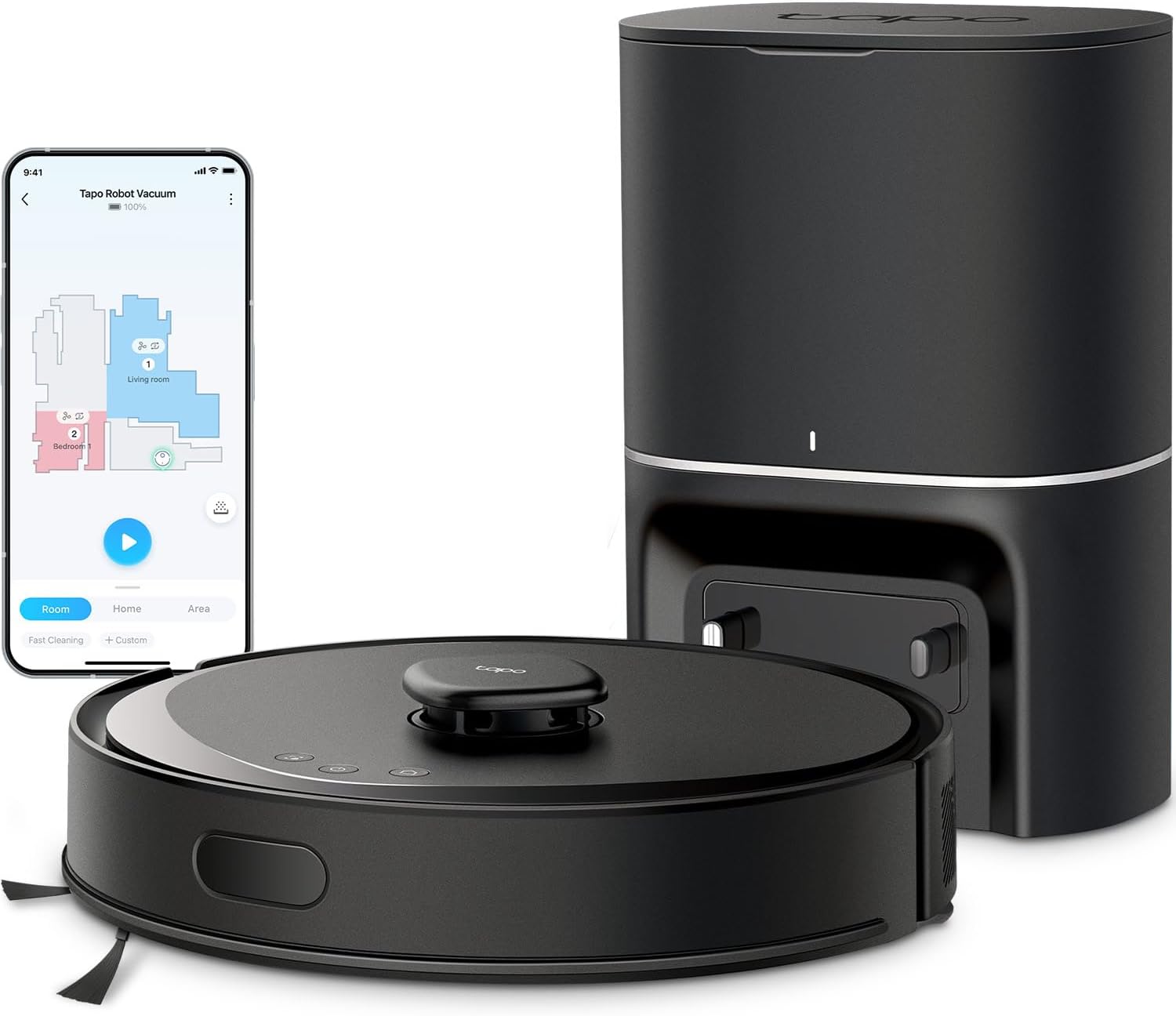
TP-Link Tapo RV30 Max Plus
Best Overall
Price as of Mar 4, 2026 — see current price on Amazon.
Robot vacuums under $300 in 2026 do things that $600 models struggled with two years ago. Self-emptying docks, LiDAR mapping, mopping, and obstacle avoidance are standard features now, not premium upsells. The price compression means buyers in this range are choosing between genuinely capable machines rather than settling for whatever they can afford.
Picks draw on cleaning performance data from RTINGS, PCMag, and Tom's Guide, plus real customer feedback on pet hair, edge cleaning, and navigation reliability. Four robot vacuums earn consistent praise across all of it. Each one includes a self-emptying dock or built-in mopping, and three include both.
Quick picks
| Vacuum | Best For | Suction | Self-Empty | Mop | Price | |
|---|---|---|---|---|---|---|
| Tapo RV30 Max Plus | Overall / value | 5,300 Pa | Yes | Yes | ~$270 | Check Price |
| Roborock Q5 Pro+ | Navigation / carpets | 5,500 Pa | Yes | Yes | ~$280 | Check Price |
| iRobot Roomba Combo Essential | Simplicity / brand trust | Power-Lifting | No | Yes | ~$200 | Check Price |
| Dreame D10 Plus | Self-emptying on a budget | 4,000 Pa | Yes | Yes | ~$250 | Check Price |
Best overall: Tapo RV30 Max Plus
TP-Link Tapo RV30 Max Plus
Best for: Best OverallPros
- 5,300 Pa suction handles pet hair, crumbs, and embedded dirt on all surfaces
- Self-emptying dock with 3L dust bag lasts up to 2 months between changes
- LiDAR navigation creates accurate multi-floor maps with no-go zones
- 2-in-1 vacuum and mop cleans hard floors in a single pass
- 97% dust pickup rate validated by PCMag testing
- Compatible with Alexa, Google Home, and the Tapo app for scheduling
Cons
- Mopping is basic drag-and-dampen -- not pressurized or vibrating
- Gets stuck under low-clearance furniture below 3.5 inches
- Dust bag replacements are a recurring cost ($15-20 per 3-pack)
- Takes 2-3 cleaning runs to fully map a new home
Price as of Mar 4, 2026 — see current price on Amazon.
PCMag named the Tapo RV30 Max Plus the best 2-in-1 robot vacuum and mop under $300 for good reason. At $270, it packs self-emptying, LiDAR navigation, and combined vacuum-mop functionality into a package that undercuts comparable Roborock and Ecovacs models by $50 to $100.
The 5,300 Pa suction is strong for the price. In practice, it picks up pet hair from both hard floors and medium-pile carpets without leaving traces. The auto-boost feature detects carpets and increases suction automatically, which means you do not need to manually switch modes for different floor types.
LiDAR navigation is the technology that separates a smart robot vacuum from a random-bump model. The RV30 Max Plus maps your home in real time, creating accurate floor plans that you can edit in the Tapo app. Set no-go zones around pet bowls, kid play areas, or cable-heavy desk setups. Create room-specific cleaning schedules. Save multiple floor maps if you have a multi-story home. This is the navigation quality that used to require spending $400-plus.
The self-emptying dock holds a 3L sealed dust bag that stores 60 days of debris. After each cleaning run, the vacuum returns to the dock and empties its onboard dustbin automatically. The sealed bag design keeps dust contained rather than releasing it back into the air during emptying, which matters if anyone in your household has allergies.
The mopping function is honest but basic. A water tank dampens a microfiber pad that drags across hard floors behind the vacuum. It handles light spills, dust residue, and general floor grime. It does not scrub dried stains or replace a manual mop for serious messes. For daily maintenance mopping, it is effective. For deep cleaning, manage expectations.
Best navigation: Roborock Q5 Pro+
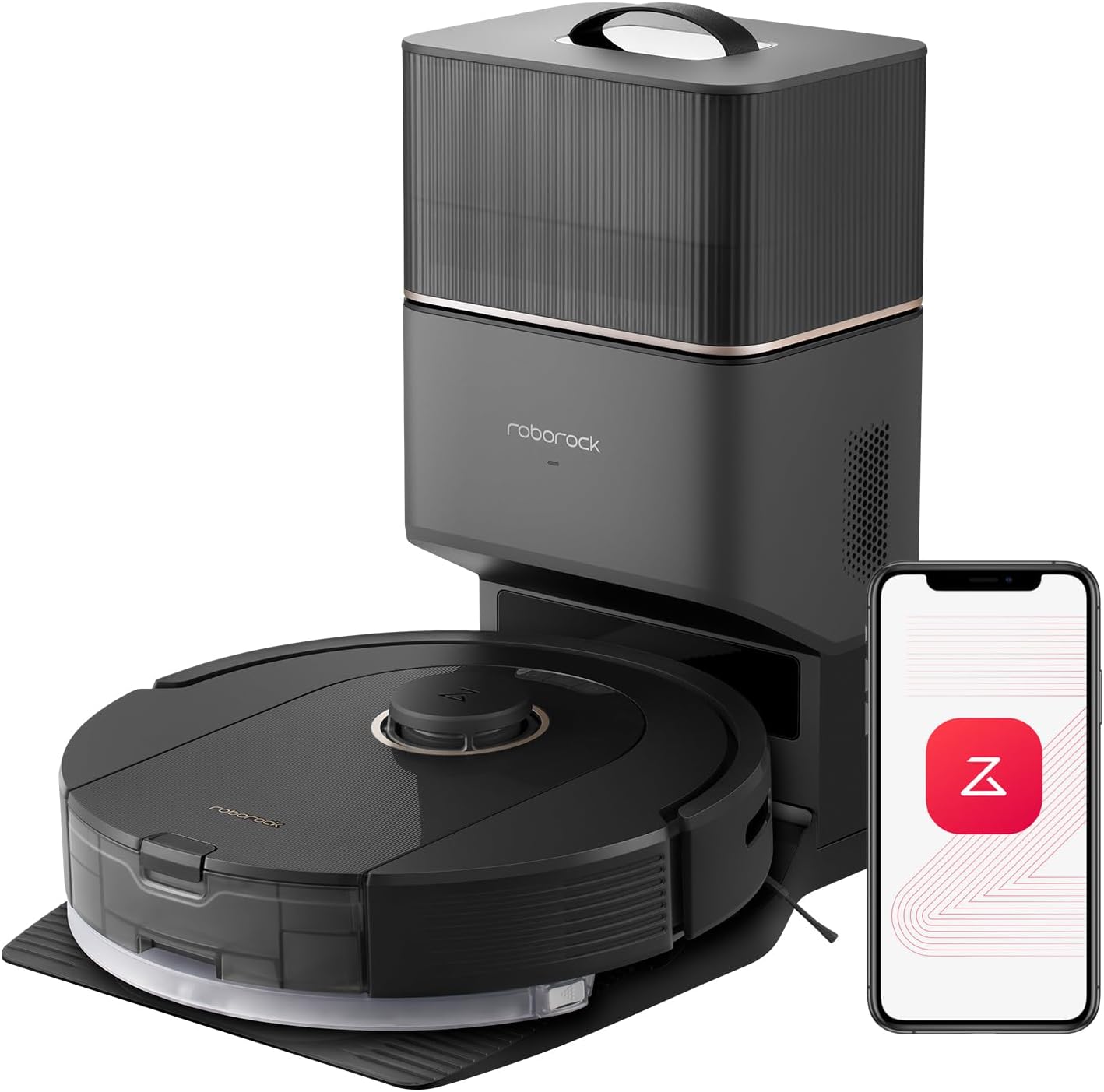
Roborock Q5 Pro+
Best for: Best NavigationPros
- 5,500 Pa suction is the strongest on this list
- DuoRoller brush eliminates hair tangles -- genuine maintenance reduction
- LiDAR navigation with 3D mapping is class-leading for accuracy
- Self-emptying dock stores 7 weeks of debris
- 240-minute runtime covers homes up to 3,000 sq ft on a single charge
- Roborock app is one of the best in the category for customization
Cons
- Mopping is basic -- single pad without vibration or pressure
- At $280 it is the most expensive pick on this list
- No obstacle avoidance camera -- relies on LiDAR and bumper contact
- Dock is large and takes up noticeable floor space
Price as of Mar 4, 2026 — see current price on Amazon.
Roborock has earned its reputation for navigation quality, and the Q5 Pro+ is the most affordable model that delivers their best mapping experience. The LiDAR sensor creates 3D floor maps that are noticeably more accurate than competitors at this price. Room recognition is fast and reliable. The vacuum rarely gets confused about where it is, even in open-plan layouts where rooms flow into each other without clear boundaries.
The DuoRoller brush is the feature that saves the most real-world frustration. Two rubber rollers counter-rotate to pull debris in while actively preventing hair from wrapping around the brush. If you have long-haired humans or pets, you know the pain of cutting tangled hair off a brush roller every few days. The DuoRoller largely eliminates that maintenance task.
5,500 Pa suction at max setting is the highest on this list. On carpets, the difference between 4,000 Pa and 5,500 Pa is visible -- the Q5 Pro+ pulls more embedded dust and pet hair from medium-pile carpet in a single pass. On hard floors, the difference is less noticeable since most debris sits on the surface.
The 240-minute runtime means homes up to 3,000 square feet can be cleaned on a single charge. For most apartments and average-sized houses, the vacuum completes a full clean and returns to the dock with battery to spare. Larger homes may require a mid-clean recharge, which the Q5 Pro+ handles automatically -- it returns to the dock, charges enough to finish, and resumes where it left off.
The Roborock app provides granular control: per-room suction levels, mopping intensity, cleaning order, scheduled routines, and real-time tracking of the vacuum's path. It is consistently rated as one of the best companion apps in the robot vacuum category.
Best budget: iRobot Roomba Combo Essential
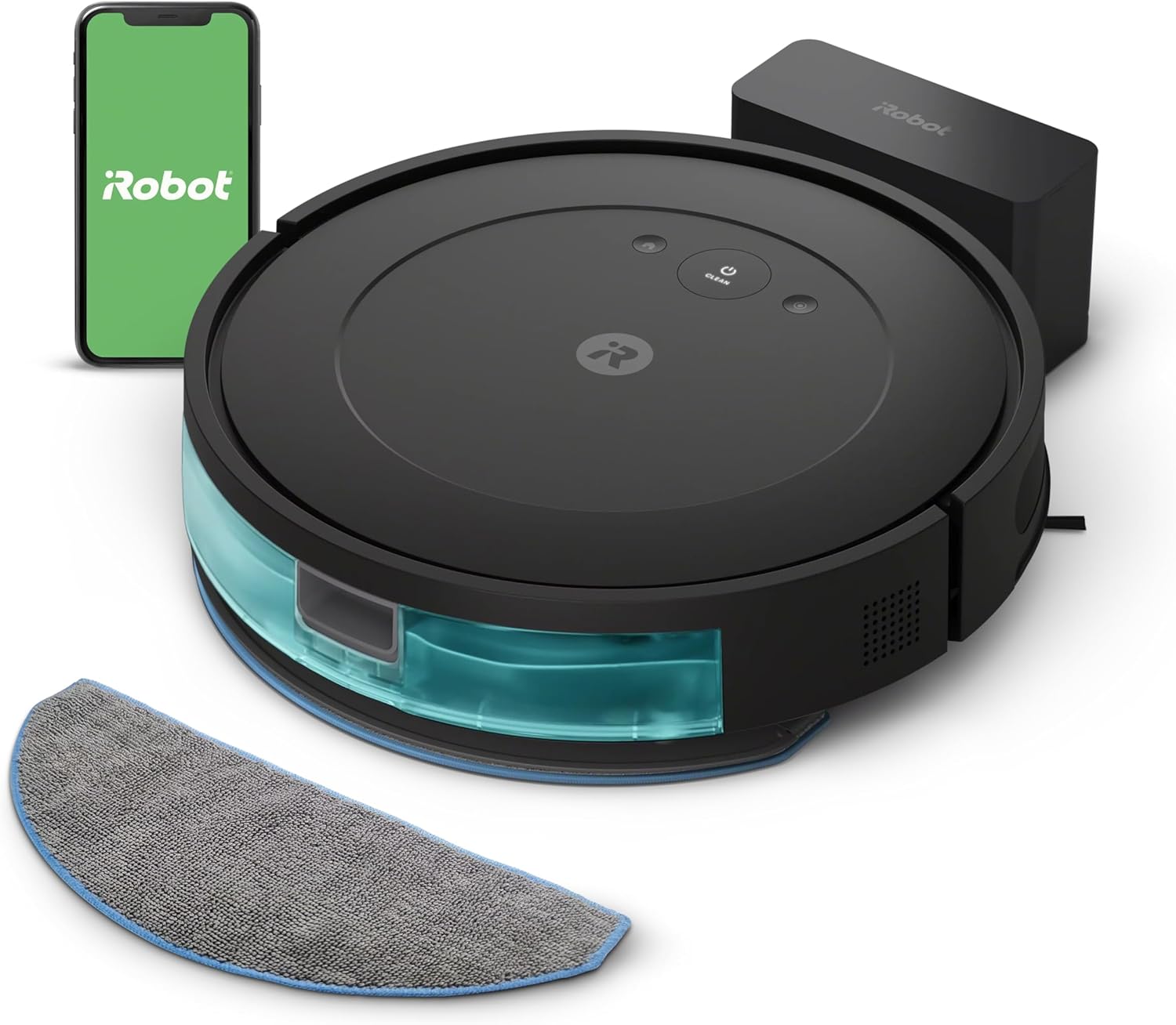
iRobot Roomba Combo Essential
Best for: Best BudgetPros
- $200 is the lowest entry point for a vacuum-mop combo from a major brand
- iRobot's proven cleaning system with edge-sweeping brush
- Simple setup -- minimal app configuration needed to start cleaning
- Smart navigation cleans in neat rows rather than random patterns
- Compatible with Alexa for voice-activated cleaning
- Compact design fits under most furniture
Cons
- No self-emptying dock -- you manually empty the dustbin after each clean
- Navigation is camera-based, not LiDAR -- less precise room mapping
- Suction power trails LiDAR competitors on carpet
- Mopping is basic -- dampened pad only, no scrubbing action
- Smaller dustbin fills faster in homes with pets
Price as of Mar 4, 2026 — see current price on Amazon.
The Roomba Combo Essential exists for people who want a robot vacuum that works out of the box without fussing with apps, maps, and settings. At $200, it is the most affordable option on this list and delivers the core Roomba experience: reliable cleaning in a proven form factor.
iRobot's 4-Stage Cleaning System uses an edge-sweeping brush to pull debris from wall edges and corners, dual multi-surface brushes to agitate and lift dirt, and power-lifting suction to pull it into the bin. The system is not the most powerful on specs, but iRobot has refined the cleaning pattern and brush design over years of iteration. In practice, it picks up surface debris on hard floors effectively and handles low-pile carpet adequately.
Smart navigation cleans in neat rows rather than the random bouncing that cheaper robots use. The result is more consistent coverage with fewer missed spots. It is not as precise as LiDAR navigation -- you do not get detailed room maps or no-go zones -- but it covers the floor methodically.
The combined vacuum-mop function adds a dampened pad for hard floor maintenance. Like the other mopping options on this list, it is basic maintenance cleaning rather than deep scrubbing.
The obvious trade-off at $200: no self-emptying dock. You empty the dustbin manually after each cleaning session. In homes with pets or heavy foot traffic, that means emptying every run. If hands-free operation is a priority, the Dreame D10 Plus adds self-emptying for $50 more.
Best self-emptying value: Dreame D10 Plus
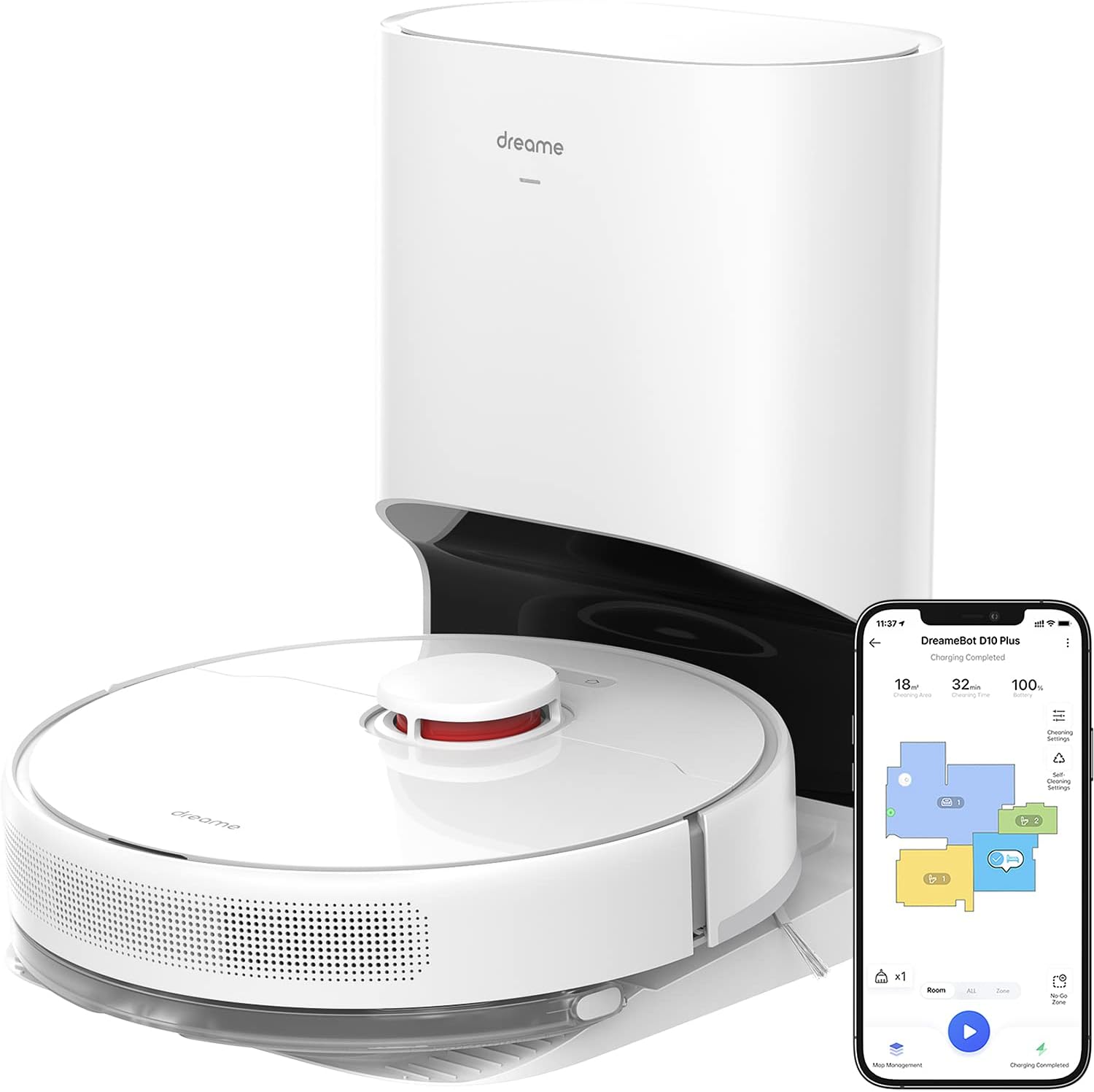
Dreame D10 Plus
Best for: Best Self-Emptying ValuePros
- Self-emptying dock at $250 is the cheapest on the market
- 45-day dust storage capacity in the sealed dock bag
- LiDAR navigation with multi-floor mapping
- 4,000 Pa suction handles hard floors and low-pile carpet well
- 2-in-1 vacuum and mop with electronic water tank control
- Dreamehome app provides room editing, no-go zones, and scheduling
Cons
- 4,000 Pa suction is the lowest on this list -- medium-pile carpet performance is average
- Obstacle avoidance is limited -- gets caught on cables and small objects
- Mopping pad is basic without vibration or lifting for carpets
- Dust bag dock is loud during the emptying cycle
Price as of Mar 4, 2026 — see current price on Amazon.
The Dreame D10 Plus answers a specific question: what is the cheapest robot vacuum with a self-emptying dock that still cleans well? At $250, it undercuts the Tapo RV30 Max Plus by $20 and the Roborock Q5 Pro+ by $30 while including the same core feature set: LiDAR navigation, self-emptying, and combined vacuum-mop.
The 45-day dust storage means you empty the dock roughly once a month in a typical household. The sealed bag design keeps dust contained. For allergy sufferers, the difference between manually dumping a dustbin (which releases particles) and swapping a sealed bag is meaningful.
LiDAR navigation creates accurate maps with room recognition. The Dreamehome app lets you edit rooms, set no-go zones, schedule per-room cleaning, and save multiple floor maps. The mapping quality is a step below Roborock's precision but well ahead of camera-based or bump-navigation alternatives.
At 4,000 Pa, the suction is adequate for daily maintenance on hard floors and low-pile carpet. Where it falls short is medium-pile carpet and embedded pet hair -- the Roborock Q5 Pro+ and Tapo RV30 Max Plus both outperform it in head-to-head carpet tests. If your home is primarily hard floors, the suction difference is negligible. If you have wall-to-wall carpet, spend the extra $20-30 for stronger suction.
Obstacle avoidance is the D10 Plus's weakest point. It uses LiDAR for mapping but does not have a forward-facing camera for object detection. Loose cables, shoes, and small toys on the floor will get caught. Clear the floor before running, or use the no-go zone feature to fence off problem areas.
What to look for in a robot vacuum under $300
Self-emptying dock is the biggest quality-of-life upgrade. Without it, you empty the dustbin after every cleaning session. With it, you swap a sealed bag every 1 to 2 months. The Tapo, Roborock, and Dreame models all include self-emptying docks. The Roomba Combo Essential does not -- and that is the primary reason to spend $50 more.
LiDAR navigation beats everything else for mapping accuracy. LiDAR creates detailed floor plans, recognizes rooms, and supports no-go zones. Camera-based navigation (Roomba Essential) is less precise and does not create maps you can edit. Bump-and-bounce navigation (found in sub-$150 models) is not recommended at any price.
Suction power matters most on carpet. On hard floors, even 2,000 Pa picks up surface debris. On carpet, the difference between 4,000 Pa and 5,500 Pa is measurable -- higher suction pulls more embedded dirt and pet hair per pass. If your home has significant carpet area, prioritize suction.
Mopping at this price is maintenance, not deep cleaning. Every mop function under $300 uses a dampened pad without vibration or pressurized water. It handles daily dust and light spills. For dried stains, stuck-on food, or sticky floors, you still need a manual mop. Models above $500 with vibrating mop pads and heated drying docks deliver meaningfully better mopping.
Pet owners should prioritize brush design. The Roborock Q5 Pro+'s DuoRoller brush resists hair tangles. Other models use standard bristle-rubber combo brushes that require periodic hair removal. If you have shedding pets, the tangle-free brush saves maintenance time every week.
Want to see the full range including premium models? Check our best robot vacuums 2026 roundup. Building out your smart home? See our picks for the best smart home hubs 2026 to connect your vacuum to a whole-home automation system. And for keeping the rest of your home secure, our guide to the best indoor security cameras 2026 covers the cameras that pair well with robot vacuum schedules.
Frequently asked questions
- Do robot vacuums under $300 actually clean well?
- Yes. LiDAR-equipped models at this price pick up 90 to 97 percent of debris on hard floors in a single pass. Carpet performance varies by suction power -- 5,000-plus Pa models handle medium-pile carpet well. They are not a replacement for a deep clean with an upright vacuum every few weeks, but for daily maintenance, they keep floors noticeably cleaner with zero effort.
- How often do I need to replace the self-emptying dock bags?
- Most sealed dust bags last 45 to 60 days in a typical household. Homes with pets or heavy foot traffic may need replacement every 30 days. Replacement bags cost $15 to $20 for a 3-pack, which works out to roughly $5 to $7 per month in operating cost.
- Can a robot vacuum replace my regular vacuum?
- For most daily messes, yes. Robot vacuums handle dust, crumbs, pet hair, and surface debris on schedule without intervention. For deep cleaning -- pulling furniture away from walls, cleaning upholstery, reaching high corners -- you still need a manual or upright vacuum. The ideal setup is a robot vacuum running daily with a manual deep clean every 2 to 4 weeks.
- Are robot vacuum mops worth it or should I buy vacuum-only?
- If you have any hard floors, the mop function adds meaningful value for zero extra effort. It will not replace a manual mop for sticky messes, but it keeps hard floors dust-free and lightly cleaned between manual mopping sessions. Since all models on this list include mopping at no price premium, there is no reason to skip it.
- Do robot vacuums work well with pets?
- Modern robot vacuums at this price handle pet hair effectively. The Roborock Q5 Pro+ with its tangle-free DuoRoller brush is the best choice for heavy shedders. All models on this list pick up pet hair from hard floors without issue. On carpet, higher suction (5,000-plus Pa) pulls embedded pet hair more completely. Schedule daily runs to stay ahead of shedding.
How We Pick
We pick products by combining spec-level research, price checks, trusted third-party benchmarks, and owner sentiment from high-signal sources.
- Performance and real-world value in the category this guide targets
- Price-to-performance and deal consistency over recent pricing windows
- Build quality, reliability patterns, and known long-term issues
- Recommendation refresh cadence to keep these picks current
Author
TheTechSearch Editorial Team
Independent product reviewers & PC builders
We compare real-world specs, reviews and owner reports, price trends, and user feedback to recommend gear that actually makes sense to buy.