Best RTX 5070 Graphics Cards 2026
The RTX 5070 hits $549 MSRP but AIB models run $549–$739. Here's which board partner card to buy: ASUS TUF vs MSI Trio vs Ventus vs Gigabyte Eagle. Expert pi...
As an Amazon Associate we earn from qualifying purchases made through our links — this doesn't affect our picks.
ASUS TUF Gaming GeForce RTX 5070 OC Edition
Our top recommendation for this category
Price as of May 11, 2026 — see current price on Amazon.
In this guide
- Quick Picks
- ASUS TUF Gaming GeForce RTX 5070 OC Edition
- MSI Gaming Trio RTX 5070 OC
- Gigabyte Eagle OC SFF GeForce RTX 5070
- MSI Ventus 2X OC RTX 5070
- ASUS Prime GeForce RTX 5070 OC
- PNY GeForce RTX 5070 OC Triple Fan
- What to Look for in an RTX 5070 AIB Card
- RTX 5070 vs. RX 9070 XT: Worth Comparing First
- Bottom Line
The RTX 5070 launched at a $549 MSRP, but nobody sells it at that price. AIB (add-in board) partner cards from ASUS, MSI, Gigabyte, and PNY are running $549 to $739, depending on the cooler, factory overclock, and brand premium. If you've already decided the RTX 5070 is your GPU, this guide answers the only question that matters: ASUS TUF or MSI Gaming Trio? Ventus 2X or Prime?
Short answer: the ASUS TUF OC is the safest pick with the deepest review bench. The MSI Gaming Trio OC wins for silence-obsessed builders. The ASUS Prime OC is the best value when it's in stock. For SFF and tight case clearance, the 2-slot MSI Ventus 2X OC or Gigabyte Eagle OC fit where nothing else does.
Quick Picks
| Card | Boost Clock | Slot Width | Best For | Price | |
|---|---|---|---|---|---|
| ASUS TUF Gaming OC | 2610 MHz | 3.125-slot | Best all-rounder | $739 | Check Price |
| MSI Gaming Trio OC | 2625 MHz | 3-slot | Quietest triple-fan | $670 | Check Price |
| Gigabyte Eagle OC SFF | 2587 MHz | 2-slot | Mid-range SFF pick | $660 | Check Price |
| MSI Ventus 2X OC | 2557 MHz | 2-slot | Budget / compact builds | $619 | Check Price |
| ASUS Prime OC | 2587 MHz | 2.5-slot | Best value / SFF-ready | $549 | Check Price |
| PNY OC Triple Fan | 2587 MHz | 2.4-slot | Budget triple-fan alternative | $569 | Check Price |
ASUS TUF Gaming GeForce RTX 5070 OC Edition
ASUS TUF Gaming GeForce RTX 5070 OC Edition
Pros
- 61°C under sustained gaming load, fans at 26 dBA
- Military-grade TUF capacitors rated 2.5x longer lifespan than standard
- Deepest review coverage of any RTX 5070 AIB
- 2610 MHz factory OC, solid margin above the 2512 MHz reference
Cons
- $190 premium over the cheapest AIB on this list
- 3.125-slot design won't clear the tightest SFF cases
Price as of May 11, 2026 — see current price on Amazon.
If you're picking one RTX 5070 AIB without wanting to spend an hour researching, this is it. The TUF OC has more independent reviews than any other RTX 5070 board partner card right now: TechPowerUp, Tweaktown, Guru3D, and The FPS Review have all tested it, and the thermal results are genuinely impressive. Under a sustained gaming load, GPU temps hold at 61°C with the fans running at just 26 dBA. That's library-quiet for a card doing this much work.
The 2610 MHz factory boost is 98 MHz above the reference spec. In games, that produces a real but small performance lift. Where it actually matters is in sustained workloads like video encoding or AI inference, where higher-clocked cards maintain their peak frequencies longer before thermal throttling.
ASUS's military-grade TUF capacitors are rated for a 52% wider temperature tolerance than standard components, and the triple Axial-tech fans spin on dual-ball bearings. ASUS has shipped these components across four GPU generations without a credibility-damaging recall. When you're spending $739, that track record matters as much as the specs.
The tradeoffs are real: the 3.125-slot physical width won't clear every mid-tower, and $739 is a steep ask when the ASUS Prime OC delivers similar gaming performance for $190 less. But for anyone who wants the safest option backed by the most evidence, the TUF OC earns that premium.
MSI Gaming Trio RTX 5070 OC
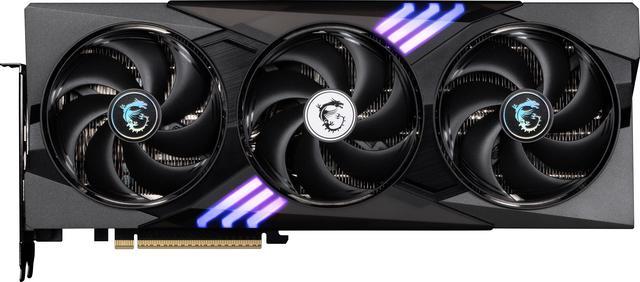
MSI Gaming Trio RTX 5070 OC
Pros
- Highest factory boost clock (2625 MHz) of any RTX 5070 AIB
- TRI FROZR 4 with STORMFORCE fans runs perceptibly quiet under gaming loads
- RGB lighting that doesn't look embarrassing
- $70 less than the TUF OC
Cons
- Runs 3-5°C warmer than TUF under extended stress testing
- Triple-slot footprint limits SFF compatibility
- Slightly less review coverage than ASUS at launch
Price as of May 11, 2026 — see current price on Amazon.
MSI's Gaming Trio OC posts the highest out-of-the-box boost clock in the entire RTX 5070 lineup at 2625 MHz, edging the TUF OC by 15 MHz. That gap won't appear in your benchmark numbers, but the cooling story here is worth attention.
The TRI FROZR 4 system uses three STORMFORCE fans with updated blade geometry and a larger heatsink surface than previous-generation MSI cards. In quiet-build scenarios, the Trio runs perceptibly quieter under sustained gaming than the Ventus 2X OC, which has only two fans working harder to move the same heat. For a media center PC, a living room build, or anyone gaming with headphones off, that difference is real.
At $670, you're paying $70 more than the Ventus 2X OC and $70 less than the TUF OC. That positioning makes it a compelling choice if silence is the priority but you still want triple-fan thermal coverage. In extended stress tests the TUF OC does run a few degrees cooler, so for workloads beyond gaming (long encodes, stable diffusion runs), the TUF's margin shows up. For gaming-only use, the Trio OC is a genuine alternative.
Gigabyte Eagle OC SFF GeForce RTX 5070
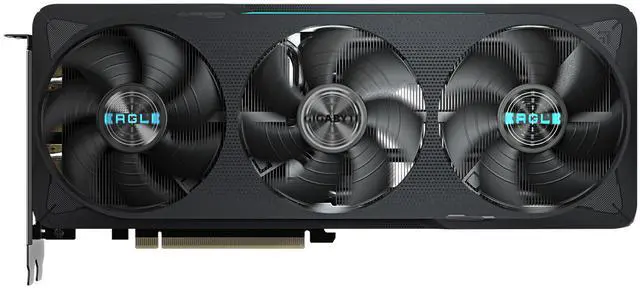
Gigabyte Eagle OC SFF GeForce RTX 5070
Pros
- WINDFORCE alternate-spin fans reduce turbulence for better heatsink airflow
- 2-slot form factor in a triple-fan cooler, fits cases the TUF won't
- Ventilated backplate adds passive exhaust path
- 3-year Gigabyte warranty
Cons
- $660 is awkward pricing between better-cooled Trio OC and cheaper Ventus 2X
- Less launch review coverage than ASUS or MSI AIBs
- WINDFORCE system runs slightly warmer than TRI FROZR 4 at the same TDP
Price as of May 11, 2026 — see current price on Amazon.
Gigabyte built the Eagle OC SFF around their WINDFORCE system using three alternate-spinning fans. The alternating rotation reduces turbulence between adjacent fan blades, improving static pressure into the heatsink fins. At 2-slot width, it's one of the more compact designs that still runs triple fans, which is a genuine engineering achievement for a 250W GPU.
The pricing is the awkward part. At $660, it's $10 less than the MSI Gaming Trio OC, which has a more established review record and quieter operation. For most buyers, that $10 gap points directly at the Trio OC instead.
The Eagle OC SFF earns its spot for one specific scenario: you need a 2-slot card but don't want to accept the dual-fan Ventus 2X OC's thermal profile. If your case physically can't fit a 3-slot card and you want three fans inside a 2-slot footprint, the Eagle OC SFF is one of the only options in this lineup that delivers it.
MSI Ventus 2X OC RTX 5070
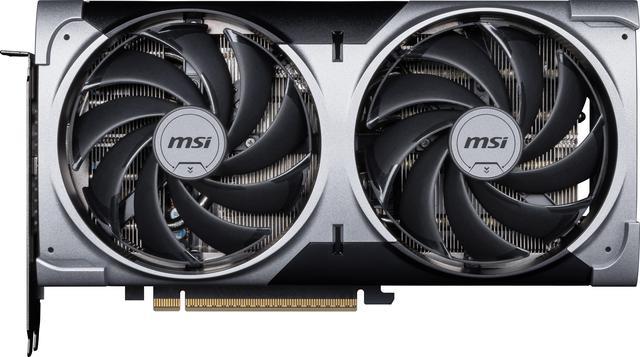
MSI Ventus 2X OC RTX 5070
Pros
- $619 is the cheapest full-performance RTX 5070 AIB available
- 2-slot design fits virtually any mid-tower
- Updated TORX Fan 5.0 blades are quieter than older Ventus generations
- Clean, minimal aesthetic with no RGB if that suits your build
Cons
- Dual-fan thermal profile runs 5-8°C warmer under sustained load than triple-fan cards
- 2557 MHz boost is the lowest factory OC in this lineup
- Two fans at high RPM under stress are audible, unlike the TUF or Trio
Price as of May 11, 2026 — see current price on Amazon.
The Ventus 2X OC doesn't pretend to be a premium product, and it doesn't need to. At $619, it's roughly $120 less than the TUF OC for what is, in typical 1440p gaming sessions, almost identical real-world performance. The thermal delta between this and the premium triple-fan cards is small during normal play.
Push it hard in a poorly ventilated case, or run it through a long video encode, and you'll see the 5-8°C gap that two fans versus three fans creates. MSI updated the TORX Fan 5.0 blade geometry in this generation, so the improvement over TORX 4.0 is real. It's not Trio-quiet, but it's not uncomfortable either.
The 2-slot footprint is a genuine advantage for mid-towers with GPU sag concerns or cramped PCIe configurations. Cards that the 3.125-slot TUF can't physically install in just work here.
For a workstation-style PC that runs productivity apps with occasional gaming, or a secondary machine where thermals aren't under pressure, the Ventus 2X OC is a serious consideration. For a dedicated gaming rig where the card runs at sustained load regularly, the ASUS Prime OC at $549 or the Trio OC at $670 are better fits.
ASUS Prime GeForce RTX 5070 OC
ASUS Prime GeForce RTX 5070 OC
Pros
- Closest to MSRP of any verified RTX 5070 AIB in stock
- 2.5-slot SFF-ready design drops into cases the TUF OC can't
- Dual BIOS for toggling between performance and silent fan profiles
- 2587 MHz OC, 75 MHz above reference
Cons
- Dual Axial-tech fans run louder than the TUF OC under sustained load
- Stock availability is inconsistent. not always on the shelf when you want it
- Phase-change GPU thermal pad can complicate future heatsink removal
Price as of May 11, 2026 — see current price on Amazon.
ASUS designed the Prime specifically for small form factor cases. At 2.5 slots and 290mm in length, it fits builds that reject the TUF OC's 3.125-slot footprint. The Dual BIOS switch between performance and silent fan profiles is a useful inclusion for cases where noise is a real constraint.
At $549.99, the Prime OC sits closest to NVIDIA's FE reference price of any in-stock AIB on this list. That $190 savings versus the TUF OC buys you essentially the same gaming performance, since a 23 MHz clock difference (2610 vs 2587 MHz) has no meaningful impact in games. What you're giving up is the superior triple-fan thermal design and the TUF's deeper review track record.
Stock availability is genuinely inconsistent, which is the Prime's main practical weakness. If you see it in stock at $549 on Amazon or Newegg, buy it. If you need a card today and the Prime is sold out, the MSI Ventus 2X OC at $619 is the next best value move.
PNY GeForce RTX 5070 OC Triple Fan
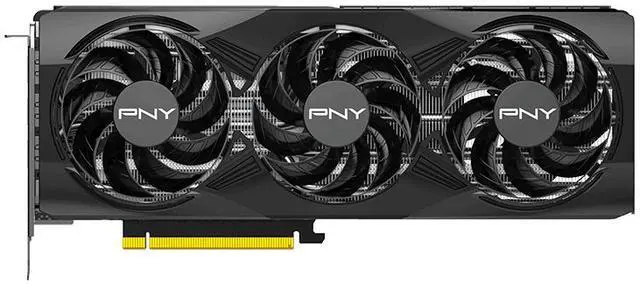
PNY GeForce RTX 5070 OC Triple Fan
Pros
- 2.4-slot compact design with triple fans is an unusual combination at this price
- Buyer reports on Best Buy show temps staying under 65°C during gaming
- Fans are quiet at typical gaming loads
Cons
- PNY's RMA process is slower than ASUS or Gigabyte in practice
- Limited independent review coverage makes long-term reliability harder to gauge
- At $569, the ASUS Prime OC at $549 is a better buy when in stock
Price as of May 11, 2026 — see current price on Amazon.
PNY doesn't generate the review coverage that ASUS and MSI do, but the OC Triple Fan is a legitimate card at the right price. The 2.4-slot form factor squeezes triple fans into a compact footprint, and customer feedback on Best Buy reports cooling well-managed around 65°C in typical gaming with surprisingly quiet fans.
The hesitation is the support side. PNY's warranty covers three years, but their RMA handling is slower and less transparent than ASUS's or Gigabyte's programs based on buyer reports across multiple GPU generations. For a $569 purchase, that's a real consideration.
If you find the Prime OC in stock at $549, buy that instead. If it's sold out and you want something in the $549-$619 range, the PNY OC Triple Fan is a capable alternative rather than a risky gamble.
What to Look for in an RTX 5070 AIB Card
Slot Width and Case Compatibility
The RTX 5070 AIBs span from 2-slot (MSI Ventus 2X OC, Gigabyte Eagle OC) to 3.125-slot (ASUS TUF OC). Before buying, measure your case's maximum GPU width and clearance. Most mid-towers handle a 3-slot card without issue, but mATX and mini-ITX cases frequently top out at 2-slot or 2.5-slot.
Factory Overclock vs. Reference Clock
NVIDIA's reference boost for the RTX 5070 is 2512 MHz. Every AIB here beats it, with the MSI Trio OC at 2625 MHz being the highest and the Ventus 2X OC at 2557 MHz being the lowest. That 68 MHz spread across the entire lineup produces maybe a 2-3% performance difference in games. The cooling and acoustics story is more impactful for most buyers than chasing the highest boost clock.
Cooling Performance and Acoustic Trade-offs
The TUF OC's 26 dBA at full load is the benchmark for this generation. MSI's Trio OC and the ASUS Prime OC also run quietly during typical gaming. The Ventus 2X OC is louder under sustained workloads because two fans are moving the same heat load as three fans on the larger cards. For a silent-PC build, prioritize the TUF OC or MSI Trio OC. For a gaming rig where you're wearing headphones anyway, the Ventus 2X OC is fine.
How Much Premium Over MSRP Is Worth It
NVIDIA's $549 Founders Edition is scarce. AIB cards run from $549 (ASUS Prime OC) to $739 (TUF OC). The $190 spread between cheapest and most expensive buys better cooling, quieter fans, and stronger warranty support. If you run the GPU in a well-ventilated mid-tower for daily gaming, the Ventus 2X OC or Prime OC delivers nearly identical gaming performance at meaningfully lower cost. If the GPU lives in a small case, runs hot workloads, or you want the peace of mind of better thermal headroom, the premium cards earn it.
DLSS 4 Multi Frame Generation
Every RTX 5070 AIB on this list supports DLSS 4 with Multi Frame Generation. The performance difference between a 2557 MHz and 2625 MHz card in games is under 3% and essentially disappears once Multi Frame Generation is active. For most buyers, the slot width and thermal design decisions matter more than the clock speed differences across these models.
RTX 5070 vs. RX 9070 XT: Worth Comparing First
If you haven't fully committed and value is the top priority, check our RX 9070 XT roundup before you checkout. AMD's card performs within 5-10% of the RTX 5070 at 1440p and hits street prices closer to $499. NVIDIA's DLSS 4 Multi Frame Generation is a genuine differentiator in supported titles, and the RTX 5070 wins clearly at 4K. But if you're gaming at 1440p on a 60-165Hz monitor without 4K ambitions, the RX 9070 XT closes most of the gap for $100-$150 less.
Bottom Line
The ASUS TUF Gaming RTX 5070 OC Edition is the right call for most buyers: proven thermal performance, the best acoustic profile in the lineup, and more independent review coverage than any other RTX 5070 AIB. At $739 it's a real premium, but the peace of mind is well-documented.
If $739 isn't the move, the ASUS Prime OC at $549 is the best value on this list when you can catch it in stock. The MSI Gaming Trio OC at $670 is the pick for silent-build enthusiasts who want triple fans without the full TUF premium. For SFF builders, the Gigabyte Eagle OC SFF or ASUS Prime OC both fit where the TUF can't go.
Frequently asked questions
- What is the best RTX 5070 graphics card to buy in 2026?
- The ASUS TUF Gaming RTX 5070 OC Edition is the safest all-around pick at $739. It has the best-reviewed thermal performance in the lineup (61°C under load, 26 dBA) and the deepest review coverage of any RTX 5070 AIB. If budget matters more, the ASUS Prime OC at $549 offers nearly identical gaming performance and is the best value on this list when in stock.
- What's the difference between the MSI Ventus 2X OC and the MSI Gaming Trio OC?
- The Ventus 2X OC has two fans in a 2-slot design at $619. The Gaming Trio OC has three STORMFORCE fans in a 3-slot design at $670. The Trio runs 5-8°C cooler and quieter under sustained gaming load. For most dedicated gaming builds, the $50 premium for the Trio is worth it if fan noise is a concern.
- Is the RTX 5070 better than the RX 9070 XT?
- At 1440p the gap is 5-10% in the RTX 5070's favor. The bigger advantage is DLSS 4 Multi Frame Generation, which can multiply frame rates in supported games. For 4K gaming or high-refresh 1440p, the RTX 5070 is the stronger choice. For 1080p or standard 1440p at 60-144Hz, the RX 9070 XT delivers comparable real-world gaming for $100-$150 less.
- What PSU do I need for an RTX 5070?
- NVIDIA recommends a 750W PSU for the RTX 5070. The card's TDP is 250W and it uses a single 16-pin (12VHPWR) power connector. A quality 650W unit can technically power this card, but 750W provides comfortable headroom for your full system under simultaneous CPU and GPU gaming load.
- Are RTX 5070 AIB cards actually in stock at reasonable prices?
- As of May 2026, AIB cards are widely available at $549-$739. The NVIDIA Founders Edition at $549 remains scarce, but the ASUS Prime OC at $549.99 is the most MSRP-adjacent AIB that regularly shows up in stock. The ASUS TUF OC and MSI Gaming Trio OC have the most consistent availability in the $650-$740 range. Setting a price alert on CamelCamelCamel for the Prime OC is worth doing if you're patient.
- Will the RTX 5070 handle 4K gaming?
- Yes, with context. At native 4K the RTX 5070 performs roughly like an RTX 4070 Ti Super, handling 4K at high settings and 60fps in most demanding titles. With DLSS 4 Quality mode and Multi Frame Generation enabled, 4K performance jumps considerably in supported games. For native 4K at maximum settings in the most demanding current titles, the RTX 5070 Ti is the more capable card.
How We Test
We score products by combining spec-level research, pricing history, trusted third-party benchmarks, and owner sentiment from high-signal sources.
- Performance and real-world value in the category this guide targets
- Price-to-performance and deal consistency over recent pricing windows
- Build quality, reliability patterns, and known long-term issues
- Recommendation refresh cadence to keep these picks current
Author
TheTechSearch Editorial Team
Independent product reviewers & PC builders
We test and compare real-world specs, price trends, and user feedback to recommend gear that actually makes sense to buy.