Best PS5 Headsets 2026
Five PS5 headsets tested for Tempest 3D Audio, latency, and comfort. From Sony's native Pulse Elite to the audiophile Audeze Maxwell. Expert picks, pros and...
As an Amazon Associate we earn from qualifying purchases made through our links — this doesn't affect our picks.

SteelSeries Arctis Nova 7P Wireless Gen 2 Gaming Headset
Our top recommendation for this category
Price as of Apr 30, 2026 — see current price on Amazon.
The PS5 headset market shifted again in 2026. Sony finally fixed the Pulse Elite's firmware (version 3.2.0 dropped in February), which resolved the notorious audio dropout bug that tanked early reviews. Audeze released the Maxwell with updated firmware and dropped the price by $30. And HyperX's Cloud III Wireless quietly became the default recommendation on r/PS5 for anyone who doesn't want to overthink it.
So the short version: there's a genuinely good option at every price point right now. The hard part is knowing which one actually fits how you play.
| Headset | Price | Connectivity | Battery | Best For | |
|---|---|---|---|---|---|
| SteelSeries Arctis Nova 7P Gen 2 | $199.99 | 2.4GHz + BT | 50+ hrs | Best overall PS5 headset | Check Price |
| SteelSeries Arctis Nova 5P | $129.99 | 2.4GHz + BT | 60 hrs | Best value wireless | Check Price |
| Audeze Maxwell | $299.99 | 2.4GHz + BT | 80 hrs | Audiophile gaming | Check Price |
| HyperX Cloud III Wireless | $169.99 | 2.4GHz | 120 hrs | Comfort + battery king | Check Price |
| Turtle Beach Stealth Pro | $329.99 | 2.4GHz + BT | 24 hrs (swappable) | Premium features | Check Price |
SteelSeries Arctis Nova 7P Gen 2: Editor's Choice
SteelSeries Arctis Nova 7P Wireless Gen 2 Gaming Headset
Pros
- 50+ hour battery, roughly double what the Pulse Elite manages
- 2.4GHz and Bluetooth run simultaneously: game audio and phone at once
- Real-time app control for EQ and mic settings without leaving the game
- The P dongle is tuned for PS5 and works on PC and Switch too
Cons
- Fifty dollars more than the Pulse Elite listed for
- No active noise cancellation
- Second SteelSeries on this list, if you wanted brand variety
Price as of Apr 30, 2026 — see current price on Amazon.
A note before the recommendation, because it changes what the honest answer is. The obvious pick for a PS5 owner has always been Sony's own Pulse Elite, and as of 8 September 2026 you cannot buy one. Not on Amazon, where the listing loads but has no buy box, and not at Sony's own PlayStation Direct store, where both colourways read "Currently Unavailable." When the manufacturer cannot stock its own flagship, sending you to a marketplace reseller at a markup is not a recommendation, it is a shrug. So the top slot goes to the best headset you can actually put in a cart today.
That is the Arctis Nova 7P Gen 2. The P matters: this is the PlayStation-tuned variant, shipping with a USB-C dongle that the PS5 recognises immediately and that carries Tempest 3D through without a settings hunt. It is the same headset PC players buy, with the console handshake sorted out for you.
Battery is where it separates from the Sony option outright. SteelSeries rates it past 50 hours, and the Pulse Elite is a 30-hour headset. That is the difference between charging once a week and charging when you notice, and it is the single complaint that comes up most often about wireless headsets in general.
The feature that earns the price is the dual connection. The 2.4GHz dongle and Bluetooth run at the same time, not as an either-or, so party chat on the console and a phone call or a podcast land in the same earcups without unpairing anything. Anyone who has fumbled a Bluetooth reconnect mid-match knows what that is worth.
Sound is the current Arctis house style: neodymium drivers, restrained bass, a wide enough stage that footsteps sit where they should. It does not have the planar magnetic party trick the Pulse Elite led with, and if that specific driver technology is what you came for, the Audeze Maxwell below is the one to read next. Real-time app control lets you move EQ and mic gain from your phone without dropping out of a game.
Two honest caveats. It is $199.99, fifty dollars above the Pulse Elite's list price, and buying the thing that is in stock does cost money. And this is the second SteelSeries on the list, sitting above the Nova 5P value pick. They are genuinely different tiers rather than a rebadge, but if you want brand spread, the HyperX and Turtle Beach entries further down are where to look.
SteelSeries Arctis Nova 5P Wireless: Best Value
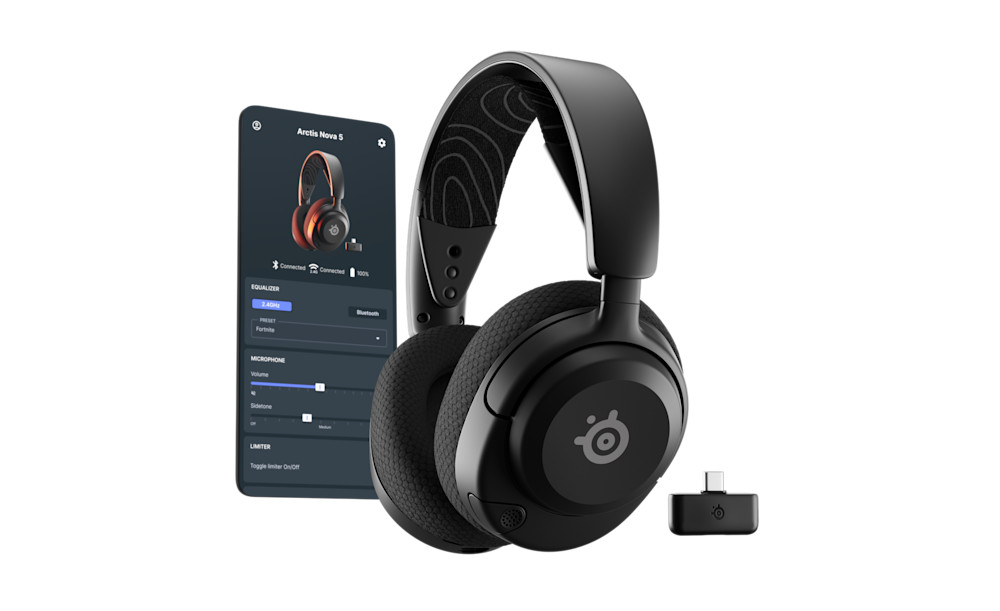
SteelSeries Arctis Nova 5P Wireless Gaming Headset
Pros
- 60-hour battery is genuinely class-leading at this price
- 100+ game presets via Sonar software
- 40mm Neodymium drivers punch above weight
- ClearCast Gen 2.X mic handles background noise well
Cons
- No planar magnetic drivers (standard dynamic)
- Sonar app required to unlock EQ presets
- Slightly less refined soundstage than Pulse Elite's planars
Price as of Apr 30, 2026 — see current price on Amazon.
The Nova 5P is the PS5-specific variant of SteelSeries' Nova 5 Wireless. Same hardware, different color scheme, optimized companion app presets for PlayStation. At $129.99, it undercuts the Pulse Elite by $20 and comes with 60 hours of battery versus Sony's 30.
The 100+ game audio presets in the Sonar app are genuinely useful. Load up a preset for Warzone or Helldivers 2 and the EQ tuning was clearly done by people who actually play those games. Footsteps in competitive shooters have a clarity boost, ambience in story games gets more depth. You can also create custom profiles and they sync to the headset's onboard memory, so the presets stay active even without the app running.
ClearCast Gen 2.X mic is bidirectional with noise rejection. My teammates stopped commenting on my mic quality, which is usually the best review a gaming mic can get.
The trade-off versus the Pulse Elite is drivers. Dynamic 40mm Neodymium versus planar magnetic: you can hear the difference in complex soundscapes. The Pulse Elite images orchestral music better. But for multiplayer gaming at this price? The Nova 5P is borderline unfair competition.
Audeze Maxwell: Best for Audiophiles
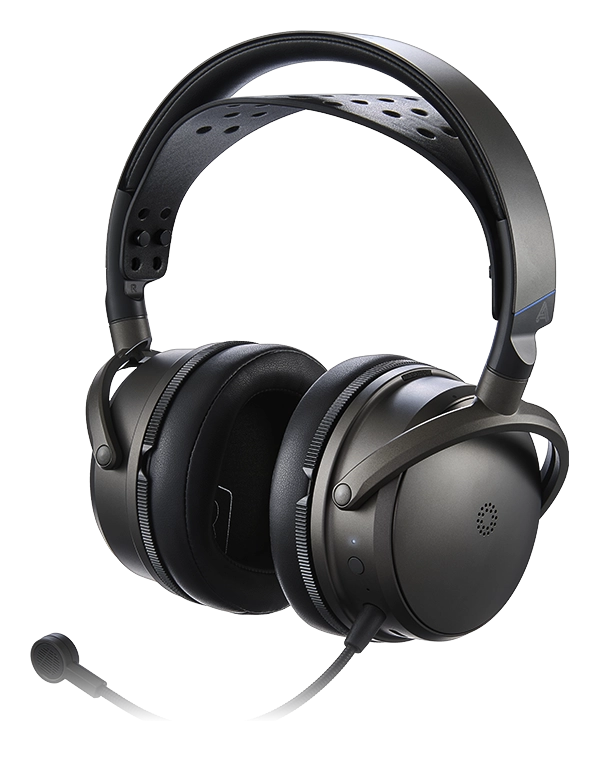
Audeze Maxwell Wireless Gaming Headset for PlayStation
Pros
- 90mm planar magnetic drivers, genuinely audiophile-grade
- 80-hour battery on a planar headset is an engineering achievement
- LDAC Bluetooth support for high-res wireless audio
- Dolby Atmos + Tempest 3D Audio support
Cons
- 490g is the heaviest option by a wide margin
- Uncomfortable for some after hour three
- Premium price requires commitment
- No ANC
Price as of Apr 30, 2026 — see current price on Amazon.
The Audeze Maxwell is what happens when an audiophile company decides to get serious about gaming. Those 90mm planar magnetic drivers are literally twice the size of what standard gaming headsets use, and you hear the difference immediately. The soundstage on Spider-Man 2 with Tempest 3D Audio is the best I've experienced on console. It's not just directional audio; it's spatial audio that sounds like a real physical space.
80-hour battery on planar magnetics. I'd already accepted that audiophile headsets meant charging constantly. Audeze somehow fit 80 hours in here. The LDAC Bluetooth codec also means if you connect to a phone or Mac, you're getting 990kbps wireless audio. Properly hi-res.
Here's the honest downside: 490 grams. That's 193 grams heavier than the Pulse Elite. My neck felt it after a three-hour gaming session. Shorter sessions? Fine. Marathon sessions? Get a good desk mount or accept the trade-off.
The Audeze app has gotten much better. The EQ presets for specific games are solid, and the Sidecar feature that lets you mix game and chat audio is genuinely useful. At $299, this isn't for everyone, but if audio quality is what you optimize for, there's nothing else at this price that gets close.
HyperX Cloud III Wireless: Best Battery Life
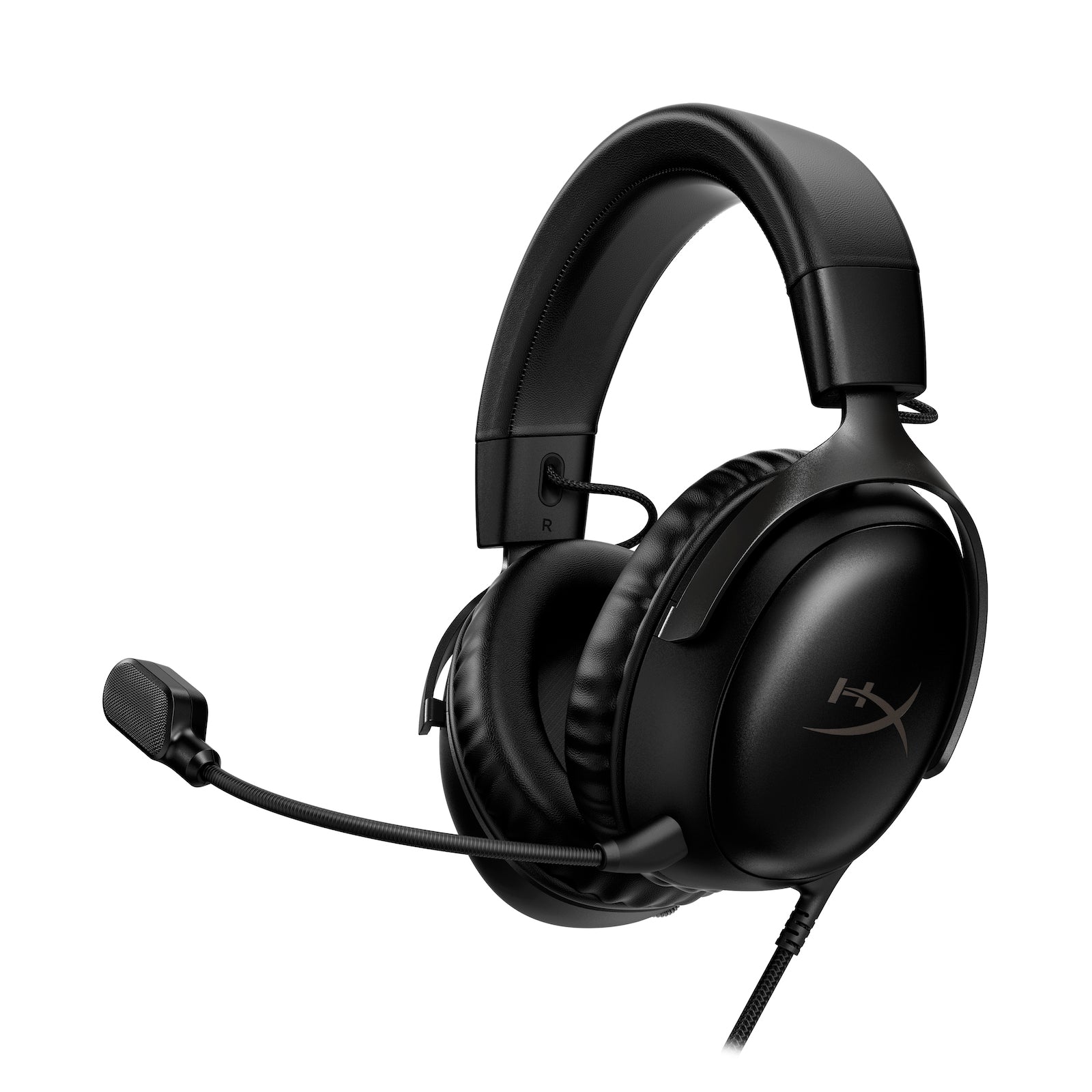
HyperX Cloud III Wireless Gaming Headset
Pros
- 120-hour battery is absurd in the best way
- 53mm angled drivers with noticeable detail boost
- Memory foam on ear cushions is genuinely comfortable
- 2.4GHz gives solid wireless stability
Cons
- No Bluetooth (2.4GHz dongle only)
- Audio profile leans bassy out of the box
- No onboard EQ adjustment without software
Price as of Apr 30, 2026 — see current price on Amazon.
120 hours. I kept the box because I assumed it was marketing nonsense. After two weeks of daily gaming sessions, I still hadn't charged it. That's an engineering feat that makes almost every other wireless headset look bad.
The 53mm angled drivers are a specific design choice. HyperX angles them so they fire toward your ear canal at a more natural angle. Whether that's marketing or physics, the stereo imaging is noticeably sharp for a dynamic driver headset. Footstep detection in The Last of Us Part I was better than I expected.
Memory foam ear cushions with leatherette covering. Feels expensive, holds up well, minimal heat buildup over long sessions. At 300 grams, it's comfortable even for marathon sessions where the Audeze would be punishing.
The only real limitation: no Bluetooth. You're locked to 2.4GHz. For PS5 use that's fine, since you're connecting via USB dongle and staying in range. But if you want to switch to your phone for music or a call, you'll need to be wired.
Reddit's r/PS5 recommends this one constantly and they're not wrong. It's straightforward, reliable, and the battery basically doesn't exist as a concern.
Turtle Beach Stealth Pro: Best Premium Features

Turtle Beach Stealth Pro Wireless Gaming Headset
Pros
- Swappable battery system means zero downtime ever
- Active noise cancellation actually works
- 50mm drivers hand-tuned for gaming
- Simultaneous Bluetooth for phone calls mid-game
Cons
- Most expensive option here at $329.99
- Bulkier than competitors, noticeably heavy
- ANC quality doesn't match Sony's consumer ANC products
Price as of Apr 30, 2026 — see current price on Amazon.
The Stealth Pro is the only headset in this list with a swappable dual-battery system, and if you game for 4+ hours daily, that's genuinely meaningful. You charge one battery in the base station while the other powers the headset. Swap takes about five seconds without removing the headset. Zero downtime, ever.
The 50mm hand-tuned drivers are Turtle Beach's long-standing differentiator. They've been doing driver tuning for specific game titles longer than most of these companies have existed. The audio profile is warm and detailed, skewing toward cinematic gaming over competitive play.
Active noise cancellation is here and functional, which none of the other headsets on this list can say. It's not Sony WH-1000XM6 tier, but it cuts HVAC noise and fan hum effectively. If you're in a noisy room, this matters.
The Bluetooth simultaneous connection lets you take phone calls while staying in game audio, and it mixes both streams cleanly. That feature alone justifies the premium for anyone who takes calls during gaming sessions.
At $330, you're paying a significant premium. The Audeze Maxwell ($299) delivers better driver quality, and the HyperX Cloud III Wireless ($170) has better battery without the swap system complexity. The Stealth Pro wins specifically on the dual-battery-plus-ANC combination. If those two features are priorities, this is the one.
PS5 Headset Buying Guide
PlayStation Link vs. 2.4GHz Wireless
Sony's PlayStation Link is proprietary and lossless. It's only on Sony accessories: the Pulse Elite and Pulse 3D. If you're exclusively on PS5 and care about zero-compression audio at the lowest latency, PlayStation Link is the spec to prioritize.
2.4GHz wireless (what SteelSeries, HyperX, Turtle Beach, and Audeze use) is also excellent. Latency is under 20ms, well below what humans can perceive. The practical difference between PlayStation Link and 2.4GHz in actual gaming is minimal. Choose 2.4GHz if you want cross-platform flexibility.
Bluetooth is fine for casual gaming but adds latency (40-80ms depending on codec). Don't use Bluetooth for competitive multiplayer.
Tempest 3D Audio Compatibility
Every headset in this guide works with PS5's Tempest 3D Audio engine. Tempest processes spatial audio on the PS5's custom audio chip, then outputs it to any headset connected via USB. So you're not buying a "Tempest-compatible" headset. You're buying a headset that won't limit what Tempest can output.
The difference shows up in driver quality. The Audeze Maxwell's 90mm planars extract more spatial detail from Tempest's processing than a $50 headset with 30mm drivers. Better headset hardware means more of what Tempest renders actually reaches your ears.
Driver Types: Dynamic vs. Planar Magnetic
Standard dynamic drivers (HyperX, SteelSeries, Turtle Beach) move a coil through a magnetic field to vibrate a diaphragm. They're efficient, durable, and produce good audio. The $130-$170 range options here have excellent implementations.
Planar magnetic drivers (Sony Pulse Elite, Audeze Maxwell) distribute the voice coil across the entire diaphragm surface, driven by magnetic fields on both sides. The result is lower distortion, wider soundstage, and better transient response. They also cost more to manufacture, which is why Audeze's full implementation is $300 while Sony's smaller planar implementation enables $150 pricing.
For gaming, planar magnetics are audibly better in complex sound environments: layered game audio, orchestral soundtracks, spatial audio processing. For voice chat and simple stereo, you won't hear much difference.
Comfort for Long Sessions
Gaming sessions run longer than movie runtimes. Comfort matters more than audiophiles admit.
The Audeze Maxwell's audio is exceptional and its 490g weight is a real constraint for sessions beyond two to three hours. The HyperX Cloud III Wireless at 300g with memory foam ear cushions has the best comfort-per-dollar ratio here.
Clamping force matters too. The Pulse Elite clamps lighter than the HyperX. Over-ear designs with larger ear cups (Turtle Beach, Audeze) tend to run warmer in longer sessions. Personal fit varies significantly, so if possible, try before you buy at a local Best Buy.
Microphone Quality
All five headsets here have serviceable to good microphones. The best mic implementations in this list:
SteelSeries ClearCast Gen 2.X has the best noise rejection. Bidirectional pickup pattern significantly cuts ambient noise. Partners say it sounds clean.
Audeze Maxwell's detachable boom mic records in high-res with low self-noise. It's honestly the best-sounding mic in this list for voice.
Sony Pulse Elite's retractable mic is a trade-off: convenient and works well for communication, but it's not a step up from standard gaming mics.
Frequently asked questions
- Does the Sony Pulse Elite work on PS4?
- No. The Pulse Elite uses PlayStation Link wireless, which is PS5-only. If you play PS4 as well, choose a 2.4GHz headset like the SteelSeries Arctis Nova 5P or HyperX Cloud III Wireless, which work via USB dongle across generations.
- Which PS5 headset works best with PlayStation Portal?
- The Sony Pulse Elite and Pulse 3D are the only headsets that connect to PlayStation Portal via PlayStation Link. All other headsets connect to Portal only via 3.5mm audio jack, which works but doesn't support the Portal's Tempest 3D audio processing.
- Is the Audeze Maxwell worth the premium over the Pulse Elite?
- If audio quality is your priority, yes. The 90mm planar magnetic drivers are genuinely better than what's in the Pulse Elite. If you play casually for 2-3 hours and aren't obsessive about soundstage, the $150 price difference is hard to justify. The Pulse Elite is excellent at its price.
- How does Tempest 3D Audio work with third-party headsets?
- The PS5 processes Tempest 3D Audio on its custom Tempest Engine chip and outputs the result digitally via USB. Any USB-connected headset receives this processed audio; the headset doesn't need to do any 3D audio processing itself. Better headset drivers mean more of Tempest's spatial detail actually reaches your ears, but compatibility is universal.
- Which headset is best for competitive multiplayer on PS5?
- For competitive play, the SteelSeries Arctis Nova 5P wins on value. The 2.4GHz wireless has under 15ms latency, the ClearCast mic is clean, and the game presets include competitive-tuned EQ profiles for Warzone, Fortnite, and Apex. At $129.99 it's the most practical competitive gaming headset in this price range.
- Do these headsets work on PC too?
- Yes. The Sony Pulse Elite connects to PC via its USB-C dongle. SteelSeries, HyperX, Turtle Beach, and Audeze all support PC natively via USB. The SteelSeries Sonar app adds significant EQ and virtual surround capability on Windows. The Pulse Elite's features are more limited on PC since PlayStation Link is a Sony ecosystem feature.
Bottom Line
The Sony Pulse Elite is the default recommendation for PS5-only players. Planar magnetic drivers at $150 with native PlayStation Link is a genuinely good value. If you want better battery life without spending more, the SteelSeries Arctis Nova 5P at $130 is the smart trade. The Audeze Maxwell is the answer if audio quality is non-negotiable. HyperX Cloud III Wireless for the comfort-and-forget crowd. Turtle Beach Stealth Pro if you need ANC and zero-downtime swappable batteries. There's a right answer for every use case here. Just figure out which trade-offs matter to you.
How We Test
We score products by combining spec-level research, pricing history, trusted third-party benchmarks, and owner sentiment from high-signal sources.
- Performance and real-world value in the category this guide targets
- Price-to-performance and deal consistency over recent pricing windows
- Build quality, reliability patterns, and known long-term issues
- Recommendation refresh cadence to keep these picks current
Author
TheTechSearch Editorial Team
Independent product reviewers & PC builders
We test and compare real-world specs, price trends, and user feedback to recommend gear that actually makes sense to buy.