Best 65-Inch TVs 2026: Top Picks for Every Budget
The best 65-inch TVs of 2026 ranked by value, picture quality, and gaming performance. From the Samsung Q80D QLED to the LG C5 OLED and Samsung S95F QD-OLED.
As an Amazon Associate we earn from qualifying purchases made through our links — this doesn't affect our picks.
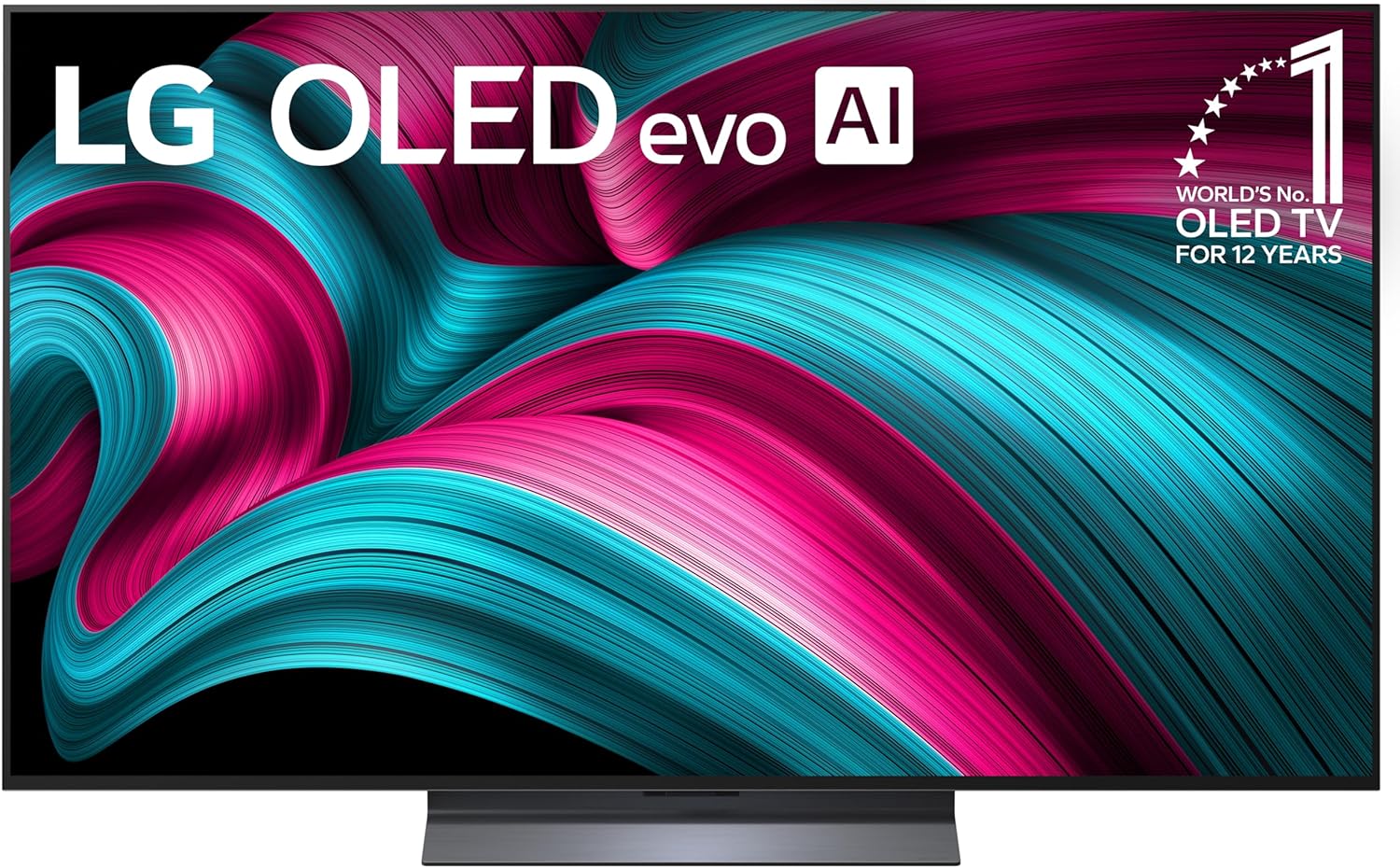
LG 65-Inch Class OLED evo AI 4K C5 Series Smart TV (2025)
Our top recommendation for this category
Price as of Oct 8, 2026 — see current price on Amazon.
In this guide
Best 65-Inch TVs 2026: Top Picks for Every Budget
65 inches is the sweet spot for living room TVs. Big enough to fill a wall properly. Small enough to not require a remodel. And in 2026, the 65-inch class has genuinely excellent options at every price from $500 to $1,975.
Whether you're after an OLED for film nights, a bright Mini-LED for sports, or the best gaming TV you can get, the 65-inch options this year are the strongest they've ever been.
Quick Picks
- Best overall: LG C5 OLED: best picture quality for most rooms
- Best for gaming: Samsung S95F QD-OLED: 165Hz, glare-free, lowest input lag
- Best budget QLED: Samsung Q80D: solid bright-room TV under $500
- Best value Mini-LED: Hisense U8QG (2025 successor to the U8N): $1,097.97 as of September 2026
1. LG C5 OLED 65": Best Overall
LG 65-Inch Class OLED evo AI 4K C5 Series Smart TV (2025)
Pros
- Infinite contrast ratio: true black at 65 inches is stunning
- Best-in-class webOS smart TV interface
- 144Hz with full VRR and ALLM gaming support
- Accurate color out of the box, no calibration needed
Cons
- Not as bright as QD-OLED or Mini-LED in peak HDR highlights
- Higher price than Mini-LED alternatives
Price as of Oct 8, 2026 — see current price on Amazon.
At 65 inches, the gap between OLED and Mini-LED becomes more noticeable from a couch. The LG C5 is where OLED picture quality makes the most sense for most people.
The self-lit OLED pixels produce true black. In a dark or moderately lit room, the contrast is immediately visible compared to any LCD-based TV. The Alpha 9 AI Gen8 processor handles motion well, and LG's webOS remains the best smart TV software available.
The 144Hz panel with G-Sync compatible and FreeSync Premium Pro certification makes the C5 a strong living room gaming TV as well.
Price note: The 65" C5 typically runs $200-300 more than the 55". Watch for sales. LG regularly discounts this model at major retailers.
Buy it if: You want the best overall picture in a living room that isn't flooded with sunlight.
2. Samsung S95F QD-OLED 65": Best for Gaming and Bright Rooms
Samsung QN65S95F 65-Inch Class OLED 4K S95F Vision AI Smart TV (2025)
Pros
- 165Hz with near-zero input lag for competitive gaming
- Glare-free matte screen handles bright rooms better than glossy OLEDs
- QD-OLED delivers richer, more saturated colors at high brightness
- Samsung Gaming Hub for Xbox Game Pass and GeForce Now streaming
Cons
- Most expensive pick in this roundup
- Tizen smart TV OS less intuitive than LG webOS
Price as of Oct 8, 2026 — see current price on Amazon.
The Samsung S95F uses QD-OLED technology: a quantum dot layer over an OLED panel that increases peak brightness to around 2,000 nits while maintaining OLED's infinite contrast. At 65 inches in a bright living room, this extra brightness makes a real-world difference in HDR content.
The matte anti-glare screen is the practical differentiator for anyone with windows or overhead lights near their TV. Glossy OLED panels (including the LG C5) can show significant reflections in bright rooms. The S95F handles ambient light better than any other OLED option.
At 165Hz with under 1ms response time, it's the best gaming TV in the 65-inch class.
Buy it if: You game seriously, have a bright room, or want the highest performance OLED regardless of cost.
3. Samsung Q80D QLED 65": Best Budget QLED
Samsung 65-Inch Class QLED 4K Q80D Series Smart TV (2024)
Pros
- Direct Full Array backlight with good local dimming
- Wide color gamut (Quantum Dot) looks vibrant on sports and HDR
- Works well in bright rooms
- Solid gaming features at 120Hz
Cons
- No OLED blacks: blooming visible in dark scenes
- 120Hz only (not 144Hz)
- 2024 model, but still widely available new
Price as of Oct 8, 2026 — see current price on Amazon.
The Samsung Q80D is the value pick for buyers who want Samsung quality without paying for OLED. It uses Quantum Dot technology with a direct full-array LED backlight and local dimming to improve contrast over basic edge-lit TVs.
For bright rooms, sports, and casual gaming, it performs solidly. The Quantum Dot color filter gives it the wide color gamut and vibrant saturation that Samsung TVs are known for. In dark scenes, local dimming blooming is visible but not offensive.
At $499.99 for 65 inches, it's a practical choice for secondary TVs, bedrooms, or households that don't watch much dark-scene content.
Buy it if: You want a reliable Samsung TV under $500 and don't need OLED black levels.
4. Hisense U8QG 65": Mini-LED Successor to the U8N
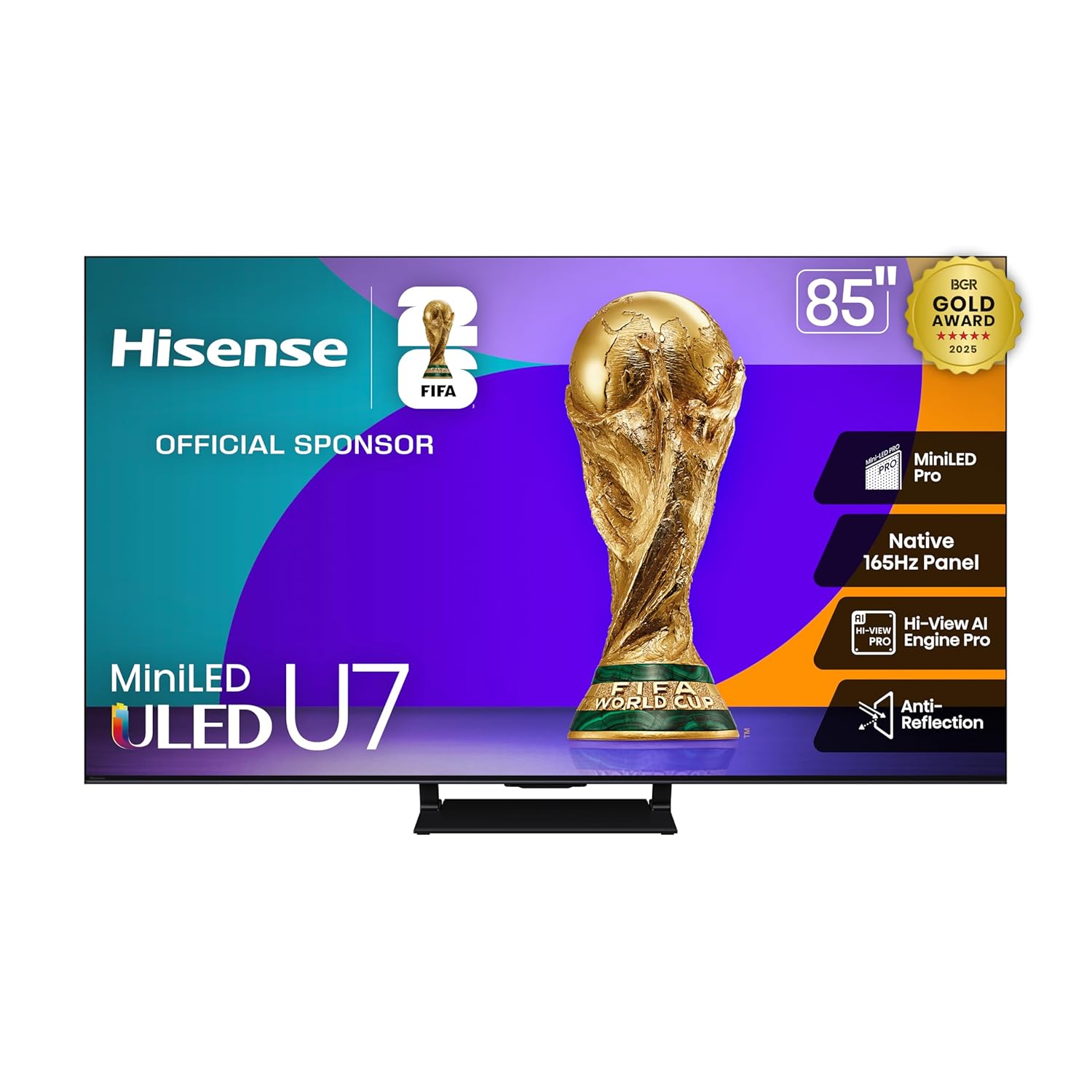
Hisense 65-Inch Class U8 Series Mini-LED ULED 4K Google Smart TV (65U8QG, 2025)
Pros
- Over 2,500 nits peak brightness, brighter than every OLED on this list
- Native 144Hz with excellent VRR gaming support
- Full Array Local Dimming Pro for better-than-average contrast
- Google TV with built-in Chromecast
Cons
- Blooming visible around bright objects on dark backgrounds
- Black levels cannot match true OLED
- Hisense brand reliability less established than Samsung or LG
Price as of Oct 8, 2026 — see current price on Amazon.
The Hisense U8QG is the 2025 successor to the U8N, and at $1,097.97 it's the Mini-LED value pick on this list. It's specced for a native 165Hz panel with VRR up to 288Hz. The U8N it replaces pushed over 2,500 nits in peak highlights, more than any OLED on this list, and that Mini-LED brightness is what makes HDR on sports broadcasts and action movies so impressive.
The trade-off is black levels. In dark scenes, you'll see a subtle glow around bright objects (the "blooming" effect of local dimming). At 65 inches from 8-10 feet away, this is less distracting than at closer viewing distances, but it's visible.
The U8QG suits buyers who watch a lot of daytime sports or HDR in a bright room and want Mini-LED punch without OLED pricing. If your budget tops out under $1,000, the Samsung Q80D is the better fit.
Buy it if: You want Mini-LED brightness for sports and HDR movies in a bright room.
OLED vs Mini-LED at 65 Inches: The Real Difference
At 55 inches, OLED and Mini-LED differences are subtle from normal viewing distance. At 65 inches with 8-10 feet of viewing distance, the differences become more noticeable.
OLED advantages become clearer at 65": The true black from self-lit pixels is visible from farther away. The infinite contrast in dark scenes is apparent. If you watch movies or shows with dark scenes regularly, OLED's advantage is real.
Mini-LED advantages stay real at 65": The Hisense U8 line's brightness advantage is especially visible in brightly-lit rooms and sports content. If you watch during the day with light in the room, the extra brightness matters.
For most buyers in moderately-lit living rooms watching a mix of content, the LG C5 OLED is the better long-term investment despite the higher price.
How to Choose by Use Case
Dark room home theater: LG C5 OLED or Samsung S95F QD-OLED. The infinite contrast is the defining advantage.
Bright living room: Samsung S95F (matte screen) or Hisense U8QG (peak brightness). Both handle ambient light better than glossy OLEDs.
Gaming setup: Samsung S95F for 165Hz serious gaming, or LG C5 for 144Hz at lower cost. Hisense U8QG for 165Hz Mini-LED gaming.
Sports and casual viewing: Hisense U8QG at $1,097.97. Its Mini-LED backlight delivers high brightness for daytime sports.
Budget-first: Samsung Q80D at $499.99 now that the Hisense has moved up in price.
Related Guides
FAQ
What is the best 65-inch TV for under $1,000?
The Samsung Q80D at $499.99 is the pick under $1,000. If you can stretch a little past that line, the Hisense U8QG at $1,097.97 steps up to a Mini-LED backlight and a 165Hz panel for brighter HDR and smoother gaming.
Is a 65-inch OLED TV worth it over a Mini-LED?
In a room with controlled lighting, yes. OLED's infinite contrast and true black levels are visibly better for movie watching and dark-scene content. In a bright room with windows, Mini-LED's brightness advantage narrows the gap significantly. If your living room gets strong sunlight, consider the Samsung S95F (glare-free OLED) or the Hisense U8N (high-brightness Mini-LED).
What is a good viewing distance for a 65-inch TV?
The ideal viewing distance for a 65-inch 4K TV is 8-10 feet. At this distance, you can resolve 4K detail without the screen filling your entire field of view. Closer than 6 feet can cause eye fatigue. Farther than 12 feet reduces the perceived benefit of 4K resolution.
Is the Samsung Q80D or LG C5 better?
For picture quality in a moderately lit room, the LG C5 OLED is better in virtually every way: deeper blacks, more accurate colors, better HDR highlights for most content. The Samsung Q80D is better for budget-conscious buyers who want Samsung build quality without paying the OLED premium. The Q80D costs roughly $900 less at 65 inches.
Should I get a 65-inch or 75-inch TV?
65 inches is appropriate for viewing distances of 8-10 feet. 75 inches works better at 10-12 feet. For most living rooms with standard furniture layout, 65 inches is the practical choice. The price jump from 65" to 75" is typically $200-500 and worth it if your seating distance is consistently over 10 feet.
How We Test
We score products by combining spec-level research, pricing history, trusted third-party benchmarks, and owner sentiment from high-signal sources.
- Performance and real-world value in the category this guide targets
- Price-to-performance and deal consistency over recent pricing windows
- Build quality, reliability patterns, and known long-term issues
- Recommendation refresh cadence to keep these picks current
Author
TheTechSearch Editorial Team
Independent product reviewers & PC builders
We test and compare real-world specs, price trends, and user feedback to recommend gear that actually makes sense to buy.