Best OLED TVs 2026: Top Picks for Picture Quality, Gaming, and Value
The best OLED TVs of 2026 ranked: LG C5, Samsung S95F QD-OLED, Sony Bravia 8 II, and the best budget alternative. Expert buying guide with real specs.
As an Amazon Associate we earn from qualifying purchases made through our links — this doesn't affect our picks.
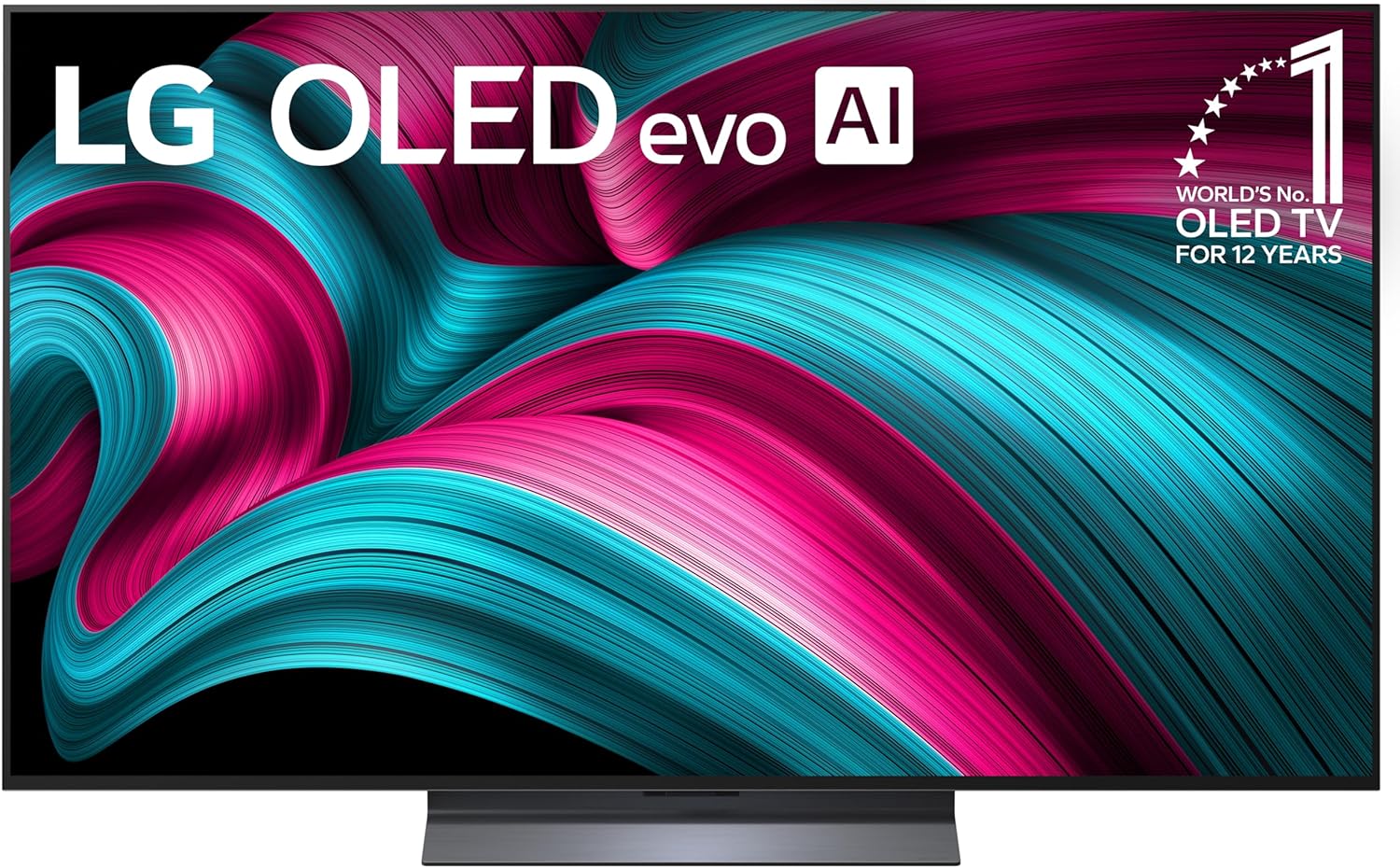
LG 55-Inch C5 OLED AI 4K Smart TV (2025)
Our top recommendation for this category
Price as of Mar 7, 2026 — see current price on Amazon.
Best OLED TVs 2026: Top Picks for Picture Quality, Gaming, and Value
OLED is still the best TV technology money can buy. Self-lit pixels, infinite contrast, and near-instant response times at every price point above $700. The question isn't whether to buy an OLED. It's which one.
In 2026, the choice has gotten easier at the top and harder in the middle. LG remains the default recommendation for most people. Samsung's QD-OLED technology keeps closing the brightness gap. Sony delivers the best picture processing. And if you can't stomach OLED prices, Hisense's Mini-LED is a serious alternative.
Here's where each fits.
Quick Picks
- Best overall: LG C5 OLED: balanced, bright, great software, strong value
- Best for gaming: Samsung S95F QD-OLED: 165Hz, lowest input lag, glare-free screen
- Best for movies: Sony Bravia 8 II QD-OLED: XR processing, perfect for dark rooms
- Best budget alternative: Hisense U8N Mini-LED: not OLED, but close at half the price
1. LG C5 OLED: Best Overall
LG 55-Inch C5 OLED AI 4K Smart TV (2025)
Pros
- Excellent out-of-box picture accuracy
- webOS is the best smart TV interface available
- 144Hz panel with VRR and ALLM for gaming
- Wide viewing angles
- Good brightness for a WOLED panel
Cons
- Not as bright as QD-OLED in peak HDR highlights
- ATSC 3.0 tuner missing on base models
Price as of Mar 7, 2026 — see current price on Amazon.
The LG C5 is the benchmark OLED TV for a reason. It does everything well: accurate colors out of the box, smooth motion, fast gaming response, and LG's webOS software remains the most intuitive smart TV interface available.
The C5 uses LG's WOLED panel (white subpixel OLED) with an Alpha 9 AI Gen8 processor. Peak brightness in small window highlights reaches around 1,500 nits. Not class-leading, but bright enough to make HDR content genuinely pop.
Where it earns the "best overall" title is consistency. Great at dark room movie watching, handles bright rooms adequately, capable for competitive gaming at 144Hz, and priced below the QD-OLED competition without a significant quality drop for most content.
Buy it if: You want an OLED TV without overthinking it. The C5 is the right answer for most living rooms.
2. Samsung S95F QD-OLED: Best for Gaming
Samsung 55-Inch Class OLED S95F 4K Smart TV (2025)
Pros
- 165Hz refresh rate with near-zero input lag
- Glare-free matte screen for bright rooms
- QD-OLED delivers richer color volume than WOLED
- Samsung Gaming Hub built-in
Cons
- Tizen OS less intuitive than webOS
- More expensive than LG C5
- Near-black shadow detail can look slightly elevated
Price as of Mar 7, 2026 — see current price on Amazon.
QD-OLED adds a quantum dot layer on top of OLED to boost brightness and color saturation. The result is peak highlights around 2,000 nits, nearly 30% brighter than the LG C5, while keeping the infinite contrast ratio that defines OLED.
The S95F's 165Hz refresh rate with VRR support and sub-1ms response time make it the top choice for competitive gaming. Samsung's Gaming Hub lets you stream games from Xbox Game Pass or GeForce Now without a separate console. The glare-free matte screen is a practical advantage in rooms with windows that would otherwise wash out a glossy OLED.
Buy it if: You game seriously, or you have a bright room where glare is a problem. The matte screen and 165Hz are genuine differentiators.
3. Sony Bravia 8 II QD-OLED: Best for Movies
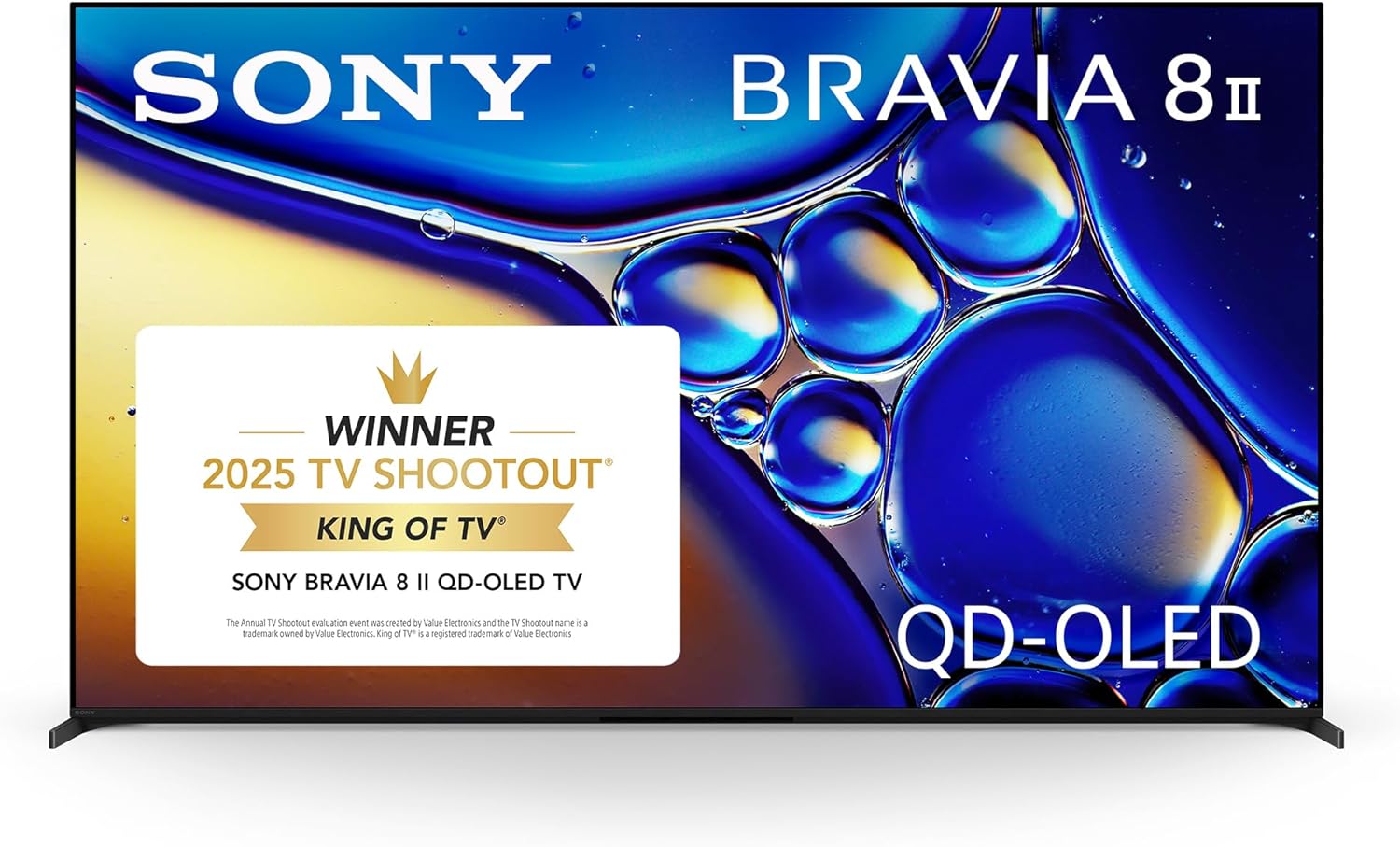
Sony BRAVIA 8 II 55-Inch QD-OLED 4K Smart Google TV (2025)
Pros
- XR processor delivers best-in-class motion handling
- Acoustic Surface Audio Plus (sound from the screen itself)
- Perfect for PS5: exclusive PlayStation features and Auto HDR Tone Mapping
- Excellent Dolby Vision and HDR tone mapping
Cons
- Most expensive of the three OLEDs
- 120Hz only (vs 144/165Hz competitors)
- Google TV interface has more bloat than webOS
Price as of Mar 7, 2026 — see current price on Amazon.
Sony's XR processor is the differentiator. It handles motion, noise reduction, and upscaling differently than LG and Samsung, emphasizing natural film-like output rather than artificially sharp processing. For dark room movie watching and cinematic content, the Bravia 8 II is the best-looking TV in this lineup.
The Acoustic Surface Audio Plus system uses actuators behind the screen panel to produce sound directly from the display. It's a genuine engineering achievement that improves dialogue clarity and creates better sound-to-image synchronization than any external soundbar approach.
If you own a PlayStation 5, Sony's integration, including Auto HDR Tone Mapping, Auto Genre Picture Mode, and Bravia CORE streaming, adds specific value over competing TVs.
Buy it if: Movies and shows are your primary use case, you have a dark or light-controlled room, and you own or plan to buy a PS5.
4. Hisense U8N Mini-LED: Best Budget Alternative
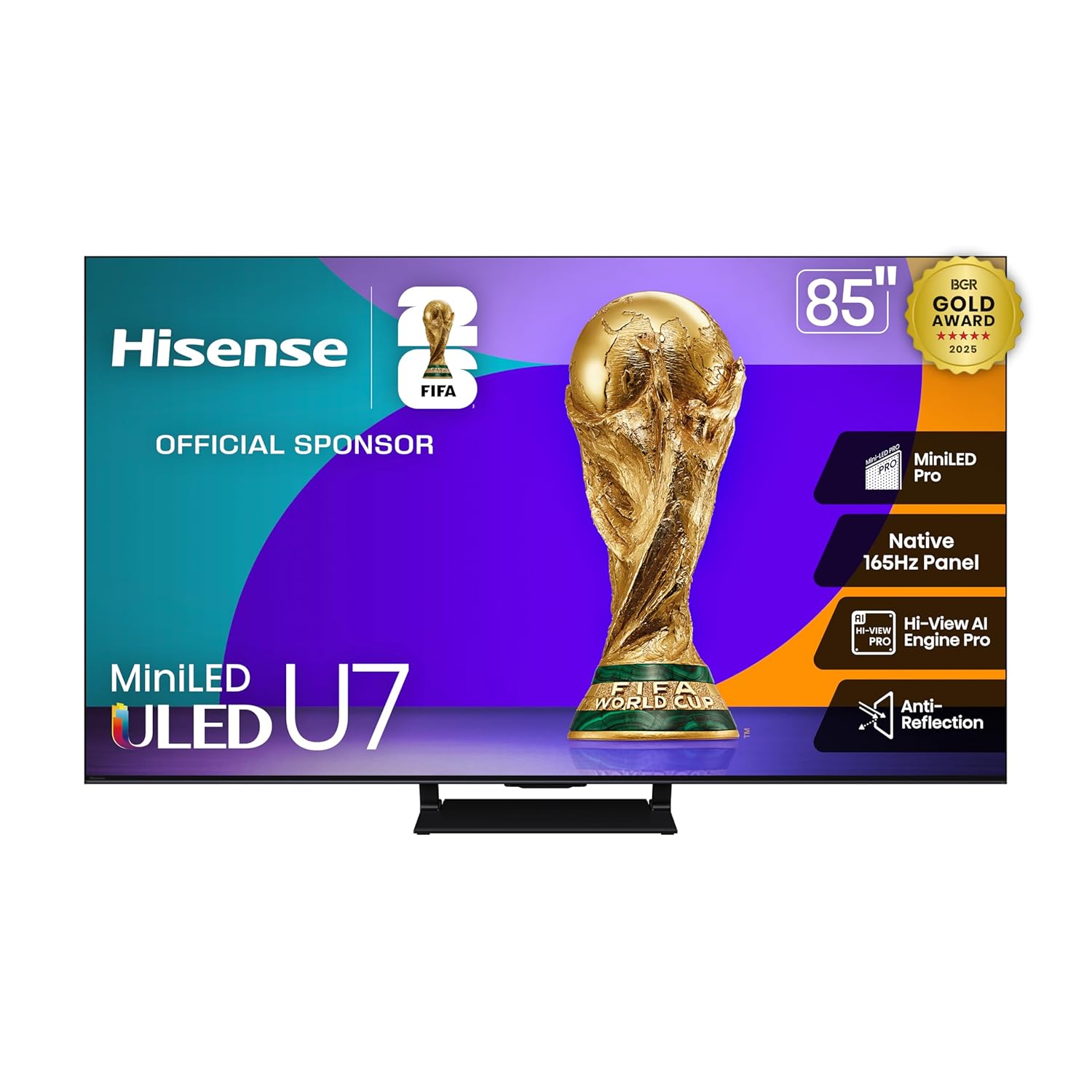
Hisense 55-Inch U8N Mini-LED ULED 4K Google Smart TV
Pros
- Exceptional value at under $600
- 2,500+ nit peak brightness destroys every OLED in HDR highlights
- 144Hz with excellent gaming features
- Full Array Local Dimming Pro for deep blacks
Cons
- Not OLED: blooming around bright objects on dark backgrounds is visible
- Black levels cannot match true OLED
- Hisense's ULED marketing can be confusing
Price as of Mar 7, 2026 — see current price on Amazon.
This one doesn't technically belong in a "best OLED" list. The U8N uses Mini-LED, not OLED. But it belongs here because it's the answer to "I can't afford an OLED, what do I get?"
At $549, the Hisense U8N delivers peak brightness that exceeds every OLED TV on this list. For sports, video games, and HDR movies with bright highlight moments, the U8N's 2,500+ nit output creates genuinely impressive HDR. The Full Array Local Dimming reduces blooming better than most LCD TVs, though it's still visible compared to true pixel-level OLED control.
If black levels in a dark room are your priority, this is the wrong pick. If you want the best picture for under $600 and watch in a bright room, it's unbeatable.
Buy it if: Your budget is under $800, you have a bright room, or you watch a lot of sports and HDR movies where peak brightness matters more than deep blacks.
OLED vs QD-OLED: What's the Difference?
Standard OLED (what LG uses in the C5) uses a white OLED subpixel with color filters. It delivers outstanding black levels and color accuracy but peaks around 1,000-1,500 nits in small highlight windows.
QD-OLED (Samsung and Sony) adds a quantum dot color conversion layer over blue OLED. This pushes peak brightness to 1,800-2,000 nits and improves color volume, keeping colors saturated at high brightness levels. The tradeoff is that near-black shadow detail is handled slightly differently.
For most content most of the time, the difference is subtle. In high-dynamic-range scenes with extreme bright objects (sun, stadium lights, specular reflections), QD-OLED has a visible edge. In dark room viewing at normal brightness, WOLED and QD-OLED look almost identical.
How to Choose
Room lighting matters most. A bright room favors the Samsung S95F (glare-free screen) or the Hisense U8N (raw brightness). A dark home theater favors the LG C5 or Sony Bravia 8 II.
Gaming or watching? Gamers should prioritize refresh rate (165Hz on S95F, 144Hz on C5, 120Hz on Bravia 8 II). Movie watchers should prioritize processing (Sony XR) and motion handling.
Budget. The LG C5 at $1,099 represents the best value OLED in the lineup. The Sony Bravia 8 II at $1,599 is worth the premium only if you specifically want Sony's XR processing or PS5 integration. If your budget is under $800, go Hisense U8N.
TV size. All four TVs are available in 65" and 77" sizes. Prices scale up significantly at 77". If you're buying a 65"+ TV for a living room, it's worth spending on LG C5 or Samsung S95F over the Hisense. The black level difference is more noticeable at larger sizes from typical viewing distances.
Related Guides
- Best TVs 2026
- Best Budget Gaming Monitors 2026
- Best Soundbars 2026
- Best Streaming Devices 2026
- Best Free Alternatives to RTINGS.com
FAQ
Is OLED still better than QLED in 2026?
For black levels and contrast, yes. OLED pixels turn off completely for true black, which no LED-backlit TV can match. QLED and Mini-LED TVs like the Hisense U8N can get brighter in peak highlights, which is relevant for HDR content in bright rooms. The honest answer depends on your room and content: dark room movie fans should choose OLED, sports fans in bright rooms may prefer Mini-LED brightness.
What is the best OLED TV for gaming in 2026?
The Samsung S95F is the best OLED TV for gaming. It runs at 165Hz with near-zero input lag, supports VRR and ALLM, has Samsung Gaming Hub for streaming game services, and the glare-free screen handles ambient light during daytime gaming sessions.
Is the LG C5 or Samsung S95F better for most people?
The LG C5 for most people. It costs $300 less, uses the excellent webOS interface, and delivers picture quality that is indistinguishable from the S95F on most content. The S95F's advantages (higher brightness, 165Hz, glare-free screen) matter most to gamers and people with bright rooms.
How long do OLED TVs last?
Modern OLED TVs are rated for 100,000+ hours of use to half-brightness. At 6 hours of viewing per day, that's 45+ years. Burn-in from static content (like news tickers or game HUDs) is a more realistic concern than panel wear. Using pixel-shifting features and avoiding maximum brightness for extended static content is recommended.
Should I buy a 55-inch or 65-inch OLED?
Measure your viewing distance first. The general rule is 1.5x to 2.5x the screen diagonal for comfortable viewing. At 8 feet of viewing distance, a 55" TV is appropriate; at 10-12 feet, a 65" TV is better. For living room setups with 10+ feet of distance, the 65" model is worth the price jump.
How We Test
We score products by combining spec-level research, pricing history, trusted third-party benchmarks, and owner sentiment from high-signal sources.
- Performance and real-world value in the category this guide targets
- Price-to-performance and deal consistency over recent pricing windows
- Build quality, reliability patterns, and known long-term issues
- Recommendation refresh cadence to keep these picks current
Author
TheTechSearch Editorial Team
Independent product reviewers & PC builders
We test and compare real-world specs, price trends, and user feedback to recommend gear that actually makes sense to buy.