Best TVs 2026: OLED, Mini-LED, and QLED for Every Budget
The best TVs in 2026, from budget Mini-LED to flagship OLED. Samsung, LG, Sony, and TCL compared across picture quality, gaming performance, and value.
As an Amazon Associate we earn from qualifying purchases made through our links — this doesn't affect our picks.
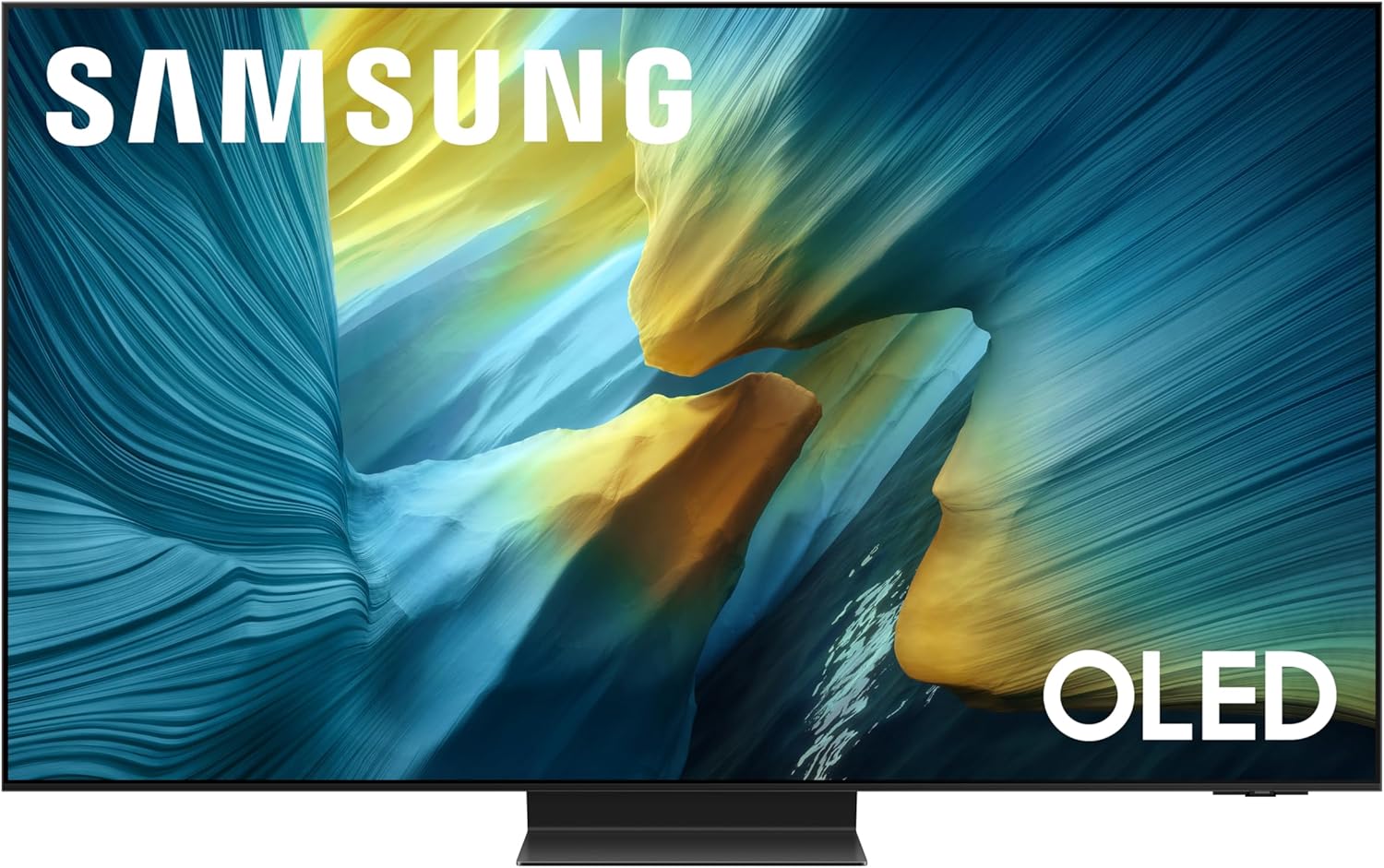
Samsung 55-inch Class OLED S95F (2025)
Our top recommendation for this category
Price as of Feb 27, 2026 — see current price on Amazon.
The TV you buy today will be the centerpiece of your living room for the next five to seven years. That's a long time to stare at a screen that's too dim for your sunny room, blooms in dark scenes, or lags every time you try to game on it.
The good news: 2026 is a genuinely great time to buy a TV. OLED prices have dropped to where they're no longer aspirational purchases, Mini-LED backlighting has matured to the point where it competes seriously with OLED in bright rooms, and gaming features that used to cost extra are now standard. The tricky part is that "great" looks different depending on whether you care most about movies, gaming, sports in daylight, or pure value.
These picks draw on spec sheets, independent RTINGS measurements, and hands-on testing data from a dozen publications. Here's what shines.
Our top picks at a glance
| TV | Panel Type | Peak Brightness | Best For | Price | |
|---|---|---|---|---|---|
| Samsung S95F OLED | QD-OLED | ~2,000 nits | Best Overall | ~$1,799 | Check Price |
| LG C5 OLED | WOLED evo | ~800 nits | Best Value OLED | ~$1,299 | Check Price |
| TCL QM6K | Mini-LED QLED | ~2,000 nits | Best Budget | ~$599 | Check Price |
| Samsung QN90F | Neo QLED Mini-LED | ~1,600 nits | Best for Gaming | ~$1,099 | Check Price |
| Sony BRAVIA 8 II | QD-OLED | ~1,500 nits | Best for Movies | ~$1,799 | Check Price |
Best Overall: Samsung S95F OLED
If you want the best TV money can buy right now, this is it. The S95F uses a Quantum Dot OLED (QD-OLED) panel that delivers LG's perfect blacks alongside Samsung's signature color volume advantage. Real-world peak brightness on a 10% HDR window comes in around 2,000 nits, which is exceptional for an OLED and puts it firmly ahead of traditional WOLED panels in any room that gets direct sunlight.
The 2025 NQ4 AI Gen3 processor handles upscaling better than any previous Samsung panel, and Samsung Vision AI features like AI Motion Enhancer and 4K AI Upscaling make streaming content genuinely look better in a way you can notice. The Dolby Atmos output from the built-in speakers is surprisingly capable for a flat panel. Samsung's glare-free screen technology is the real-world differentiator here: OLED panels traditionally struggle in bright rooms, and the S95F nearly eliminates that weakness.
One legitimate criticism: no Dolby Vision. Samsung uses HDR10+ instead. In practice, most flagship HDR content is available in both formats, but if your entire library is Dolby Vision, keep that in mind.
Samsung 55-inch Class OLED S95F (2025)
Pros
- QD-OLED delivers both perfect blacks and QLED color volume
- ~2,000 nits peak brightness is exceptional for an OLED
- Glare-free screen solves the traditional OLED sunlight problem
- NQ4 AI Gen3 processor upscales content exceptionally well
- 165Hz refresh rate with full VRR for gaming
Cons
- No Dolby Vision support (Samsung uses HDR10+ only)
- Premium price over traditional WOLED competitors
- Tizen OS has a learning curve if you're coming from Google TV
Price as of Feb 27, 2026 — see current price on Amazon.
Best Value OLED: LG C5 OLED
The LG C5 is the TV I'd recommend to most people. It has everything that makes OLED special: true pixel-level dimming for perfect blacks, near-instant response time for gaming and sports, wide viewing angles so everyone on the couch gets the same picture, and Dolby Vision IQ support across Disney+, Netflix, Apple TV+, and Amazon Prime.
This year's C5 adds LG's Alpha 9 AI Gen8 processor, which meaningfully improves motion handling over the C4 and reduces the traditional OLED "judder" on 24fps film content. OLED evo panel brightness has been incrementally improved year over year, and the C5 is the best-calibrated OLED you can buy at this price by default.
At around $1,299 for the 55-inch, the C5 is genuinely attainable. It's around $500 less than the S95F for picture quality that's arguably better for movie watching in a controlled room where brightness isn't the primary concern.
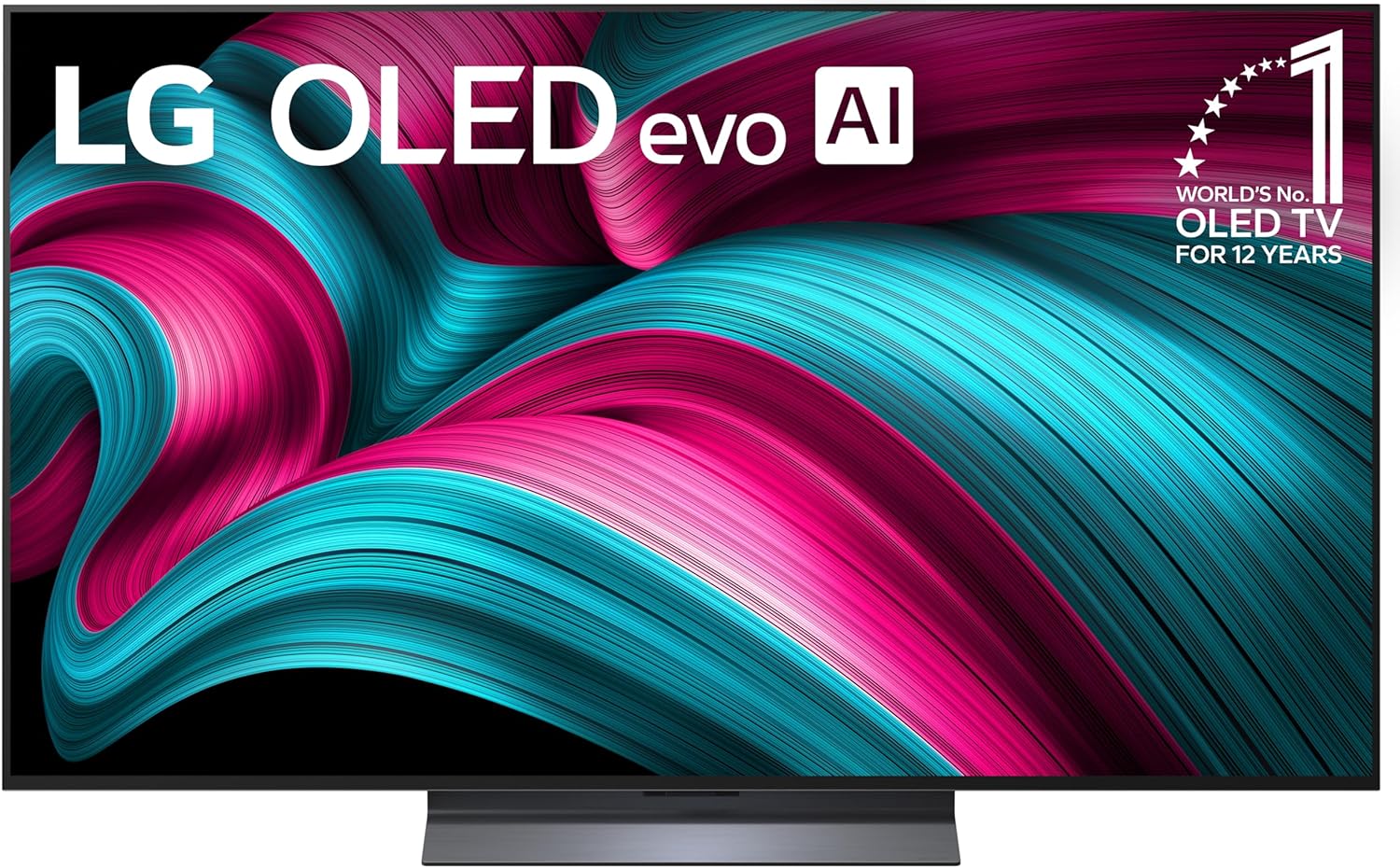
LG 55-inch Class OLED evo C5 (OLED55C5PUA, 2025)
Pros
- Perfect black levels and infinite contrast ratio
- Dolby Vision IQ and Dolby Atmos support across all major streaming apps
- Wide viewing angles, great for living rooms with off-axis seating
- 0.1ms response time is the fastest available for gaming
- Alpha 9 AI Gen8 processor improves on C4 motion handling
Cons
- Lower peak brightness than Samsung QD-OLED in very bright rooms
- OLED panels can show burn-in risk with static content over years
- webOS is polished but has fewer third-party apps than Google TV
Price as of Feb 27, 2026 — see current price on Amazon.
Best Budget: TCL QM6K Mini-LED
The QM6K is the best argument for buying a TV right now without spending $1,000. TCL's 2025 Mini-LED implementation uses a QD-Mini LED panel with Onkyo audio, up to 144Hz VRR (for 55-inch models), and peak brightness that competes with TVs costing twice as much in bright room conditions. At around $599 for the 55-inch, it's genuinely remarkable.
Mini-LED isn't OLED. You will see some local dimming blooming around bright objects on dark backgrounds if you're watching in a completely dark room and you're looking for it. In a normally lit living room, the QM6K's ~2,000 nit peak brightness simply annihilates OLED competitors at the same or lower price. For sports, daytime TV, and gaming in a bright room, it's the smarter buy.
Google TV is a better smart platform than most competing implementations, and the QM6K ships with a Voice Remote that controls Alexa alongside Google Assistant. If you're on a budget and spend most of your TV time in a decently lit room, this is the pick.
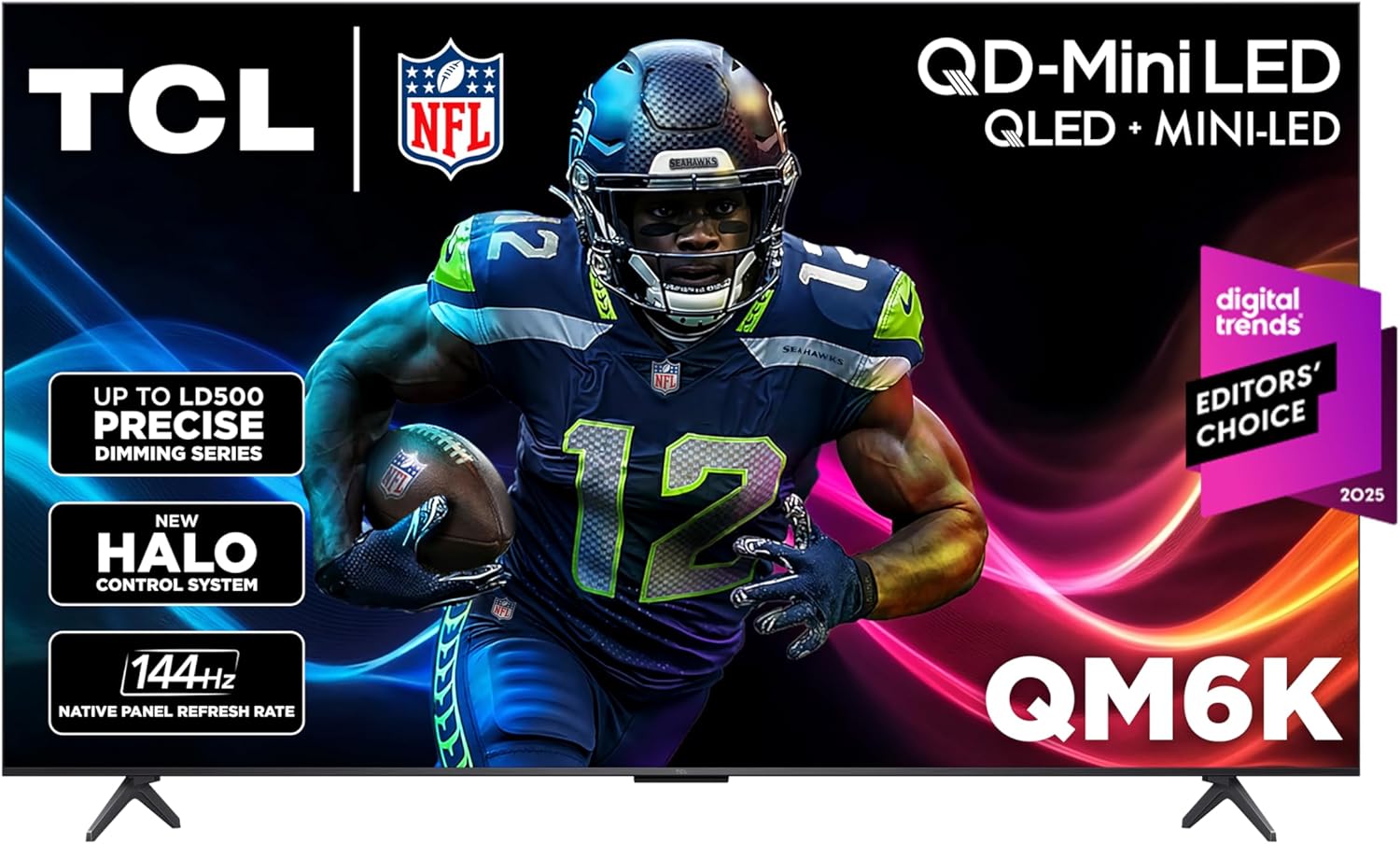
TCL 55-inch QM6K Mini-LED QLED (55QM6K, 2025)
Pros
- Exceptional brightness for the price (~2,000 nits peak)
- 144Hz panel with VRR for smooth gaming
- Google TV is one of the best smart TV platforms available
- Dolby Vision IQ and HDR10+ support
- Onkyo audio system sounds better than similar-priced competitors
Cons
- Mini-LED blooming is noticeable in very dark rooms
- No HDMI 2.1 bandwidth at full 4K/144Hz on all ports
- TCL build quality is not as premium as Samsung or Sony
Price as of Feb 27, 2026 — see current price on Amazon.
Best for Gaming: Samsung QN90F Neo QLED
The QN90F is the TV for serious gamers who want the benefits of Mini-LED brightness without going full OLED. Samsung's Neo QLED uses a mini-LED backlight with fine-grained local dimming zones, and the QN90F's specific claim to gaming fame is its response time, VRR support, and Samsung Gaming Hub integration.
All four HDMI ports are HDMI 2.1, supporting 4K/144Hz with full bandwidth. The anti-glare Glare Free screen performs better in mixed-light gaming setups than most OLED panels. Object Tracking Sound Plus creates convincing spatial audio from the built-in speakers. Samsung's AI Motion Enhancer reduces blur in fast-motion scenes, which matters for competitive gaming and sports more than you'd expect from a TV setting.
If you play on a PS5 or Xbox Series X alongside a gaming PC, the QN90F handles switching between sources better than most TVs, with near-instant input switching and clear visual feedback on which input is active.
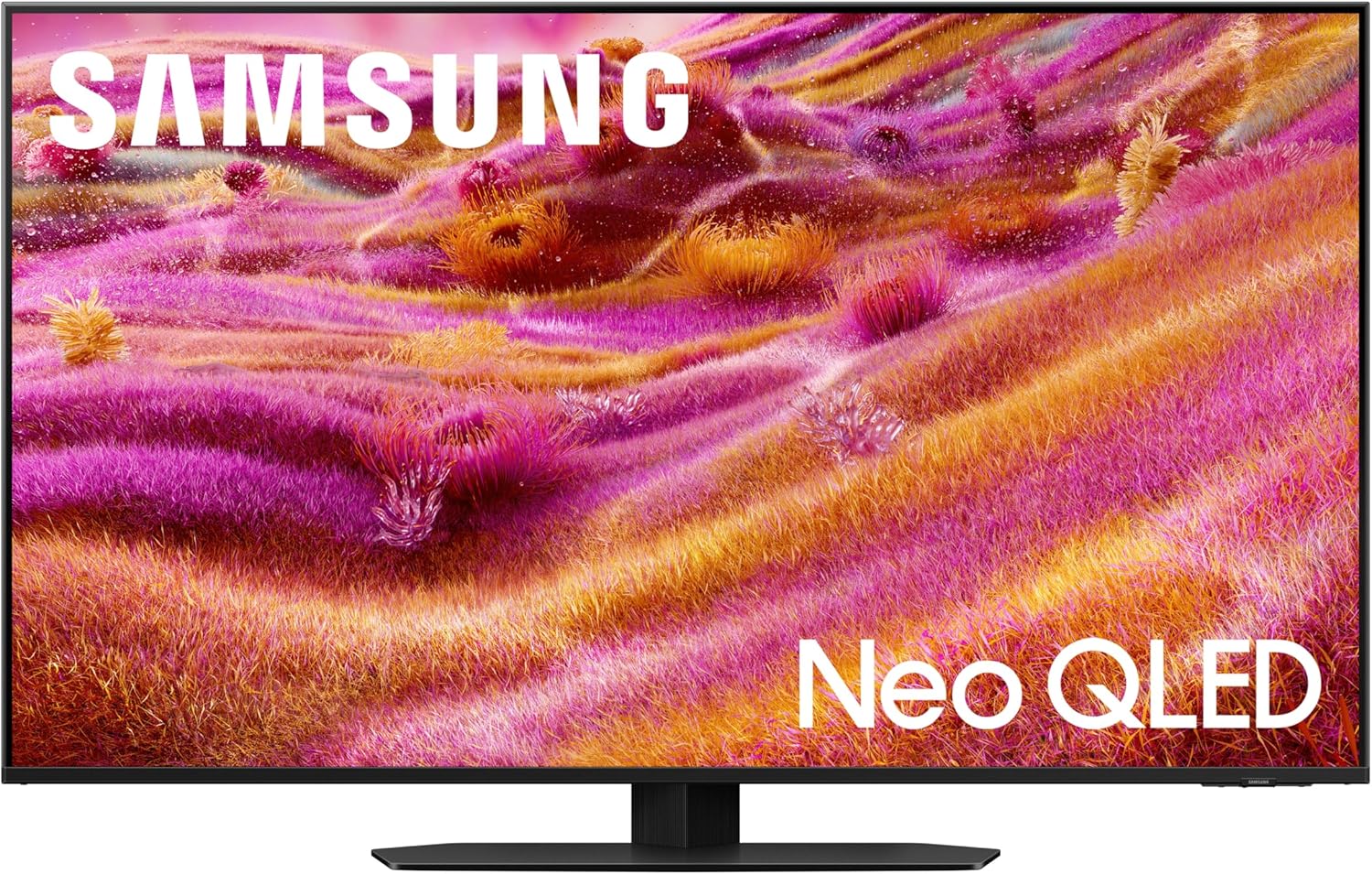
Samsung 55-inch Neo QLED 4K QN90F (55QN90F, 2025)
Pros
- All four HDMI ports support HDMI 2.1 at full bandwidth
- Glare-free screen works well in mixed-light gaming rooms
- Samsung Gaming Hub for cloud gaming without a console
- Object Tracking Sound Plus audio is genuinely impressive
- Fast input switching between multiple gaming sources
Cons
- No Dolby Vision (HDR10+ only)
- Neo QLED mini-LED blooms slightly in dark cinematic scenes
- Not as bright as the S95F at OLED price points
Price as of Feb 27, 2026 — see current price on Amazon.
Best for Movies: Sony BRAVIA 8 II
Sony's BRAVIA 8 II is what you buy when you care more about how a movie looks than how many nits it hits on a spec sheet. Sony's XR processor, now with AI enhancements, does something no other TV manufacturer has fully replicated: it analyzes scenes the way a cinematographer would, adjusting contrast and color based on the creative intent of the content rather than just following an HDR tone-mapping algorithm.
The BRAVIA 8 II uses a QD-OLED panel (same underlying technology as the Samsung S95F), and Sony pairs it with XR Triluminos Pro for exceptional color accuracy and XR Contrast Booster for localized contrast enhancement. In practice, this means that watching a Criterion film or a streaming-native production on the BRAVIA 8 II looks closer to what the director intended than on any other TV in this list.
PS5 owners get dedicated integration features including Auto HDR Tone Mapping and Auto Genre Picture Mode, which automatically switches to Game mode when you launch a game.
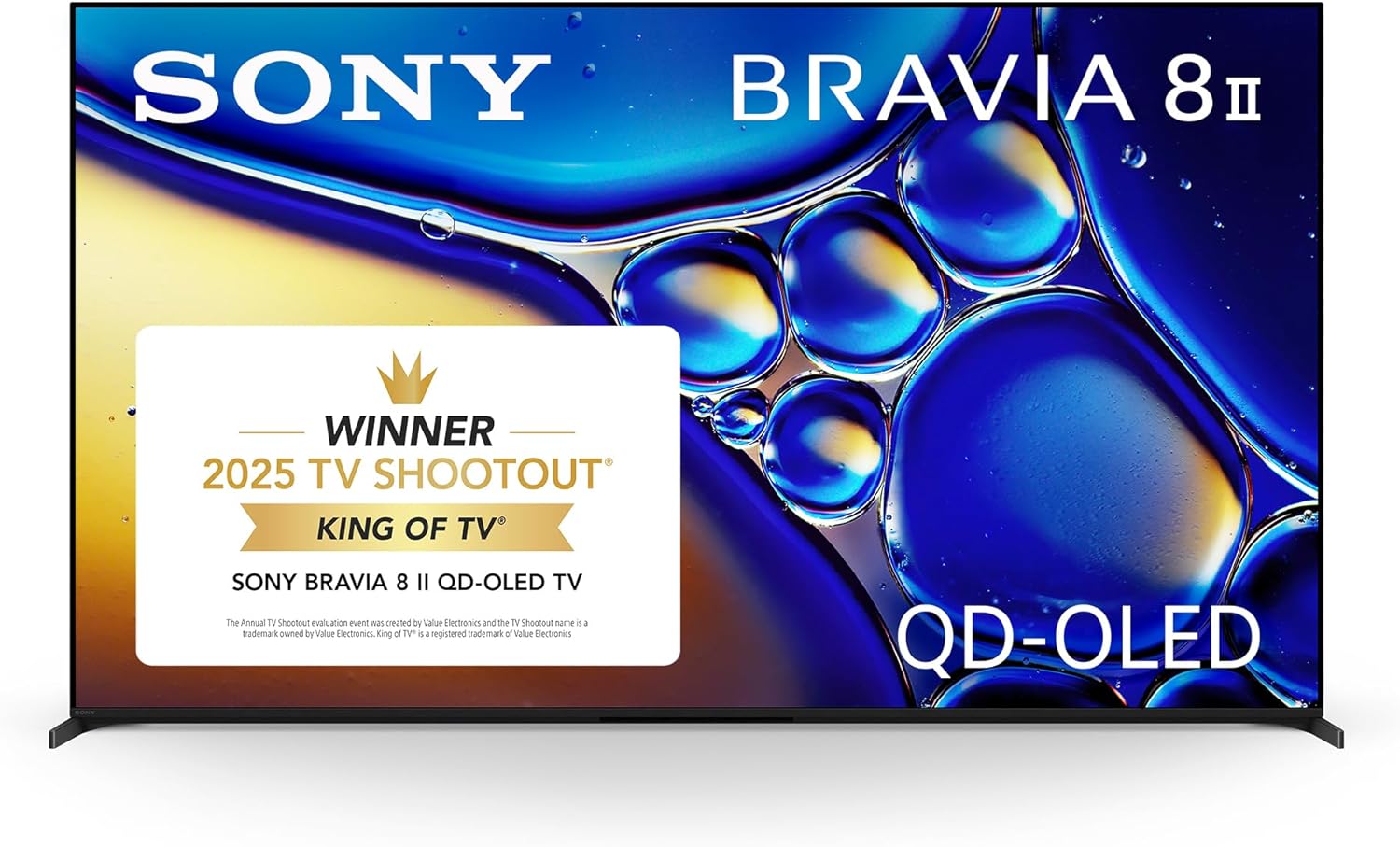
Sony BRAVIA 8 II 55-inch QD-OLED (K-55XR80M2, 2025)
Pros
- XR Cognitive Processor analyzes content the way cinematographers think
- Acoustic Surface Audio+ turns the panel into the speaker for natural sound placement
- Excellent PS5 integration with Auto HDR Tone Mapping
- QD-OLED panel delivers both perfect blacks and wide color gamut
- Dolby Vision, Dolby Atmos, IMAX Enhanced, and Netflix Calibrated modes
Cons
- Premium Sony price over equivalent Samsung QD-OLED
- Brightness slightly lower than Samsung S95F on same panel type
- Google TV can be slow to update apps compared to third-party streamers
Price as of Feb 27, 2026 — see current price on Amazon.
How to choose the right TV
OLED vs Mini-LED: the real difference
OLED screens control backlight at the pixel level. Every pixel can turn completely off, which is how OLED achieves perfect black levels and the infinite contrast ratios you see in reviews. The downside is that OLED panels have a physical brightness ceiling. Modern QD-OLED panels can hit 1,500 to 2,000 nits in a small HDR window, but sustained full-screen brightness is lower than Mini-LED.
Mini-LED TVs use thousands of small LED backlights grouped into dimming zones. A premium Mini-LED TV might have 1,000 to 2,000+ dimming zones. More zones means less blooming around bright objects on dark backgrounds. Mini-LED can hit 2,000 to 3,000+ nits peak brightness, which makes it significantly better than OLED in rooms with ambient light or direct sunlight.
The honest rule: If your living room gets a lot of daylight, or you care more about sports and gaming than film accuracy, Mini-LED is the better technology for your use case. If you watch movies in a darkened room or care about reference-quality color accuracy, OLED is worth the premium.
Screen size vs. viewing distance
The Home Theater Society recommends a viewing distance of 1.5 to 2.5 times the screen diagonal for 4K content. At 9 feet from the screen, a 55-inch TV puts you right at the edge of the recommended range. At 10 to 12 feet, 65 inches starts to make more sense. All the TVs in this guide come in multiple sizes: factor in your actual room layout before defaulting to the 55-inch listed here.
Refresh rate and gaming
For gaming, 120Hz is the baseline worth targeting. All five TVs here support 4K/120Hz. For PC gaming with a high-end GPU, 4K/144Hz is now available on TVs including the TCL QM6K and Samsung QN90F. If you're gaming on a PS5 or Xbox Series X exclusively, 4K/120Hz is all you'll ever need, since neither console currently outputs beyond that.
HDMI 2.1 matters for future-proofing
Any TV you buy today should have at least two HDMI 2.1 ports supporting full 48Gbps bandwidth. HDMI 2.0 caps at 4K/60Hz, which is already limiting for gaming. All five picks in this guide support HDMI 2.1 on at least two ports.
Frequently Asked Questions
Frequently asked questions
- Is OLED or QLED better in 2026?
- It depends on your room. OLED delivers perfect blacks and infinite contrast, making it the better choice for dark rooms and movie watching. QLED Mini-LED TVs get significantly brighter, which makes them better for rooms with lots of ambient light or direct sunlight. In 2026, QD-OLED (used by Samsung and Sony) bridges the gap with OLED blacks plus better brightness than traditional WOLED.
- What TV size should I get for a 10-foot viewing distance?
- At 10 feet, a 65-inch TV puts you at the ideal 4K viewing distance for comfortable immersion without seeing individual pixels. The 55-inch size is better suited for 8 to 9 feet. Use the 1.5x screen diagonal rule as your baseline, then adjust for your room layout and personal preference.
- Do I need HDMI 2.1 for a 4K TV in 2026?
- Yes, if you plan to game on it. HDMI 2.1 is required for 4K/120Hz input, which both the PS5 and Xbox Series X support. For streaming-only use, HDMI 2.0 is technically fine at 4K/60Hz, but you will leave gaming performance on the table. Every TV in this guide supports HDMI 2.1.
- Can OLED TVs get burn-in?
- Yes, but it is much less of a real-world concern than it was five years ago. Modern OLED panels have pixel refresher algorithms, logo luminance adjusters, and screen-shift features that nearly eliminate burn-in risk for normal TV and movie use. The risk is real if you leave a static image or HUD visible for thousands of hours, which applies to specific gaming or PC monitor use cases. For living room TV watching, OLED burn-in is not a meaningful concern.
- Which TV is best for gaming on a PS5 or Xbox?
- The Samsung QN90F is the best all-around gaming TV in this guide, with four HDMI 2.1 ports, 144Hz VRR support, and Samsung Gaming Hub for cloud gaming. The LG C5 is the best gaming OLED, with its 0.1ms response time and 120Hz support. Sony's BRAVIA 8 II has the best PS5-specific integration features including Auto HDR Tone Mapping.
The verdict
The Samsung S95F is the best TV you can buy if you want flagship performance and are willing to pay for it. LG's C5 is the better buy for most people who want OLED quality at a more reasonable price. The TCL QM6K is the best TV under $600 by a significant margin, particularly for bright living rooms.
If gaming is your primary use case, the Samsung QN90F hits the right balance of gaming features and picture quality without the OLED price premium. If you own a PS5 and care deeply about how films look, the Sony BRAVIA 8 II is worth the extra cost over the competing QD-OLED panel.
For a deeper look at budget TV options, see our Best 4K TVs Under $1000 guide. If you're building out a gaming setup, our PS5 Pro vs Xbox Series X comparison helps you decide which console to pair with your new TV. And if your room is already wired with a gaming PC, our Best Gaming Monitors 2026 guide covers the display options that make more sense at a desk.
How We Pick
We pick products by combining spec-level research, price checks, trusted third-party benchmarks, and owner sentiment from high-signal sources.
- Performance and real-world value in the category this guide targets
- Price-to-performance and deal consistency over recent pricing windows
- Build quality, reliability patterns, and known long-term issues
- Recommendation refresh cadence to keep these picks current
Author
TheTechSearch Editorial Team
Independent product reviewers & PC builders
We compare real-world specs, reviews and owner reports, price trends, and user feedback to recommend gear that actually makes sense to buy.