Best Fitness Trackers in 2026
The best fitness trackers in 2026. Top picks from Garmin, Fitbit, Amazfit, Apple, and Samsung for every budget and fitness goal. Expert picks, pros and cons,...
As an Amazon Associate we earn from qualifying purchases made through our links — this doesn't affect our picks.
Garmin Vivoactive 6 GPS Smartwatch
Our top recommendation for this category
Price as of Mar 4, 2026 — see current price on Amazon.
A fitness tracker should do three things well: count your steps accurately, measure your heart rate reliably, and last long enough on a single charge that you do not think about it. Everything else (GPS, SpO2, stress tracking, sleep scores) is a bonus. The market in 2026 splits cleanly between slim band-style trackers and compact smartwatches that double as fitness devices. Both work. The right choice depends on whether you want a simple fitness band or a wrist computer that also tracks workouts.
I compared data from WIRED, TechRadar, RTINGS, and Tom's Guide to find six fitness trackers worth buying in 2026.
Quick picks
| Tracker | Type | GPS | Battery Life | Water Resistance | Price | |
|---|---|---|---|---|---|---|
| Garmin Vivoactive 6 | Smartwatch | Built-in | Up to 11 days | 5 ATM | ~$300 | Check Price |
| Fitbit Charge 6 | Band | Built-in | Up to 7 days | 5 ATM | ~$140 | Check Price |
| Amazfit Band 7 | Band | Connected GPS | Up to 18 days | 5 ATM | ~$50 | Check Price |
| Garmin Vivosmart 5 | Band | Connected GPS | Up to 7 days | 5 ATM | ~$130 | Check Price |
| Apple Watch SE (2nd Gen) | Smartwatch | Built-in | Up to 18 hours | 5 ATM | ~$230 | Check Price |
| Samsung Galaxy Fit 3 | Band | Connected GPS | Up to 13 days | 5 ATM + IP68 | ~$60 | Check Price |
Best overall: Garmin Vivoactive 6
Garmin Vivoactive 6 GPS Smartwatch
Pros
- AMOLED display is bright and readable in direct sunlight
- Built-in GPS tracks runs, walks, and bike rides without a phone
- Up to 11 days of battery life in smartwatch mode
- 80+ sport profiles cover virtually any activity
- Body Battery energy monitoring helps pace your day
- Music storage for Spotify, Amazon Music, and Deezer offline playlists
Cons
- At $300 it costs more than most dedicated fitness bands
- Garmin Connect app has a steeper learning curve than Fitbit
- No cellular option for calls or texts without a phone
- Third-party app ecosystem is limited compared to Apple Watch
Price as of Mar 4, 2026 — see current price on Amazon.
The Vivoactive 6 is the fitness tracker that does everything without forcing you to charge it every night. WIRED named it their top fitness tracker pick for 2026, and the reasons are straightforward: accurate GPS, reliable heart rate monitoring against chest strap benchmarks, and 11 days of battery life in normal use. That means you charge it once a week and forget about it the rest of the time.
Garmin's Body Battery feature tracks your energy levels throughout the day using heart rate variability, stress, and sleep data. It sounds like a gimmick until you start checking it before deciding whether to do a hard workout or take a rest day. After a week of use, most people find it surprisingly accurate at reflecting how they actually feel.
The AMOLED display is a significant upgrade from older Garmin models that used memory-in-pixel screens. Colors pop, text is sharp, and outdoor visibility is excellent. The always-on display option does reduce battery life to around 5-6 days, which is still better than most competitors.
The main reason to skip the Vivoactive 6 is price. At $300 it costs twice as much as the Fitbit Charge 6 and six times more than the Amazfit Band 7. If you just need step counting and basic heart rate, those cheaper options deliver the core experience for less.
Best for Google/Fitbit users: Fitbit Charge 6
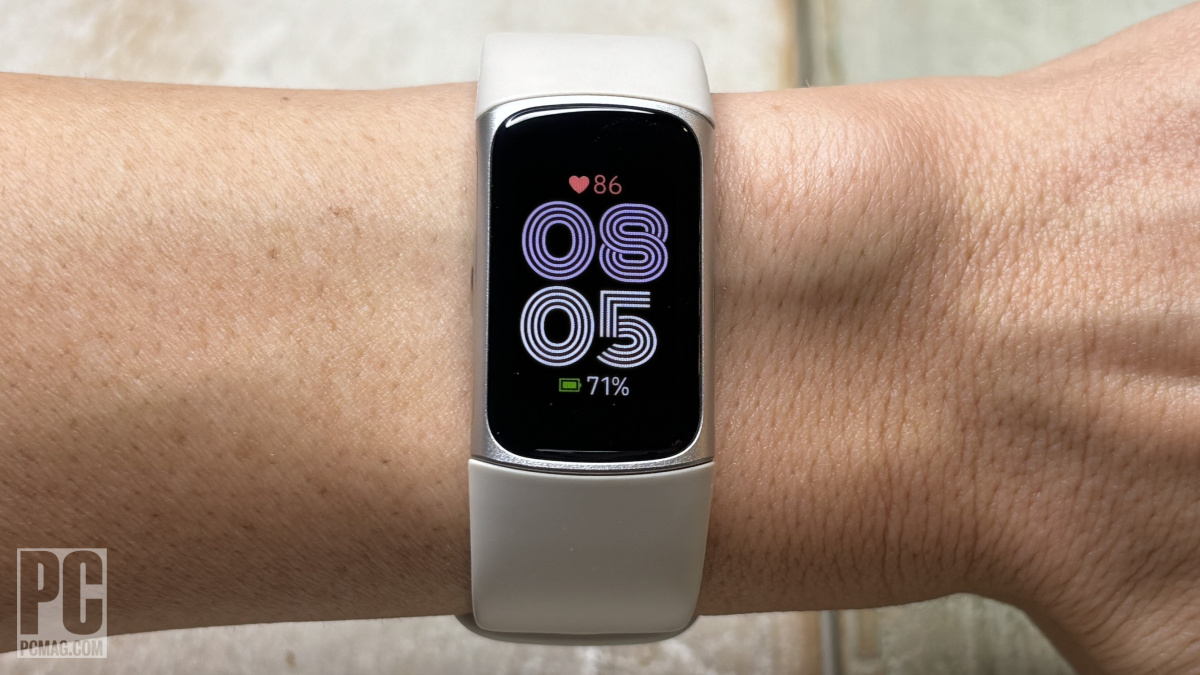
Fitbit Charge 6 Fitness Tracker
Pros
- Built-in GPS tracks outdoor workouts without carrying your phone
- Google Wallet and Google Maps integration through Fitbit by Google
- Heart rate monitoring works with gym equipment via Bluetooth
- 6 months of Fitbit Premium included for detailed health insights
- Slim band design is comfortable for all-day wear including sleep
Cons
- Screen is small and harder to read than smartwatch-style trackers
- Fitbit Premium subscription costs $10/month after the trial
- No music storage or playback capability
- Button-based navigation feels clunky compared to full touchscreen watches
Price as of Mar 4, 2026 — see current price on Amazon.
The Charge 6 is the best fitness band with built-in GPS at this price. Since Google acquired Fitbit, the Charge 6 integrates with Google Wallet for contactless payments and Google Maps for turn-by-turn directions on your wrist. For Android users already in the Google ecosystem, this integration makes daily use seamless.
The killer feature for gym users is Bluetooth heart rate broadcasting to compatible exercise equipment. Connect the Charge 6 to a Peloton bike or a gym treadmill and your real-time heart rate appears on the machine's display. No chest strap needed.
The Fitbit Premium subscription is the catch. Many of the detailed health insights (daily readiness score, advanced sleep analysis, stress management score) require the $10/month subscription after the 6-month trial. The tracker works fine without it for basic tracking, but you will see locked features in the app that feel like upsells.
Best budget: Amazfit Band 7
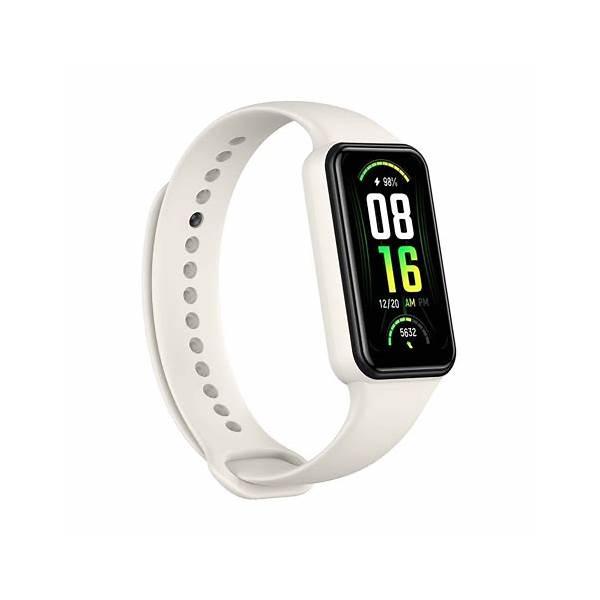
Amazfit Band 7 Fitness Tracker
Pros
- 18-day battery life is the longest on this list by a wide margin
- 1.47-inch AMOLED display is large for a budget band
- 120 sport modes cover most activities
- Alexa built-in for voice commands and quick questions
- 5 ATM water resistance for swimming
- Under $50 makes it accessible to almost any budget
Cons
- No built-in GPS, relies on connected GPS through your phone
- Heart rate accuracy is less consistent than Garmin or Fitbit during intense exercise
- Zepp app is less polished than Garmin Connect or the Fitbit app
- No contactless payments
- Notification handling is basic with limited reply options
Price as of Mar 4, 2026 — see current price on Amazon.
The Amazfit Band 7 costs less than a single month of some gym memberships and delivers remarkably capable fitness tracking. The 18-day battery life is not a typo. With heart rate monitoring on and notifications enabled, you charge this thing twice a month. That alone makes it worth considering for anyone who hates charging wearables.
The 1.47-inch AMOLED display is larger than what you typically find at this price. Text is legible, notifications are readable, and workout stats during exercise are easy to glance at. Alexa integration lets you set timers, check the weather, and control smart home devices from your wrist.
The tradeoffs are expected at $50. Heart rate accuracy during high-intensity intervals lags behind Garmin and Fitbit by a few BPM on average. Connected GPS (using your phone's GPS) works but adds a few seconds of lag compared to built-in GPS. The Zepp app is functional but lacks the polish and community features of Garmin Connect or Fitbit.
For casual fitness tracking, step counting, sleep monitoring, and notifications, the Band 7 does 80% of what a $300 tracker does for one-sixth the price.
Best slim band: Garmin Vivosmart 5

Garmin Vivosmart 5 Fitness Tracker
Pros
- Slim, lightweight design is the most comfortable band for all-day wear
- Garmin Connect app provides detailed fitness data without a subscription
- Body Battery and stress tracking included at no extra cost
- Pulse Ox sensor for blood oxygen monitoring during sleep
- Up to 7 days battery life in a very compact form factor
Cons
- No built-in GPS, requires phone connection for GPS tracking
- Grayscale OLED display is less vibrant than AMOLED options
- Touchscreen can be unresponsive with wet fingers
- Limited sport profiles compared to the Vivoactive 6
- No music playback or storage
Price as of Mar 4, 2026 — see current price on Amazon.
The Vivosmart 5 is the Garmin for people who want Garmin's data accuracy without a bulky watch on their wrist. It is one of the slimmest fitness bands available, sitting flat and light enough to forget you are wearing it. For sleep tracking in particular, comfort matters, and the Vivosmart 5 is the tracker least likely to bother you at night.
Garmin's data platform is the real value here. Body Battery, stress tracking, Pulse Ox, and detailed sleep staging are all included with no subscription required. The same data that Fitbit locks behind Premium, Garmin gives you in the base product. Over 12 months, that saves $120 compared to a Fitbit with Premium.
The grayscale OLED display is the main visual compromise. It gets the job done for step counts, heart rate, and notifications, but it lacks the color and vibrancy of the Amazfit or Fitbit screens. If you use your tracker primarily as a data collection device and check detailed stats in the app, this does not matter.
Best for iPhone users: Apple Watch SE (2nd Gen)
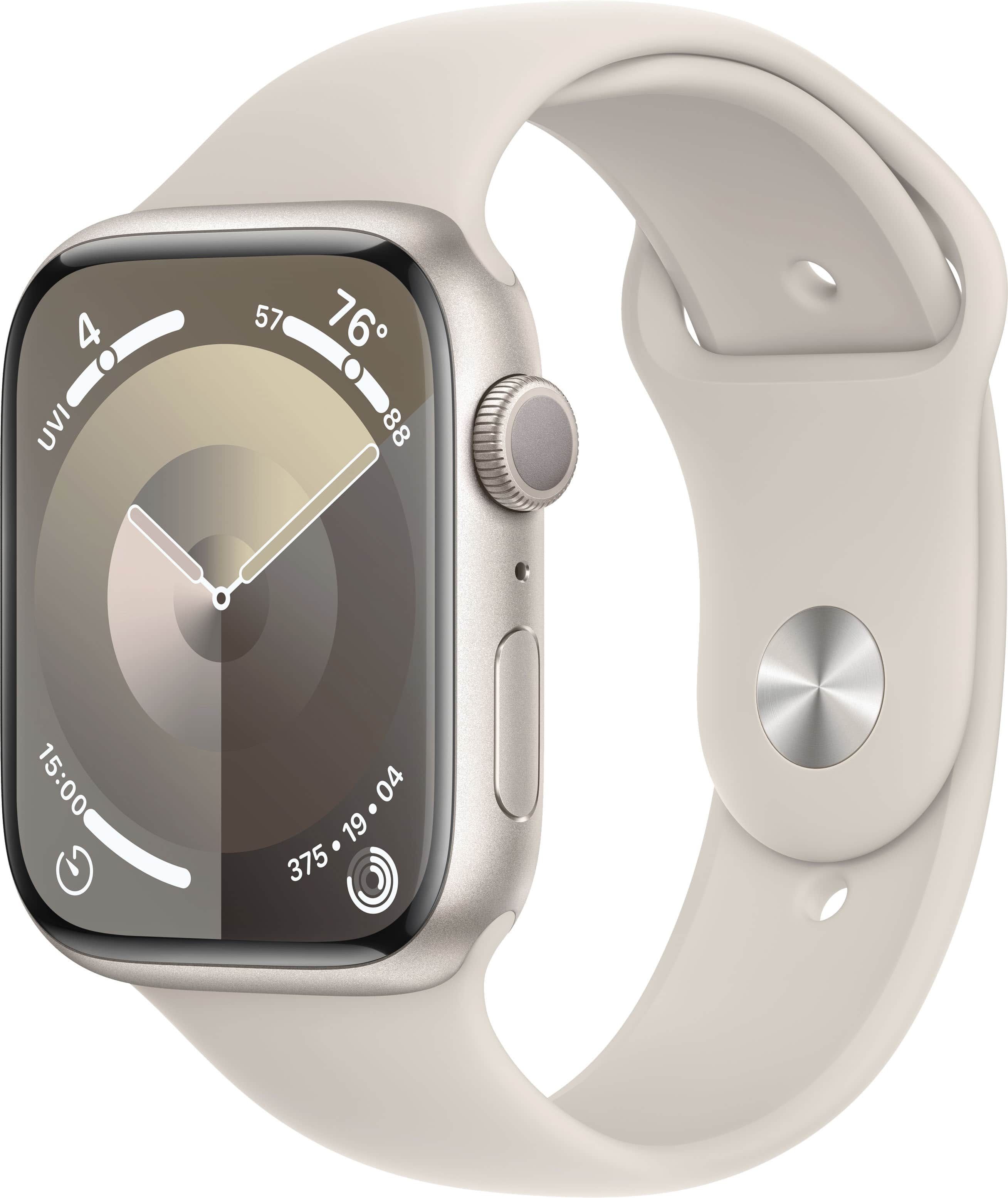
Apple Watch SE (2nd Gen, 40mm)
Pros
- Deepest iPhone integration of any fitness tracker, period
- Built-in GPS for outdoor workout tracking
- Fall detection and crash detection safety features included
- Apple Fitness+ integration for guided workouts
- App Store access for thousands of third-party fitness apps
- Swim-proof with automatic stroke detection
Cons
- 18-hour battery life is the worst on this list
- Requires daily charging, sometimes twice with heavy use
- Does not work with Android phones at all
- No always-on display in the SE model
- Lacks blood oxygen sensor and ECG found in the Series 10
Price as of Mar 4, 2026 — see current price on Amazon.
If you own an iPhone and want the best fitness tracking experience integrated with your phone, the Apple Watch SE is the answer. No other tracker matches the depth of iOS integration. Workout summaries sync to the Health app instantly, activity rings motivate daily movement, and Apple Fitness+ guided workouts work directly from the watch.
The 18-hour battery life is the unavoidable tradeoff. You will charge this watch every night. For some people that is a dealbreaker, especially if sleep tracking matters to you (you need to find a charging window during the day instead). For others who charge their phone nightly anyway, adding a watch to the routine is no big deal.
The SE skips the always-on display, blood oxygen sensor, and ECG from the pricier Series 10. For pure fitness tracking those omissions do not matter. Heart rate monitoring, GPS, and activity tracking are all identical to the flagship model.
Best Android budget band: Samsung Galaxy Fit 3
Samsung Galaxy Fit 3
Pros
- 13-day battery life is excellent for a band with this many features
- 1.6-inch AMOLED display is the largest in the budget band category
- Samsung Health app is polished and subscription-free
- IP68 plus 5 ATM means dust and water resistance
- Quick replies for messages on Samsung phones
Cons
- Best features limited to Samsung Galaxy phones
- No built-in GPS, connected only
- Heart rate accuracy during vigorous exercise is inconsistent
- No NFC for contactless payments
- Fewer sport modes than Amazfit at a similar price
Price as of Mar 4, 2026 — see current price on Amazon.
The Galaxy Fit 3 is Samsung's answer to the Amazfit Band 7, and it competes well. The 1.6-inch AMOLED display is the largest screen on any budget fitness band, which makes reading notifications and workout stats easier than on slimmer bands. Battery life holds at around 13 days in typical use, which means roughly twice-monthly charging.
Samsung Health is a strong app that provides workout tracking, sleep analysis, body composition estimates (with compatible Samsung phones), and stress monitoring without requiring a subscription. If you already own a Samsung phone, the integration is tight: quick replies to messages, find my phone, camera shutter control.
The limitation is that some features only work fully with Samsung Galaxy devices. It pairs with any Android phone for basic tracking, but quick replies, remote camera control, and some health features are Samsung-exclusive. At $60 it is still a solid budget tracker for any Android user, but Samsung phone owners get the most out of it.
How to choose: GPS, heart rate, and battery
Built-in GPS vs connected GPS: Built-in GPS (Vivoactive 6, Charge 6, Apple Watch SE) tracks your outdoor routes without needing your phone nearby. Connected GPS (Amazfit Band 7, Vivosmart 5, Galaxy Fit 3) uses your phone's GPS signal, which means you must carry your phone on runs. If you run or cycle without your phone, built-in GPS is worth the price premium.
Heart rate accuracy: Wrist-based heart rate monitors have improved significantly, but they still lag behind chest straps during high-intensity intervals and activities with a lot of wrist movement. Garmin and Apple produce the most consistent results in independent testing. Amazfit and Samsung are slightly less accurate during peak exertion but close enough for general fitness tracking.
Battery life priorities: If you hate charging devices, the Amazfit Band 7 (18 days) and Samsung Galaxy Fit 3 (13 days) are the clear winners. If you want the most features and accept daily charging, the Apple Watch SE packs the most capability per charge cycle.
Want to pair your tracker with a great watch? Check out our best smartwatches in 2026 roundup. Looking for a budget option? See our best smartwatch under $200 picks. Heading outdoors? Our best action cameras guide covers recording your adventures.
Frequently asked questions
- Are fitness trackers still worth buying in 2026?
- Yes. Dedicated fitness bands offer better battery life and lower cost than smartwatches while covering the core features most people actually use: step counting, heart rate monitoring, sleep tracking, and workout logging. If you do not need to respond to messages or run apps on your wrist, a fitness band is the better value.
- Which fitness tracker is the most accurate?
- The Garmin Vivoactive 6 and Apple Watch SE produce the most accurate heart rate and GPS data in independent testing. Garmin's optical heart rate sensor has been refined over multiple generations and consistently tracks within 1-3 BPM of a chest strap during steady-state exercise. Apple's GPS accuracy is the best in class for wrist-based devices.
- Can fitness trackers detect heart problems?
- Some trackers offer irregular heart rhythm notifications (Apple Watch SE, Fitbit Charge 6). These are screening tools, not medical devices. They can alert you to potential atrial fibrillation, but a positive alert should always be followed up with a doctor. Do not rely on a fitness tracker for medical diagnosis.
- How often do I need to charge a fitness tracker?
- It depends on the device. The Amazfit Band 7 lasts up to 18 days, the Garmin Vivoactive 6 up to 11 days, and the Samsung Galaxy Fit 3 around 13 days. The Apple Watch SE needs daily charging with its 18-hour battery life. GPS use, always-on display, and notification frequency all reduce battery life from the manufacturer's claims.
- Do I need a fitness tracker if I have a smartwatch?
- If your smartwatch already tracks heart rate, steps, and workouts, a separate fitness tracker is redundant. The benefit of a dedicated fitness band is lighter weight, longer battery life, and lower cost. If you want a smaller, less distracting wearable specifically for health tracking, a band-style tracker alongside a phone makes sense.
How We Test
We score products by combining spec-level research, pricing history, trusted third-party benchmarks, and owner sentiment from high-signal sources.
- Performance and real-world value in the category this guide targets
- Price-to-performance and deal consistency over recent pricing windows
- Build quality, reliability patterns, and known long-term issues
- Recommendation refresh cadence to keep these picks current
Author
TheTechSearch Editorial Team
Independent product reviewers & PC builders
We test and compare real-world specs, price trends, and user feedback to recommend gear that actually makes sense to buy.