Best Smartwatch Under $200 in 2026
Best smartwatches under $200 for 2026. Top picks for fitness, Wear OS, and battery life from Samsung, Garmin, OnePlus, Amazfit, and Google. Expert picks, pro...
As an Amazon Associate we earn from qualifying purchases made through our links — this doesn't affect our picks.
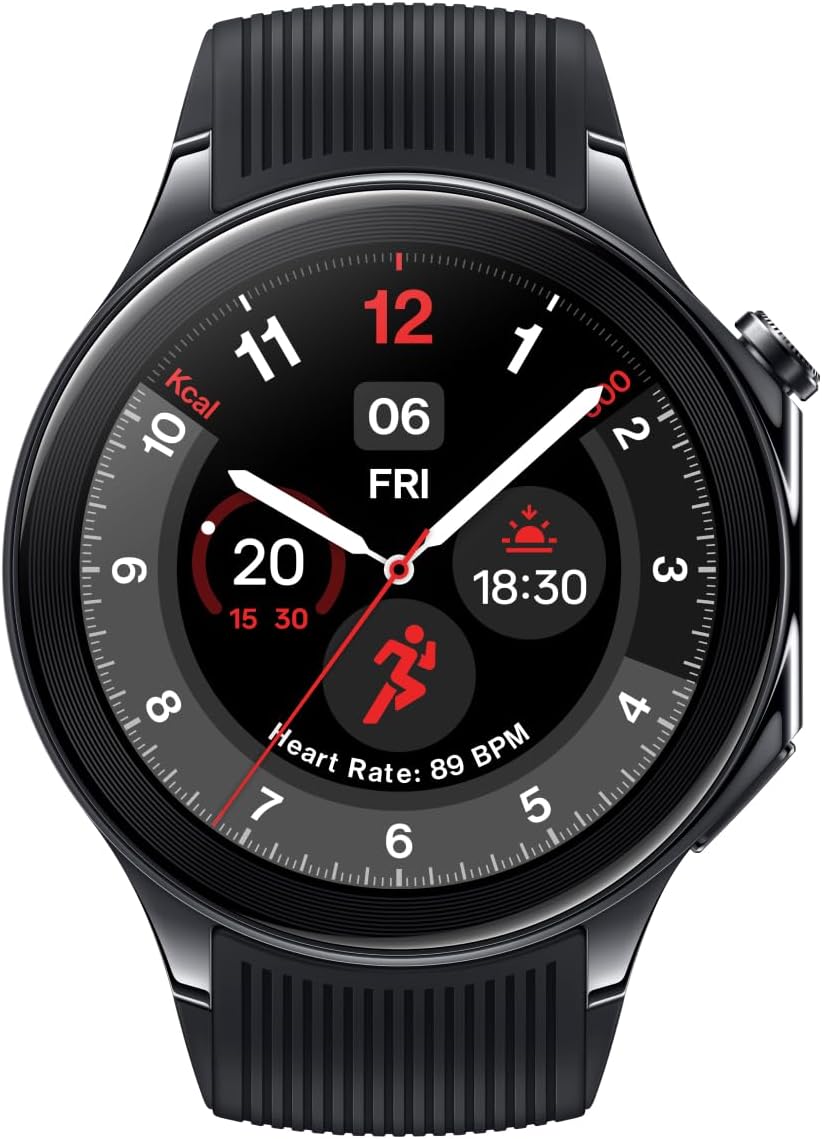
OnePlus Watch 2
Best Overall
Price as of Mar 4, 2026 — see current price on Amazon.
Most people buying a smartwatch in 2026 are not spending $400 on an Apple Watch Series 11 or a Samsung Galaxy Watch Ultra. The under-$200 range is where the volume is, and the options have gotten genuinely good. You can get Wear OS with full Google app support, multi-day battery life, accurate GPS tracking, and health sensors that rival $300-plus models from two years ago.
Picks draw on testing data from RTINGS, PCMag, Wirecutter, and Tom's Guide, plus GPS accuracy benchmarks and heart rate sensor validation studies, narrowing the field to five smartwatches that deliver the best combination of features and reliability under $200.
Quick picks
| Watch | Best For | Battery | OS | Price | |
|---|---|---|---|---|---|
| OnePlus Watch 2 | Overall / Android | 100 hrs | Wear OS | ~$200 | Check Price |
| Samsung Galaxy Watch FE | Samsung ecosystem | 40 hrs | Wear OS | ~$150 | Check Price |
| Google Pixel Watch 2 | Google/Fitbit ecosystem | 24 hrs | Wear OS | ~$180 | Check Price |
| Garmin Venu Sq 2 | Fitness tracking | 11 days | Garmin OS | ~$200 | Check Price |
| Amazfit T-Rex 3 | Outdoor / battery | 27 days | Zepp OS | ~$180 | Check Price |
Best overall: OnePlus Watch 2
OnePlus Watch 2
Best for: Best OverallPros
- 100-hour battery life in smart mode with Wear OS fully active
- Wear OS by Google with full access to Google Play Store apps
- Dual-engine architecture switches between Snapdragon W5 and efficiency chip
- 1.43-inch AMOLED display with 466x466 resolution and sapphire crystal glass
- Full health tracking suite: heart rate, SpO2, sleep, stress
- Built-in GPS with multi-satellite support for accurate outdoor tracking
Cons
- At $200 it sits at the very top of the budget range
- Not compatible with iOS -- Android only
- Wear OS app selection is smaller than Apple Watch
- Bulky 47mm case may not suit smaller wrists
Price as of Mar 4, 2026 — see current price on Amazon.
The OnePlus Watch 2 solved the problem that killed every other Wear OS watch at this price: battery life. The dual-engine architecture runs a Snapdragon W5 Gen 1 chip for full Wear OS tasks and an ultra-efficient BES2700 chip for passive health tracking and basic display functions. When you are not actively using apps, the watch drops to the low-power chip cleanly. The result is 100 hours, over four days, of real-world usage with always-on display, notifications, and health tracking active.
That is not a typo. Most Wear OS watches at any price last 24 to 48 hours. The OnePlus Watch 2 triples that by being smart about when it uses power.
A 1.43-inch AMOLED display under sapphire crystal glass is sharp and readable outdoors. The 466x466 resolution keeps text crisp for notifications and app interfaces. Sapphire crystal resists scratches better than Gorilla Glass, which matters for a device you wear all day.
Health tracking covers heart rate, blood oxygen (SpO2), sleep staging, stress monitoring, and workout detection. GPS accuracy with multi-satellite support (GPS, GLONASS, Galileo, BeiDou) is reliable for running and cycling routes.
Because it runs full Wear OS, you get Google Maps, Google Wallet (NFC payments), Google Assistant, and access to the Play Store for third-party apps. This is the feature gap that separates Wear OS watches from proprietary systems like Garmin OS or Amazfit's Zepp OS.
The main downside: this is Android-only. No iPhone support. And at 47mm, it wears large. If you have wrists under 160mm circumference, consider the Samsung Galaxy Watch FE's 40mm case instead.
Best for Samsung users: Samsung Galaxy Watch FE
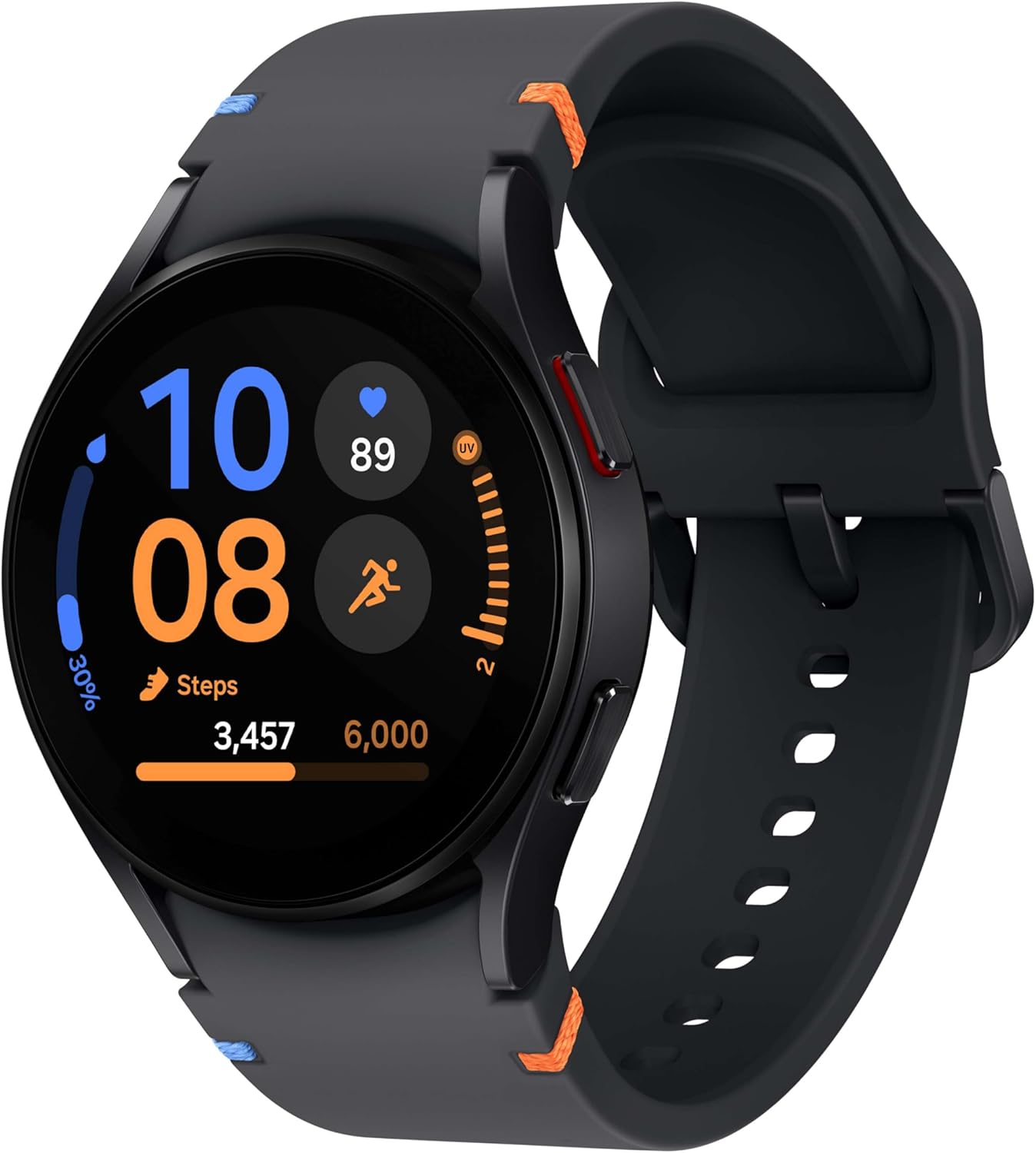
Samsung Galaxy Watch FE
Best for: Best for SamsungPros
- Full Wear OS with Samsung One UI Watch overlay and Galaxy ecosystem integration
- BIA body composition sensor measures body fat, muscle mass, and water
- Personalized heart rate zones for more effective workout targeting
- SmartThings integration controls smart home devices from your wrist
- Compact 40mm case fits smaller wrists comfortably
- $150 is the lowest Wear OS entry point from a major brand
Cons
- 40-hour battery requires charging every other day with typical use
- Best features are locked to Samsung Galaxy phones
- BIA sensor accuracy is approximate -- not medical grade
- 1.2-inch display feels small next to 1.4-inch competitors
Price as of Mar 4, 2026 — see current price on Amazon.
The Galaxy Watch FE takes Samsung's proven smartwatch formula from the Galaxy Watch 5 and repackages it at $150. You get the same BIA (Bioelectrical Impedance Analysis) body composition sensor, the same heart rate tracking with personalized zones, and the same Wear OS platform with Samsung's One UI Watch software on top.
For Samsung Galaxy phone owners, the integration is seamless. Samsung Health syncs automatically. SmartThings lets you control lights, locks, and cameras from your wrist. Samsung Wallet handles NFC payments. Find My Device locates your phone if it is lost nearby. These are features that work with any Android phone in theory, but the experience is noticeably better on Galaxy devices.
The BIA sensor is the standout health feature. Place two fingers on the side button, and the watch measures body fat percentage, skeletal muscle mass, body water, and BMI. The accuracy is not clinical -- expect margins of 3 to 5 percentage points versus a DEXA scan -- but the trend tracking over weeks and months is useful for fitness goals.
At 40mm and 26.6 grams, this is the most compact watch on the list. For people with smaller wrists or those who do not want a chunky fitness watch, the size is an advantage. The trade-off is a 1.2-inch display that feels cramped when reading notifications or navigating apps compared to the 1.43-inch screens on the OnePlus and Amazfit.
Battery at 40 hours means charging every other day with normal use. Heavy GPS workout tracking will drain it faster. The OnePlus Watch 2 and Amazfit T-Rex 3 both outlast it significantly.
Best Google integration: Google Pixel Watch 2
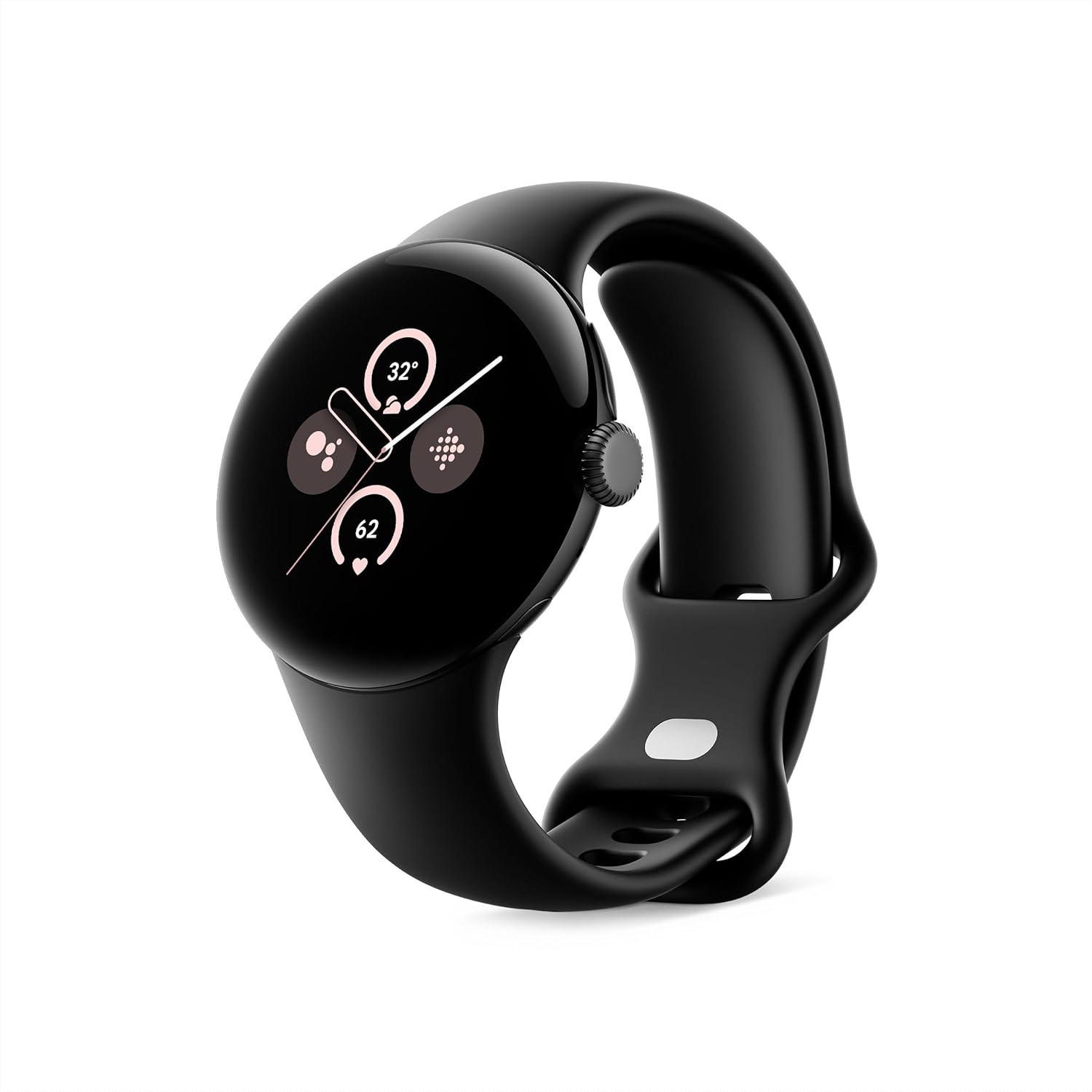
Google Pixel Watch 2
Best for: Best Google / FitbitPros
- Deepest Google integration: Assistant, Wallet, Maps, Home all native
- Fitbit health platform with detailed sleep analysis and readiness scores
- Multi-path heart rate sensor is more accurate than single-path alternatives
- Safety features: crash detection and emergency SOS
- Smooth, minimal design that looks like a real watch rather than tech
- Continuous electrodermal activity (cEDA) for stress tracking
Cons
- 24-hour battery is the shortest on this list
- Small 41mm case with thick bezels reduces effective display size
- Fitbit Premium subscription ($10/month) required for some health insights
- Proprietary band system limits third-party options
Price as of Mar 4, 2026 — see current price on Amazon.
If you are already invested in Google's ecosystem (Pixel phone, Google Home, Google Wallet, Fitbit), the Pixel Watch 2 is the most cohesive experience you can buy under $200. Assistant responds faster on this watch than on any third-party Wear OS device. Home controls work reliably from the wrist. Turn-by-turn haptics in Maps are genuinely useful for walking and cycling.
Fitbit's health tracking platform is the other major selling point. Sleep analysis goes deeper than most competitors, breaking down sleep stages and providing a daily readiness score based on heart rate variability, sleep quality, and recent activity. The multi-path heart rate sensor uses multiple optical paths to improve accuracy during exercise, which addresses the common complaint about wrist-based heart rate being unreliable during high-intensity workouts.
The stress tracking via continuous electrodermal activity (cEDA) measures skin conductance changes throughout the day. Combined with the stress management score, it provides a data-driven view of how your body responds to daily stressors.
Design is subjective, but the Pixel Watch 2's domed glass and minimal bezel-to-body transition look more like traditional jewelry than a tech gadget. If aesthetics matter, this is the most watch-like option on the list.
The honest downside is battery life. Twenty-four hours with typical use means daily charging. If you want to track sleep, you need to charge before bed and wear it overnight, which creates a charging window problem. The Fitbit Premium paywall is also frustrating -- some health insights that should be free require a $10/month subscription after the initial trial.
Best for fitness: Garmin Venu Sq 2
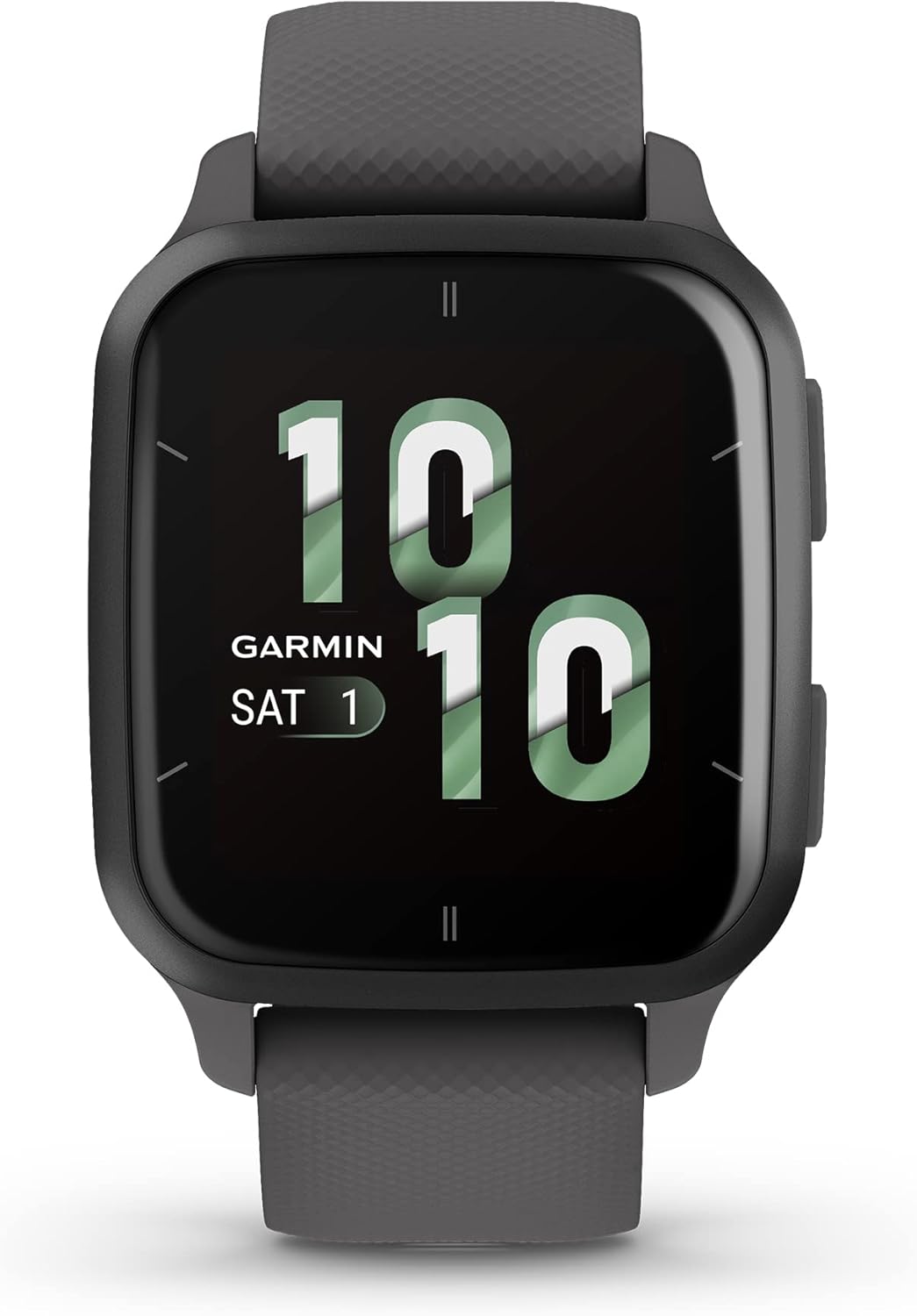
Garmin Venu Sq 2
Best for: Best for FitnessPros
- 11-day battery life with smartwatch mode active
- Garmin's fitness tracking is the industry standard for accuracy and depth
- Built-in GPS with GLONASS and Galileo for precise route tracking
- Body Battery energy monitoring helps optimize recovery and activity
- Sleep Score with detailed sleep staging and HRV tracking
- 25+ preloaded sport profiles including swimming (5 ATM water rating)
Cons
- Garmin OS has no app store -- limited to built-in and Connect IQ apps
- No Google Assistant, Google Wallet, or Google Maps
- Square design is polarizing compared to round watch faces
- AMOLED display brightness is adequate but not class-leading outdoors
Price as of Mar 4, 2026 — see current price on Amazon.
Garmin owns the fitness tracking space for a reason. The Venu Sq 2 delivers the same sensor accuracy and training metrics as Garmin's $400-plus models in a $200 square-faced package. If your primary reason for buying a smartwatch is fitness and health tracking rather than app notifications and Google services, this is the pick.
Eleven-day battery life with smartwatch mode active means weekly charging instead of daily. With GPS workout tracking running frequently (five one-hour sessions per week), expect 7 to 8 days between charges. That is still three to four times longer than any Wear OS watch on this list.
Body Battery is Garmin's energy monitoring system that combines heart rate variability, stress, activity, and sleep data to give you a 0-to-100 score throughout the day. It sounds like a gimmick until you use it for a week and realize it accurately predicts when you have energy for a hard workout versus when you should rest. It is one of the most practically useful health features on any smartwatch.
Training metrics include VO2 max estimation, training load, and recovery time recommendations. GPS accuracy with multi-satellite support matches dedicated running watches. Swimming tracking works at 5 ATM water resistance with automatic stroke detection.
The trade-off is clear: Garmin OS is not Wear OS. There is no Google Play Store. No Google Maps on your wrist. No NFC payments through Google Wallet. You get Garmin Pay (which supports fewer banks) and Garmin's own apps through Connect IQ, but the ecosystem is smaller. If you want a smart extension of your phone, choose the OnePlus Watch 2 or Samsung Galaxy Watch FE. If you want the best fitness tracker that also shows notifications, choose the Garmin.
Best battery life: Amazfit T-Rex 3
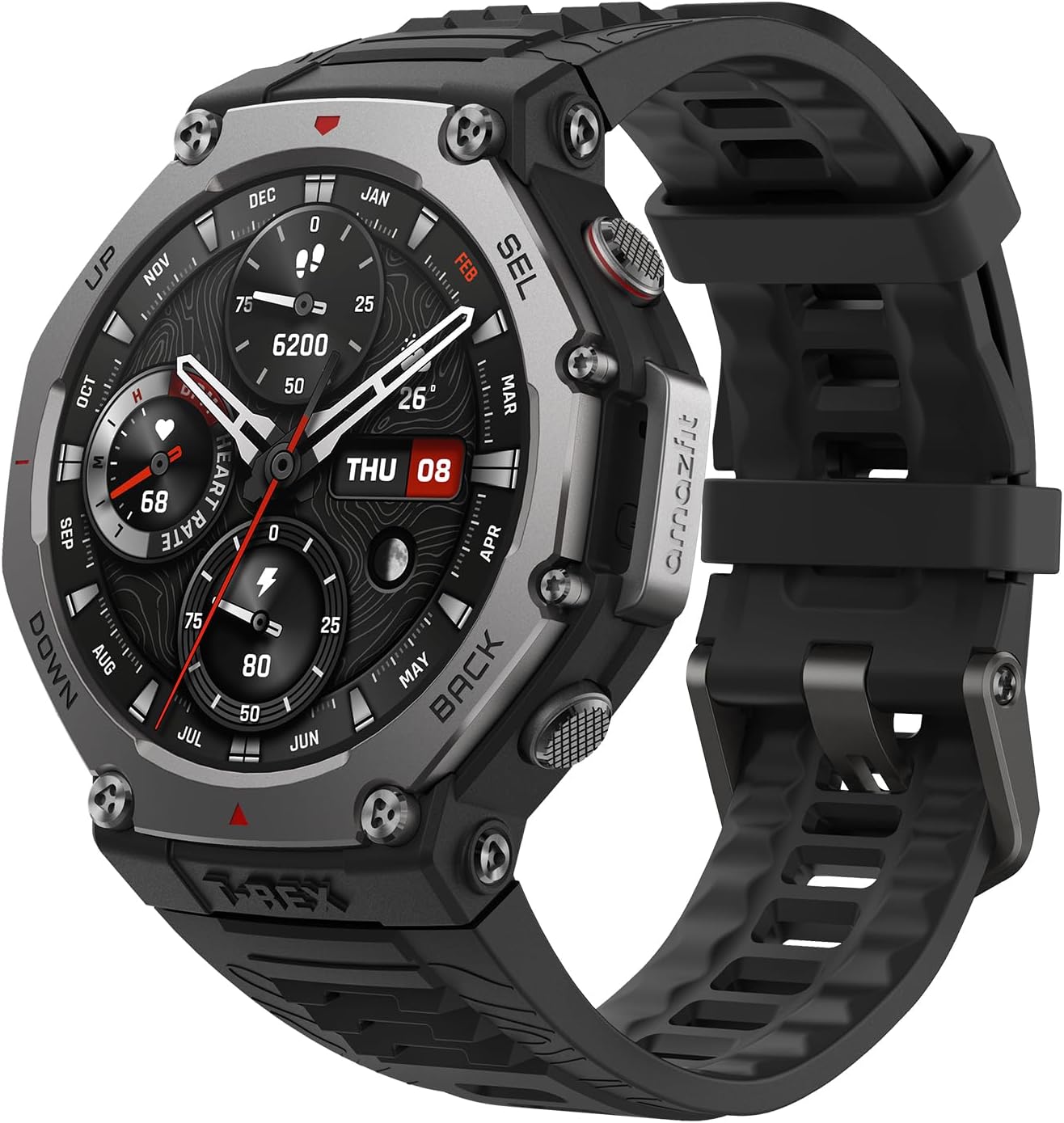
Amazfit T-Rex 3
Best for: Best Battery / OutdoorPros
- 27-day battery life in typical smartwatch mode
- Military-grade durability (MIL-STD-810H) with 10 ATM water resistance
- 1.5-inch AMOLED display at 2,000 nits is the brightest on this list
- Offline maps with route navigation for hiking and trail running
- Dual-band GPS for accurate tracking in canyons and dense forests
- Operates in extreme temperatures from -22F to 158F
Cons
- Zepp OS has limited third-party app support compared to Wear OS
- 48mm case is large and heavy for everyday casual wear
- No Google services: no Assistant, no Wallet, no Maps (has its own offline maps)
- Health tracking accuracy trails Garmin in some metrics
Price as of Mar 4, 2026 — see current price on Amazon.
The Amazfit T-Rex 3 is built for people who spend time outdoors and do not want to think about charging. Twenty-seven days of battery in smartwatch mode is not a ceiling estimate -- real-world reviews from Tom's Guide and PCMag consistently report 20 to 25 days with notifications, health tracking, and occasional GPS workouts. Even with daily hour-long GPS workouts, expect 10 to 14 days between charges.
Military-grade durability (MIL-STD-810H) means this watch is tested against shock, vibration, temperature extremes, humidity, and altitude. The 10 ATM (100-meter) water resistance rating handles swimming, snorkeling, and water sports that would kill most smartwatches. If your activities include hiking, camping, trail running, or any outdoor sport, the T-Rex 3 is built for the abuse.
The 1.5-inch AMOLED display hits 2,000 nits peak brightness, making it readable in direct sunlight without squinting. For outdoor use, this matters more than resolution or color accuracy. The larger display also makes map navigation practical on the wrist.
Offline maps with route navigation is a feature you normally find in $300-plus outdoor watches. Download a map region over WiFi, and you get trail navigation without phone connectivity. Dual-band GPS (L1 + L5) provides accurate tracking in challenging environments where single-band GPS loses signal -- steep canyons, dense tree cover, and urban skyscraper corridors.
The limitation is software. Zepp OS is functional and fast, but the app ecosystem is small. You will not get the same third-party app variety as Wear OS. Health tracking sensor accuracy is good but trails Garmin's Elevate sensors in some head-to-head comparisons, particularly for wrist-based heart rate during high-intensity intervals. For general fitness tracking and outdoor navigation, the difference is minor.
How to choose the right smartwatch under $200
Phone compatibility first. OnePlus Watch 2 and Samsung Galaxy Watch FE work best with Android. Google Pixel Watch 2 works with any Android phone but is optimized for Pixel. Garmin and Amazfit work with both Android and iOS. If you have an iPhone and want a sub-$200 smartwatch, Garmin and Amazfit are your main options since Wear OS does not support iOS.
Battery life versus features. There is an inverse relationship. Full Wear OS watches (OnePlus, Samsung, Google) give you the most apps and Google services but last 1 to 4 days. Garmin lasts 11 days with solid fitness features but no app store. Amazfit lasts 27 days with the fewest smart features. Pick the balance that matches your tolerance for charging.
Fitness tracking depth varies significantly. Garmin provides the deepest training metrics: VO2 max, training load, recovery advisor, Body Battery. Samsung adds body composition. Google/Fitbit excels at sleep analysis. OnePlus and Amazfit cover the basics well. If fitness is your primary motivation, Garmin is the clear leader.
GPS accuracy matters for outdoor sports. Dual-band GPS (Amazfit T-Rex 3) is more accurate in difficult environments than single-band. Garmin's multi-satellite support is consistently reliable. Samsung and Google offer adequate GPS for urban running and cycling. If you run trails or navigate off-road, prioritize dual-band GPS.
Want a broader overview? Check our full best smart watches 2026 roundup covering all price points and platforms. If you are also shopping for wireless earbuds to pair with your new watch, see our best wireless earbuds 2026 picks. And for tracking your fitness at home, our guide to the best smart home hubs 2026 covers the devices that tie your health ecosystem together.
Frequently asked questions
- Are smartwatches under $200 worth buying over a fitness band?
- Yes, if you want a screen large enough to read notifications, built-in GPS for phone-free workouts, or NFC payments. Fitness bands at $50 to $80 track basic health metrics but cannot run apps, display maps, or replace your phone for quick tasks. The gap in capability is significant.
- Can I use a Wear OS smartwatch with an iPhone?
- No. Wear OS watches require an Android phone running Android 9.0 or newer. If you use an iPhone, your options under $200 are Garmin, Amazfit, or other watches with proprietary operating systems that support iOS companion apps.
- How accurate are heart rate sensors on budget smartwatches?
- Optical wrist-based heart rate sensors on modern sub-$200 watches are typically accurate within 3 to 5 BPM during steady-state exercise. Accuracy decreases during high-intensity intervals, cold weather, or if the watch fits loosely. Garmin and Google Pixel Watch 2 have the most validated sensor accuracy in this range. For clinical-grade accuracy, a chest strap is still recommended.
- Do I need cellular (LTE) on a smartwatch?
- Most people do not. LTE lets you make calls, send texts, and stream music without your phone nearby, but it costs $5 to $10 per month for a carrier plan and drains battery significantly faster. At the under-$200 price point, most models are Bluetooth/WiFi only. If you leave your phone behind during workouts, built-in GPS and offline music storage cover the essentials without a monthly fee.
- How long do budget smartwatches last before needing replacement?
- Expect 3 to 4 years before battery degradation makes daily use impractical. Software support varies: Samsung and Google commit to 3 to 4 years of Wear OS updates. Garmin supports watches with firmware updates for 5-plus years. Amazfit's Zepp OS updates are less predictable. Hardware typically outlasts software support.
How We Pick
We pick products by combining spec-level research, price checks, trusted third-party benchmarks, and owner sentiment from high-signal sources.
- Performance and real-world value in the category this guide targets
- Price-to-performance and deal consistency over recent pricing windows
- Build quality, reliability patterns, and known long-term issues
- Recommendation refresh cadence to keep these picks current
Author
TheTechSearch Editorial Team
Independent product reviewers & PC builders
We compare real-world specs, reviews and owner reports, price trends, and user feedback to recommend gear that actually makes sense to buy.