Best Smart Watches 2026
Find the best smartwatches of 2026 for fitness, notifications, and daily wear. Apple Watch, Galaxy Watch, Garmin, and Pixel Watch compared. Expert picks, pro...
As an Amazon Associate we earn from qualifying purchases made through our links — this doesn't affect our picks.
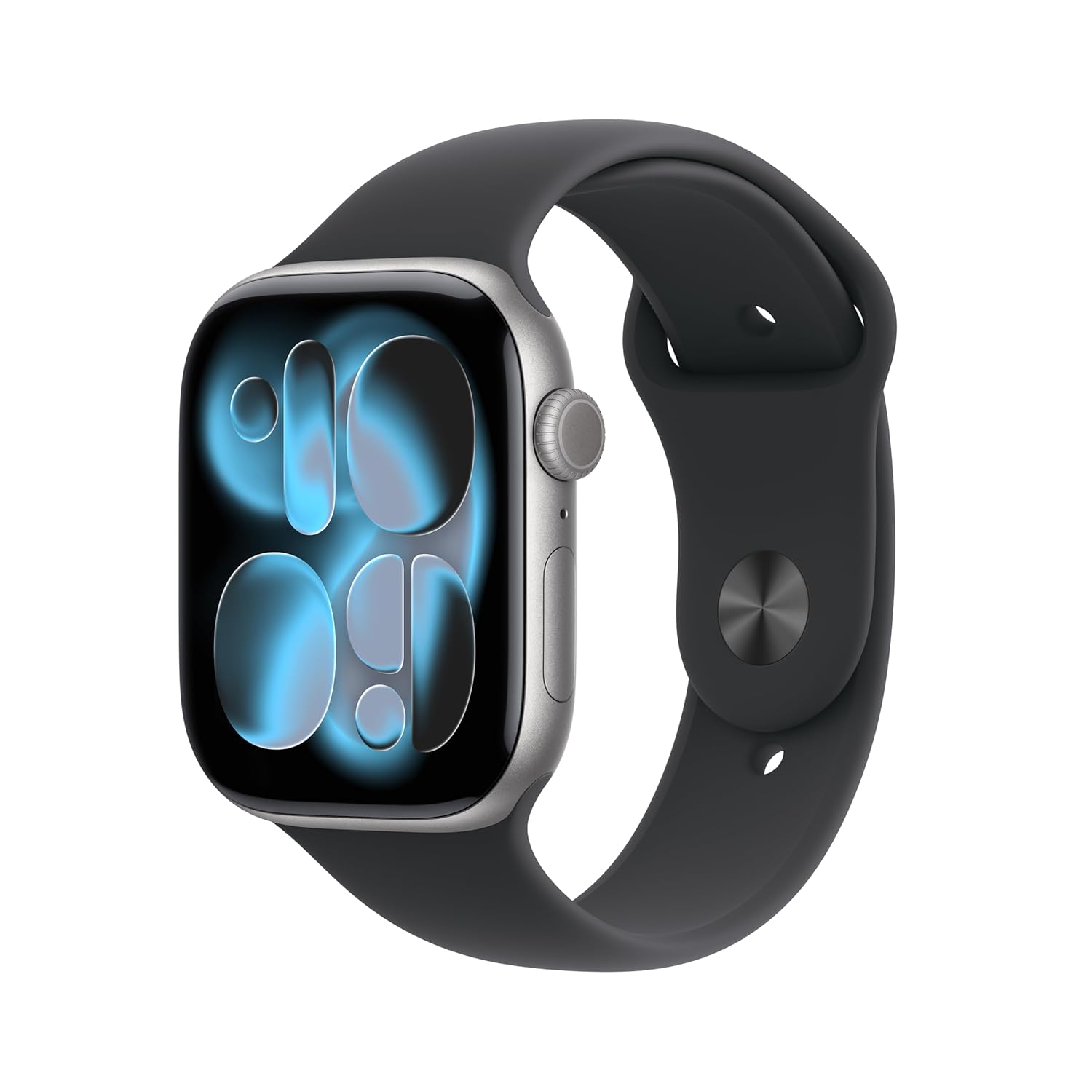
Apple Watch Series 11
Our top recommendation for this category
Price as of Feb 13, 2026 — see current price on Amazon.
Smartwatch technology has reached the point where the differences between watches are less about whether they work and more about which ecosystem you're in and how you use it. Every watch on this list tracks steps accurately, delivers notifications reliably, and lasts at least a full day. The questions that matter are health features, fitness depth, and phone compatibility.
Quick comparison
| Watch | OS | Battery | Health Features | Price | |
|---|---|---|---|---|---|
| Apple Watch Series 11 | watchOS 13 | 36 hours | ECG, SpO2, temperature, hypertension notifications | $399 | Check Price |
| Samsung Galaxy Watch Ultra (2025) | Wear OS 6 | 60 hours | ECG, SpO2, body composition, temperature | $650 | Check Price |
| Google Pixel Watch 3 | Wear OS 5 | 24 hours | ECG, SpO2, skin temperature | $350 | Check Price |
| Garmin Venu 4 | Garmin OS | 9 days | SpO2, body battery, HRV, training readiness | $400 | Check Price |
| Apple Watch SE 3 | watchOS 13 | 18 hours | Heart rate, fall detection, crash detection | $249 | Check Price |
Apple Watch Series 11
Apple Watch Series 11
Pros
- Hypertension notifications powered by Apple Intelligence
- Best app ecosystem on any smartwatch
- 36-hour battery with normal use
- Always-on Retina display is gorgeous
- Seamless iPhone integration
Cons
- iPhone required, no Android support
- $399 before adding bands
- Annual upgrades make last year's model feel old
- Hypertension feature requires initial blood pressure baseline reading
Price as of Feb 13, 2026 — see current price on Amazon.
The Series 11's standout health feature is hypertension notifications. It monitors blood pressure patterns throughout the day and alerts you if it detects consistent readings that could indicate high blood pressure. To be clear: it does not display BP numbers on the watch face. It works as an early warning system, surfacing trends and prompting you to follow up with a doctor. For anyone over 40 or with family history of hypertension, that kind of passive monitoring is genuinely valuable.
Beyond that, it's the most polished smartwatch experience available. The app ecosystem has no peer: every major fitness app, banking app, and utility has an Apple Watch version. Notifications, calls, messaging, Apple Pay, Maps navigation all work better here than on any competing platform.
Battery life finally hits 36 hours, which means you can sleep-track without charging anxiety. A quick top-up each morning is enough to keep it going.
Samsung Galaxy Watch Ultra (2025)
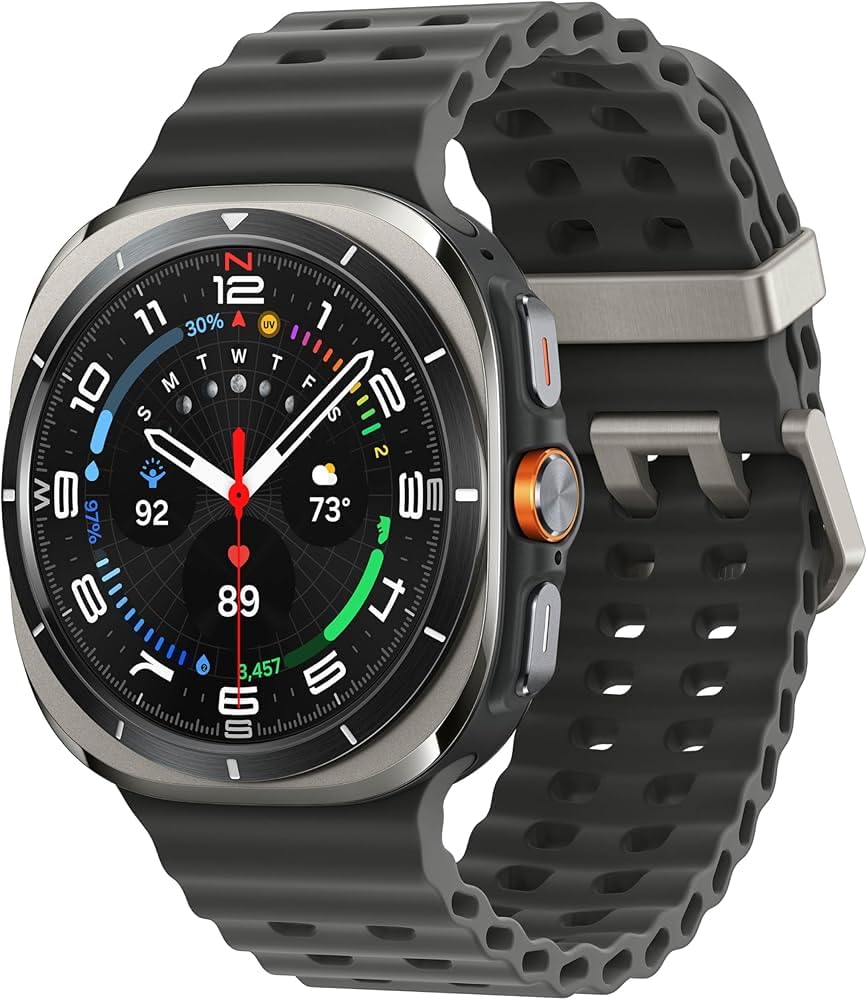
Samsung Galaxy Watch Ultra (2025)
Pros
- 60-hour battery life, best of any full smartwatch
- Titanium build is rugged and premium
- Dual-frequency GPS is the most accurate here
- BIA body composition scanner
- Works with both Samsung and other Android phones
Cons
- $650 is expensive
- Wear OS app selection trails watchOS
- Some features locked to Samsung phones
- Large 47mm case may be too big for smaller wrists
Price as of Feb 13, 2026 — see current price on Amazon.
Samsung's Galaxy Watch Ultra is built for outdoor athletes and people who hate charging. 60 hours of battery means you can take a full weekend trip without a charger. The titanium case handles abuse that would scratch aluminum watches, and dual-frequency GPS gives it an accuracy edge over single-band watches on this list.
Body composition analysis (BIA) measures body fat percentage, skeletal muscle mass, and body water by sending a small electrical current through your body via sensors on the watch. It's not DEXA-scan accurate, but for tracking trends over weeks and months, it's surprisingly consistent.
Google Pixel Watch 3
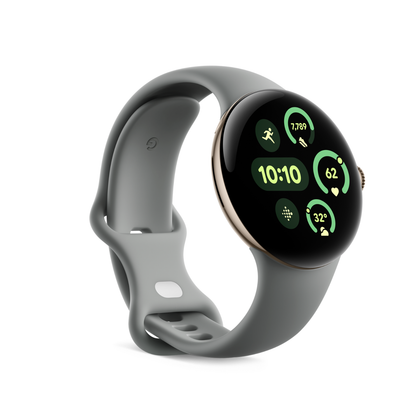
Google Pixel Watch 3
Pros
- Best Google integration: Maps, Assistant, Wallet
- Clean Wear OS interface
- Fitbit fitness tracking built in
- Beautiful domed glass design
- Works with any Android phone
Cons
- 24-hour battery is the shortest here
- Limited third-party watch faces
- Fitbit premium required for detailed health insights
- Older chipset trails Samsung in performance
Price as of Feb 13, 2026 — see current price on Amazon.
The Pixel Watch 3 is the cleanest Wear OS experience. Google's tight hardware-software integration means the interface is smoother than Samsung's, and Google services (Maps turn-by-turn, Assistant, Wallet) work better here than on any other watch.
Fitbit fitness tracking is built in, with detailed workout metrics, sleep analysis, and daily readiness scores. Some advanced health insights require a Fitbit Premium subscription ($10/month), which is annoying but not uncommon in this space.
Battery life at 24 hours is the biggest weakness. You'll need to charge daily, and there's no room for error. Skip your morning charge and you're watching the percentage anxiously by evening.
Garmin Venu 4
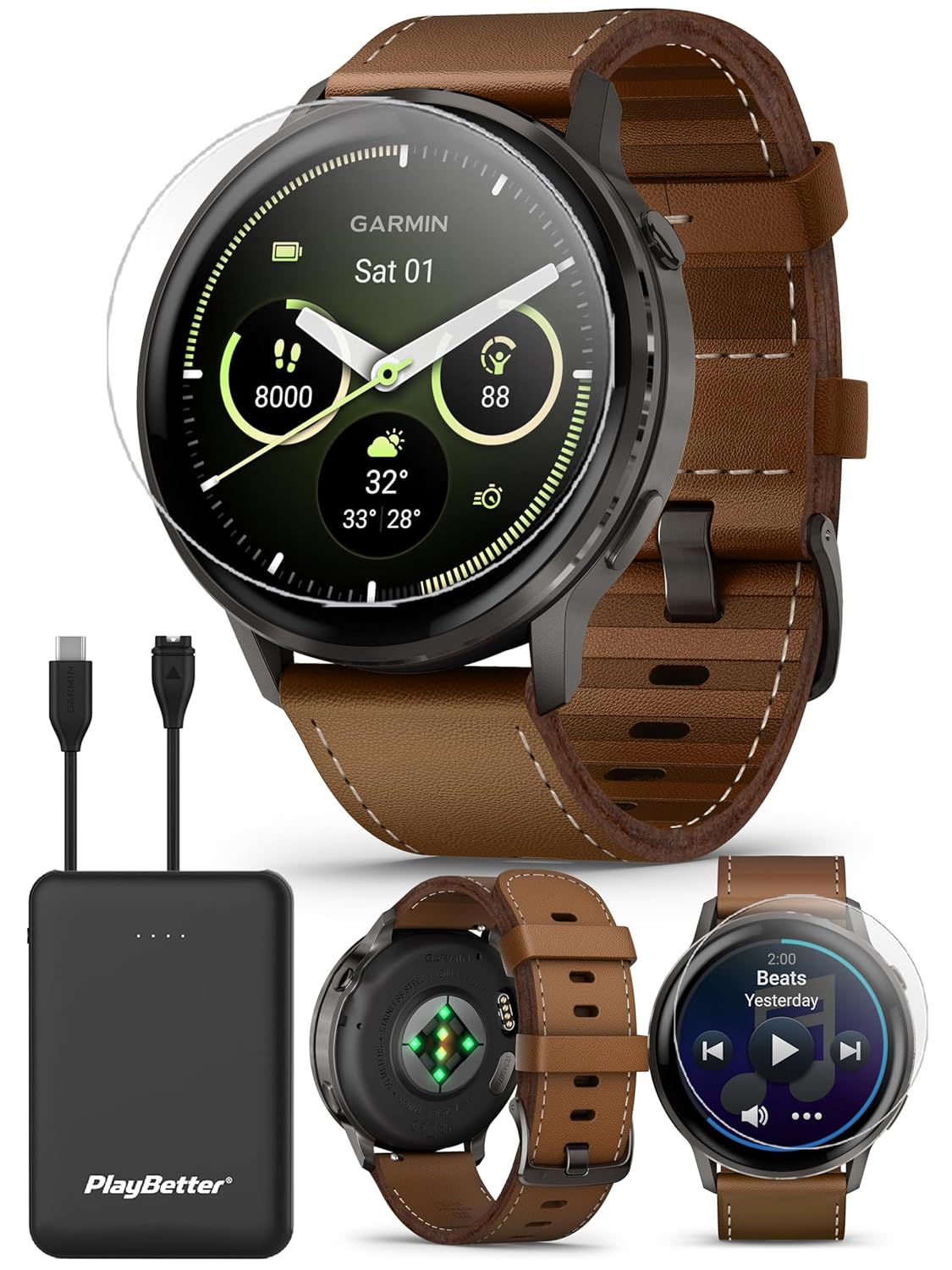
Garmin Venu 4
Pros
- 9-day battery life, charge it weekly
- Best fitness and training metrics of any watch
- Body Battery and Training Readiness are genuinely useful
- Works with both iPhone and Android
- AMOLED display is bright outdoors
Cons
- Limited smart features compared to Apple/Samsung
- No LTE option
- Third-party app support is minimal
- Notification responses are basic
Price as of Feb 13, 2026 — see current price on Amazon.
If fitness is your priority over smart features, the Garmin Venu 4 is the watch. Nine days of battery life. Training Readiness tells you whether your body is recovered enough for a hard workout. Body Battery shows your energy level throughout the day based on stress, sleep, and activity.
The trade-off is smart features. No real app store. No phone calls from the wrist. Basic notification viewing without rich replies. If you want a fitness computer that also tells time and shows notifications, the Venu 4 is perfect. If you want a wrist computer, look at Apple or Samsung.
Apple Watch SE 3
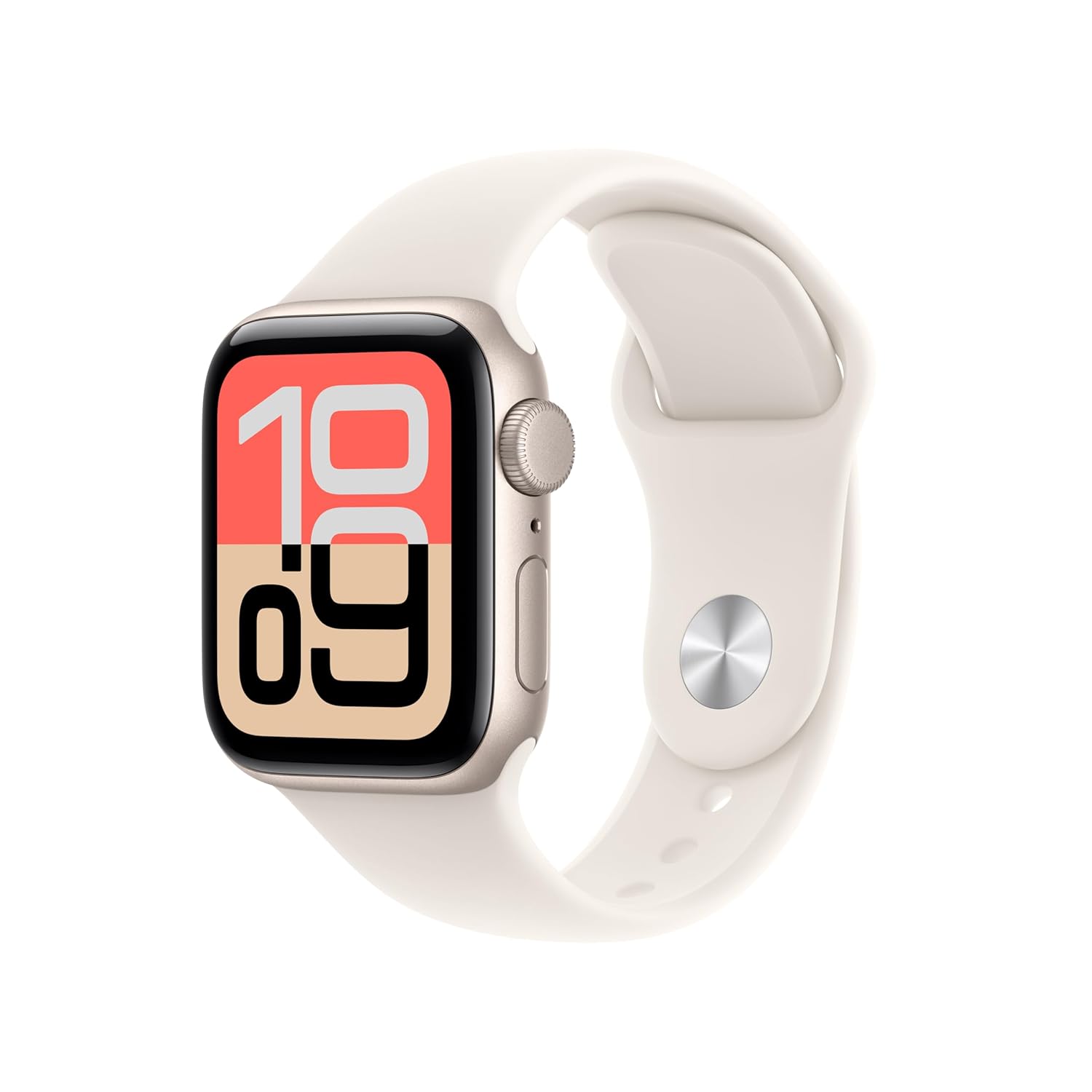
Apple Watch SE 3
Pros
- $249, cheapest way into the Apple Watch ecosystem
- Same chip as Series 10
- Fall detection and crash detection
- Full watchOS app compatibility
- Good enough for most people
Cons
- No always-on display
- No ECG or blood oxygen
- No temperature sensing
- 18-hour battery is tight
Price as of Feb 13, 2026 — see current price on Amazon.
The SE 3 is for iPhone users who want an Apple Watch without spending $400. You get the same chip as the Series 10 (one generation back), full app compatibility, and the core health features: heart rate monitoring, fall detection, and crash detection.
What you lose: always-on display, ECG, blood oxygen, temperature sensing, and hypertension notifications. For most people under 40 with no specific health monitoring needs, those features are nice-to-have rather than must-have.
Which watch for which person
iPhone user, health-focused: Apple Watch Series 11 ($399) Android user, outdoor athlete: Samsung Galaxy Watch Ultra (2025) ($650) Serious fitness tracker: Garmin Venu 4 ($400) Android user, general use: Google Pixel Watch 3 ($350) iPhone user, budget: Apple Watch SE 3 ($249)
Your phone determines your best option more than anything else. Apple Watch requires iPhone. Samsung and Pixel work best with their respective phones. Garmin works equally well with both platforms but offers fewer smart features.
As an Amazon Associate, we earn from qualifying purchases. This doesn't affect our recommendations or editorial independence.
Related guides
Frequently asked questions
- Is an Apple Watch or Android smartwatch better in 2026?
- Apple Watch works exclusively with iPhones and integrates deeply with iOS, Health, and the Apple ecosystem. For iPhone users it is the clear recommendation. Android users have more choices: Samsung Galaxy Watch for tight Samsung integration, Google Pixel Watch for Wear OS with clean Google integration, or Garmin for serious fitness tracking. There is no cross-compatible option that works perfectly with both platforms.
- How long should a smartwatch battery last?
- Apple Watch lasts 18 to 36 hours on a charge depending on model and usage. Most Wear OS watches last 24 to 48 hours. Garmin fitness watches last 5 to 16 days in smartwatch mode, 20 or more days in GPS-only mode. If you want to track sleep without removing the watch to charge, Garmin and Fitbit have a significant advantage. If you mostly care about notification management and do not mind nightly charging, Apple Watch or Wear OS work fine.
- Do smartwatches accurately track health metrics?
- Heart rate monitoring on modern smartwatches is accurate for resting and moderate activity but less reliable during intense exercise due to wrist motion. Blood oxygen (SpO2) sensors give trend data useful for sleep monitoring rather than clinical measurement. ECG features on Apple Watch, Samsung Galaxy Watch, and Garmin Venu series have medical device approval for AFib detection. For casual health awareness, accuracy is sufficient. For medical monitoring, consult a doctor rather than relying solely on smartwatch data.
- What should I look for in a smartwatch for fitness?
- GPS accuracy, sensor variety, battery life, and workout mode breadth. Garmin leads for serious athletes with advanced running metrics, training load analysis, and multi-day battery. Apple Watch Ultra and Samsung Galaxy Watch Ultra are strong for mixed-sport athletes who also want smart features. For casual fitness tracking with step counting, heart rate, and workout summaries, any current mainstream smartwatch suffices.
- Can a smartwatch replace a smartphone?
- For basic tasks, partially. LTE-equipped smartwatches can make calls, send messages, and stream music without a nearby phone. But smartphone replacement requires a data plan, reduces battery life significantly, and limits screen size for anything beyond simple interactions. Most smartwatch users keep their phone nearby and use the watch for quick glances, notifications, and workouts rather than as a standalone device.
How We Pick
We pick products by combining spec-level research, price checks, trusted third-party benchmarks, and owner sentiment from high-signal sources.
- Performance and real-world value in the category this guide targets
- Price-to-performance and deal consistency over recent pricing windows
- Build quality, reliability patterns, and known long-term issues
- Recommendation refresh cadence to keep these picks current
Author
TheTechSearch Editorial Team
Independent product reviewers & PC builders
We compare real-world specs, reviews and owner reports, price trends, and user feedback to recommend gear that actually makes sense to buy.