Best Power Banks 2026
We compared the top power banks for phones, laptops, and everything in between. From tiny 5,000mAh chargers to 100W laptop-charging beasts. Expert picks, pro...
As an Amazon Associate we earn from qualifying purchases made through our links — this doesn't affect our picks.
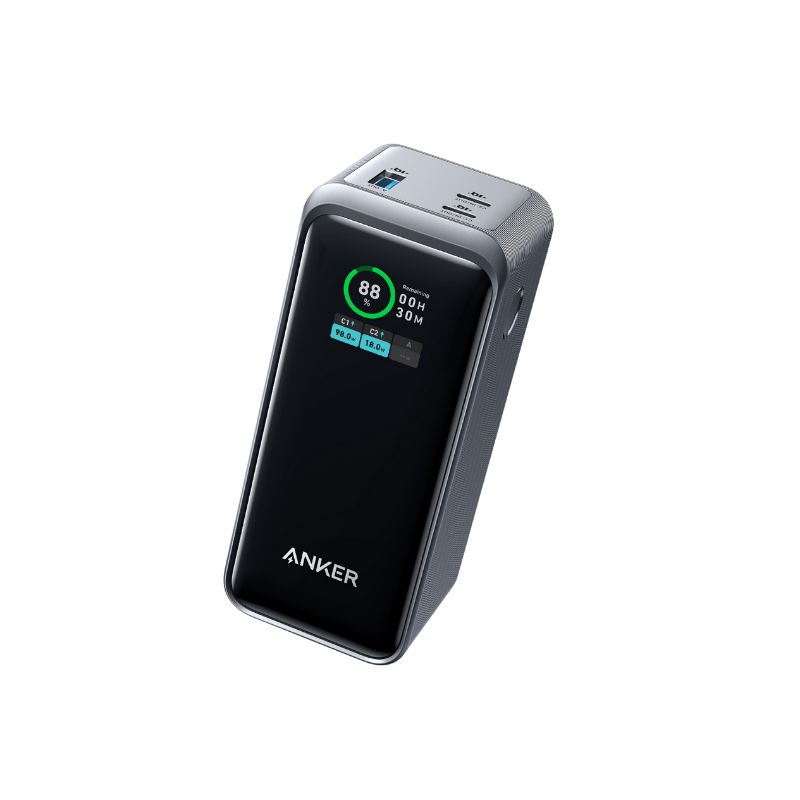
Anker Prime Power Bank 20,100mAh 220W
Our top recommendation for this category
Price as of Jan 25, 2026 — see current price on Amazon.
Phone, earbuds, tablet, sometimes a laptop: travel means a lot of devices that all need charging. This guide sorts the power banks that deliver on their promises from the rest. Spoiler: the number on the box rarely matches what you get in practice, because conversion losses eat part of the rated capacity.
Quick comparison
| Power Bank | Capacity | Max Output | Weight | Price | |
|---|---|---|---|---|---|
| Anker Prime 20,100 | 20,100mAh | 220W | 500g | $130 | Check Price |
| UGREEN 25,000mAh 200W | 25,000mAh | 200W | 560g | $80 | Check Price |
| Baseus Blade 100W | 20,000mAh | 100W | 440g | $60 | Check Price |
| Anker Nano 5,000 | 5,000mAh | 22.5W | 105g | $24 | Check Price |
| Shargeek 140 | 20,000mAh | 140W | 500g | $80 | Check Price |
Anker Prime 20,100mAh
Anker Prime Power Bank 20,100mAh 220W
Pros
- 220W total output charges laptops fast
- Built-in display shows watts, time remaining, and temperature
- Two USB-C + one USB-A port
- Charges itself at 100W
- Compact for the capacity
Cons
- $129.99 is steep for a power bank, and it went up
- Heavy at 500g
- Gets warm under sustained 200W output
- Anker app required for firmware updates
Price as of Jan 25, 2026 — see current price on Amazon.
The Anker Prime is the best daily carry here. 200W output means it can charge a MacBook Air at full speed while simultaneously topping off a phone. The built-in display is genuinely useful, it shows real-time wattage, estimated time remaining, and battery temperature, so you're never guessing.
20,000mAh works out to about 4 full iPhone charges or one full MacBook Air charge with some left over. Recharging the bank itself at 100W takes about 45 minutes from empty, which is fast enough to top it off over lunch.
The form factor is surprisingly compact, roughly the size of a deck of cards, but denser. 500g is noticeable in a pocket but fine in a bag. Build quality is premium; the aluminum shell feels like it can take a beating.
UGREEN 25,000mAh 200W
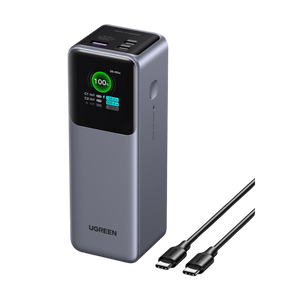
UGREEN 25,000mAh 200W Power Bank
Pros
- 25,000mAh, more capacity than the Anker for less money
- 200W output matches premium options
- Digital display with useful info
- Three USB-C ports
- Airline-approved at 90Wh
Cons
- Larger and heavier than Anker Prime
- Display is less readable in sunlight
- Charges slightly slower than advertised in cold weather
- Brand less established than Anker
Price as of Jan 25, 2026 — see current price on Amazon.
UGREEN has been quietly making great charging products, and this power bank is their best yet. 25,000mAh at $80 undercuts the Anker Prime by $50 while offering roughly 25% more capacity. Output is close at 200W, so charging speeds should be comparable for most phones and laptops.
The trade-off is size. It's noticeably larger and heavier than the Anker. But if you're choosing between these two based on specs alone, UGREEN wins on value. The three USB-C ports (no USB-A) are a modern choice that I appreciate.
Baseus Blade 100W
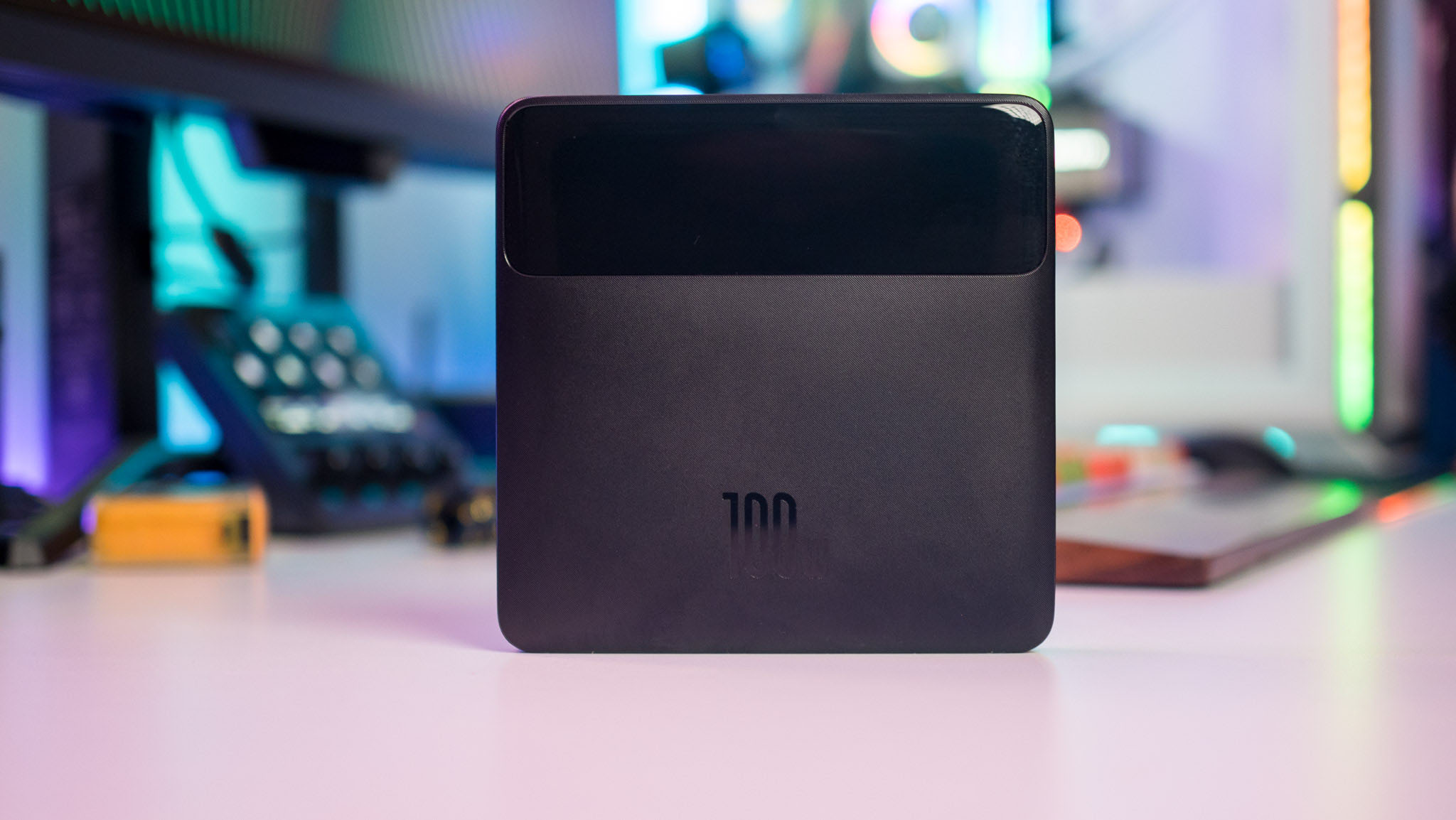
Baseus Blade Travel Power Bank 100W 20,000mAh
Pros
- Ultra-thin design, fits in a laptop sleeve
- 100W output charges most laptops
- 20,000mAh: enough for a laptop top-up and a phone
- Two USB-C plus two USB-A
- Great balance of size, capacity and price
Cons
- 100W is down on the 140W the older Blade 2 managed
- Gets warm during high-output charging
- Display is small and hard to read
- 100W only through one specific port
Price as of Jan 25, 2026 — see current price on Amazon.
The Blade 2 is for people who hate carrying bulky power banks. It's shaped like a thin rectangle, roughly the dimensions of a small tablet, and slides into a laptop sleeve without adding noticeable bulk. 12,000mAh is enough for about 2.5 phone charges or a partial laptop top-up.
140W output through the primary USB-C port is enough to charge most thin laptops at a reasonable speed. On a long flight, that's enough to keep a thin laptop like a MacBook Air going, though don't expect a full charge.
Anker Nano 5,000mAh
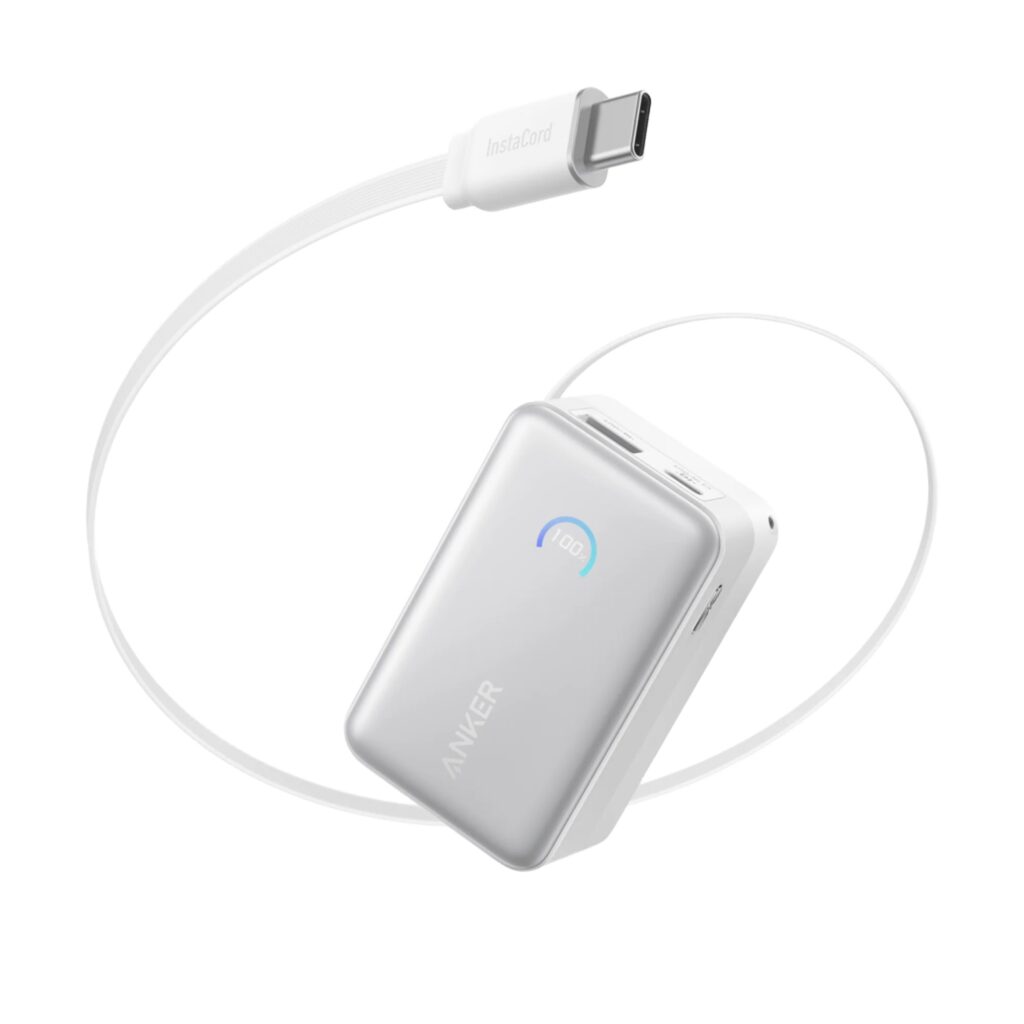
Anker Nano Power Bank 5,000mAh
Pros
- Still under $25, basically an impulse buy
- Built-in USB-C connector, no cable needed
- 105g, lighter than most phones
- Fits in any pocket
- One full phone charge
Cons
- Only 5,000mAh, one phone charge max
- 22.5W max output is slow by 2026 standards
- Built-in connector means no cable flexibility
- No display
Price as of Jan 25, 2026 — see current price on Amazon.
This tiny thing is made to live on a keychain. The built-in USB-C connector folds out and plugs directly into your phone, no cable needed. It's about the size of a lipstick tube and adds one full charge to an iPhone or roughly 80% to a Samsung flagship.
At $23.99, there's no reason not to own one. Toss it in your bag for emergencies. It won't charge your laptop, it won't fast-charge anything, but it'll keep your phone alive when you need it.
Shargeek 140
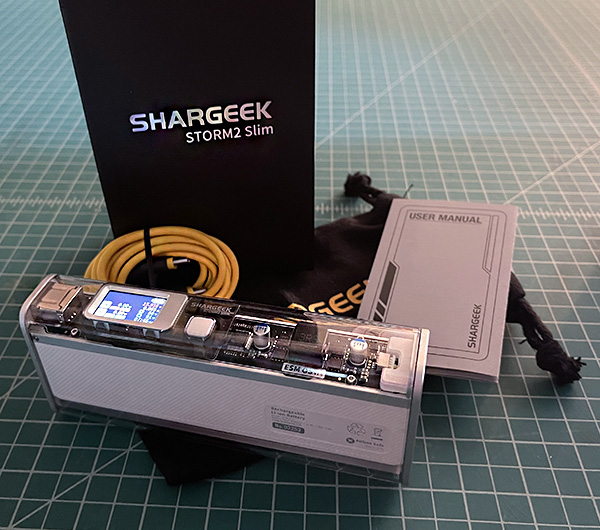
Shargeek 140 Power Bank 20,000mAh 140W
Pros
- Transparent case shows internal components
- Smart display with per-port monitoring
- 140W output, enough for a 16-inch laptop at full speed
- Comfortably airline-legal at 74Wh
- Conversation starter, it looks cool
Cons
- Heavier than similar-capacity options
- 20,000mAh, down from the Storm 2 it replaces
- The see-through design attracts fingerprints
- Shargeek support is slower than Anker's
Price as of Jan 25, 2026 — see current price on Amazon.
The Storm 2 that used to hold this slot is gone, and so is the rest of that line: checked 8 September 2026, we could not find a buyable Storm 2 anywhere on Amazon. Shargeek's current transparent-case bank is the Shargeek 140, and it is the one linked here at $79.89.
It is the same idea, done to a different balance. The transparent case still reveals the internal cells and circuitry, and the display still shows per-port wattage. Capacity drops from 25,600mAh to 20,000mAh, and output rises from 100W to 140W, which is the better trade for anyone charging a large laptop: 140W is full-speed for a 16-inch MacBook Pro where 100W was not.
The capacity drop has one genuine upside. At 74Wh this sits well clear of the 100Wh airline limit, where the Storm 2's 94.5Wh was close enough that a cautious gate agent could make it a problem.
Buying tips
Match wattage to your devices. Check what wattage your laptop charger uses. If your laptop needs 67W, a 30W power bank won't cut it, the laptop will drain faster than it charges.
Real capacity vs rated capacity. A 20,000mAh bank delivers roughly 12,000-13,000mAh of usable charge due to voltage conversion losses. Plan accordingly.
Airline limits. Anything under 100Wh (roughly 27,000mAh) can fly in carry-on. Over 100Wh requires airline approval. Over 160Wh can't fly at all.
USB-C PD is non-negotiable. Any power bank you buy in 2026 should support USB Power Delivery. Skip anything that only offers USB-A output.
My picks
Phone-only charging: Anker Nano ($24). Laptop + phone: Anker Prime ($130) or the UGREEN ($80) if you want more capacity for less. Slim travel: Baseus Blade 100W ($60).
As an Amazon Associate, we earn from qualifying purchases. This doesn't affect our recommendations or editorial independence.
Related guides
Frequently asked questions
- What capacity power bank do I actually need?
- A 10,000 mAh power bank charges most smartphones 2 to 2.5 times. A 20,000 mAh bank provides 4 to 5 charges or one full laptop charge if it supports 45W or higher USB-C output. For day trips, 10,000 mAh is enough. For multi-day travel without reliable outlet access, 20,000 to 26,800 mAh covers multiple devices. Note that conversion losses mean real-world capacity is roughly 65 to 70% of the rated mAh.
- How fast should a power bank charge my phone?
- Look for 18W to 30W USB-C Power Delivery output to fast-charge modern smartphones. The Anker 733 and similar mid-range banks deliver 30W, which fully charges most phones in about 60 to 90 minutes. Some power banks support 65W or higher for laptops. For comparison, cheap 5W charging banks top off a phone in 3 to 4 hours versus 1 to 1.5 hours at 30W.
- What makes a power bank good for travel?
- Compact size relative to capacity, USB-C input and output, airline compliance (under 100Wh for most banks, or under 160Wh with airline approval), and pass-through charging that lets you charge devices while the bank itself recharges. MagSafe compatibility is a plus for iPhone users. Look for power banks that charge themselves in 2 hours or less so you are not stuck waiting at hotels.
- Can I bring a power bank on a plane?
- Power banks must go in carry-on luggage, never checked bags. The limit is 100Wh (about 27,000 mAh at 3.7V) without special approval. Most consumer power banks under 26,800 mAh fall within this limit. Banks between 100Wh and 160Wh require airline approval. Check the power bank's Wh rating on the label, not just mAh. Airlines enforce this strictly.
- Can a power bank charge a laptop?
- Only if the power bank outputs 45W or more USB-C Power Delivery. A laptop drawing 65W for heavy work will drain a power bank providing 45W, just more slowly than it otherwise would. For charging during sleep or light use, a 45W to 65W bank keeps most thin-and-light laptops topped up. Gaming laptops and power-hungry machines need 100W or higher, which most consumer power banks cannot provide.
How We Pick
We pick products by combining spec-level research, price checks, trusted third-party benchmarks, and owner sentiment from high-signal sources.
- Performance and real-world value in the category this guide targets
- Price-to-performance and deal consistency over recent pricing windows
- Build quality, reliability patterns, and known long-term issues
- Recommendation refresh cadence to keep these picks current
Author
TheTechSearch Editorial Team
Independent product reviewers & PC builders
We compare real-world specs, reviews and owner reports, price trends, and user feedback to recommend gear that actually makes sense to buy.