Best AV Receivers 2026
The top home theater receivers with Dolby Atmos and HDMI 2.1, ranked for every budget from $749 to $2,800. Expert picks, pros and cons, and side-by-side comp...
As an Amazon Associate we earn from qualifying purchases made through our links — this doesn't affect our picks.
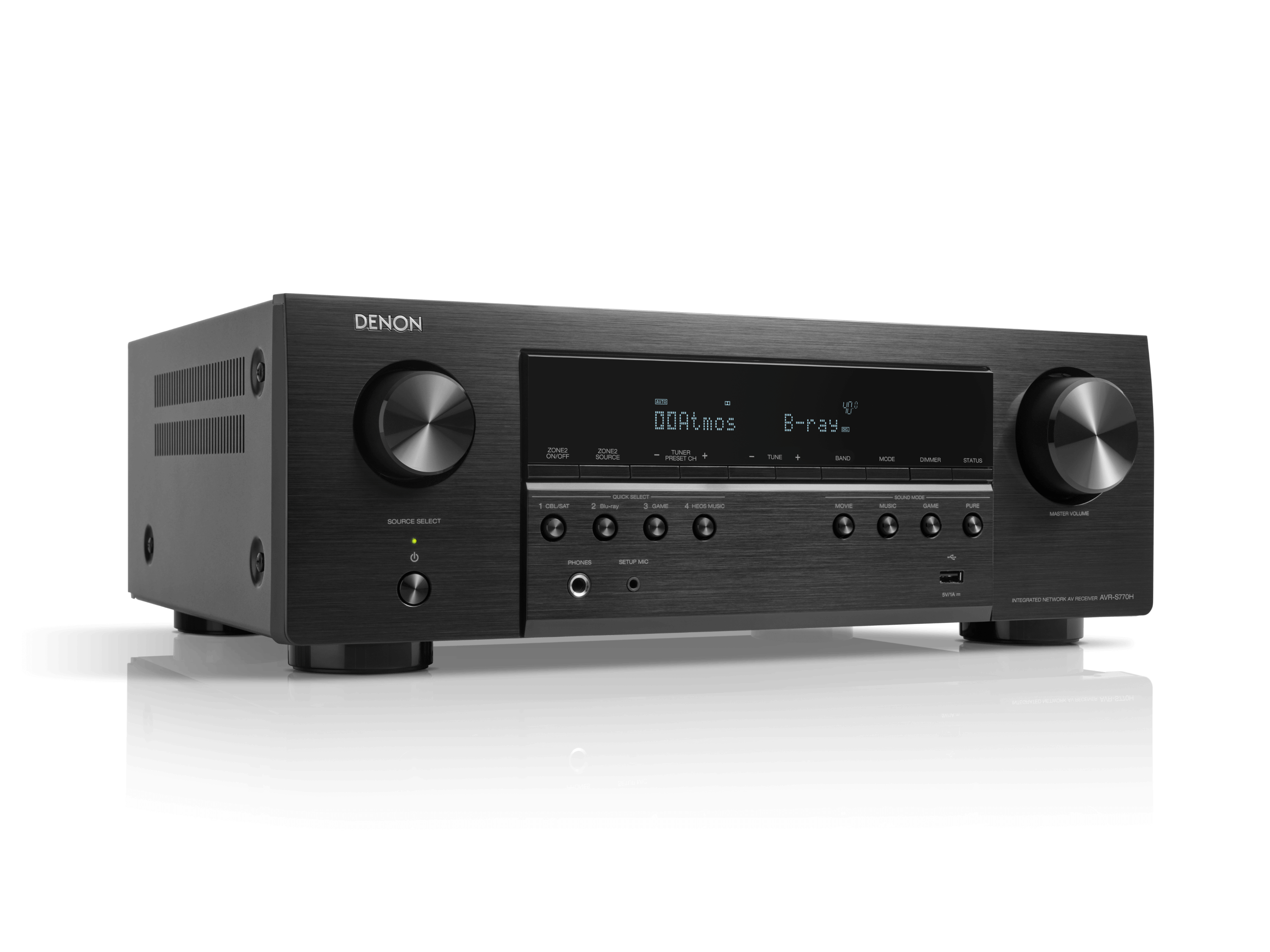
Denon AVR-S770H
Our top recommendation for this category
Price as of Jul 12, 2026 — see current price on Amazon.
Dolby Atmos used to cost four figures just for the receiver alone. In 2026, you can get a solid 7.2-channel Atmos setup for about $750. HDMI 2.1 with 4K/120Hz support is now standard across the board, and room correction systems that used to be premium-only features are trickling down to mid-range units. If you're still running a receiver from 2018 or 2019 -- or relying on a soundbar -- this is genuinely a good moment to upgrade.
From small apartment living rooms to dedicated theater rooms, these are the five receivers worth knowing about. The Denon AVR-X3800H sits at the bottom because it's often out of stock, and the four above it are easier to buy.
| Denon AVR-S770H | Yamaha RX-V6A | Sony STR-AN1000 | Marantz Cinema 50 | Denon AVR-X3800H | |
|---|---|---|---|---|---|
| Price | $749 | $699 | $1,148 | $2,800 | $1,799 (unavailable) |
| Channels | 7.2 | 7.2 | 7.2 | 9.4 | 9.4 |
| Power per Channel | 75W | 100W | 165W | 110W | 105W |
| HDMI 2.1 Inputs | 6 | 6 | 6 | 6 | 6 |
| Room Correction | Audyssey MultEQ | YPAO | D.C.A.C. IX | MultEQ XT32 + Dirac Live | MultEQ XT32 + Dirac Live |
| Best For | Most Buyers | Music + Movies | Smart Home | Audiophiles | Out of stock |
Denon AVR-S770H: Editor's Choice
Denon AVR-S770H
Pros
- Six full HDMI 2.1 inputs -- not just one or two
- Clean Dolby Atmos and DTS:X decoding
- HEOS multiroom built in
- Audyssey auto-calibration handles most rooms well
Cons
- 75W can feel thin in larger rooms above 400 sq ft
- Audyssey MultEQ basic -- missing the deeper XT32 precision
Price as of Jul 12, 2026 — see current price on Amazon.
The AVR-S770H is the one I'd buy today. It's where I'd start if you're new to surround sound or upgrading from a soundbar, and with the X3800H out of stock it's also the receiver that covers the most people well. It handles a 7.2-channel configuration or 5.1.2 for Atmos -- five main speakers, one sub, two height channels. That covers the majority of living rooms without overcomplicating things.
At $749 it isn't the bargain it was at the start of the year, but nothing else here gives you six full-bandwidth HDMI 2.1 inputs and clean Atmos decoding for less. If your ceiling is a thousand dollars, we went deeper on that budget in the best AV receivers under $1,000.
Six HDMI 2.1 inputs is the headline feature here, and it genuinely matters. Most budget receivers still skimp on HDMI 2.1 and give you one or two ports while filling the rest with 2.0. That's a problem when you're running a PS5, Xbox Series X, and a gaming PC alongside your streaming boxes. With the S770H, everything connects at full bandwidth.
Audyssey MultEQ handles room correction automatically. Run the microphone through the guided setup and it maps your room in about 10 minutes. It's not the deepest calibration available -- the XT32 version in the X3800H is noticeably better for bass management -- but it gets the job done for most setups without requiring any manual tweaking.
HEOS built in means you can stream to other HEOS-compatible speakers in other rooms without buying additional hardware. The 75W per channel rating is fine for rooms up to about 400 square feet. Push it harder and it starts sounding compressed at high volumes.
Yamaha RX-V6A: Best for Music Listeners

Yamaha RX-V6A
Pros
- YPAO room correction excels for music listening
- 100W per channel with genuine headroom
- MusicCast multiroom system is class-leading
- Cinema DSP 3D adds useful listening modes
Cons
- No Chromecast built-in, only AirPlay 2 and Bluetooth
- Atmos surround field slightly narrower than Denon at this price
Price as of Jul 12, 2026 — see current price on Amazon.
Yamaha's YPAO room correction system leans toward music listening. Most receivers tune for movies first and music second. YPAO does the opposite, which makes the RX-V6A a better fit for jazz, acoustic guitar, and classical recordings than the competing Denon at a similar price.
Cinema DSP 3D adds Yamaha's simulation modes (concert hall, stadium, church). They sound gimmicky on paper, but they are built to change the spatial feel of live concert recordings, which makes them a fun extra for music fans.
MusicCast is Yamaha's multiroom ecosystem, and honestly it's better than HEOS. The app is cleaner, connections are more stable, and the speaker selection is solid if you want to expand the system later.
Power is 100W per channel, meaningfully more headroom than the Denon S770H. The RX-V6A handles a true 7.2.2 configuration with two dedicated height channels for Atmos, rather than borrowing from front channels. That matters for how convincing the height effect sounds.
Two real caveats: no Chromecast built-in (just AirPlay 2 and Bluetooth for wireless streaming), and Yamaha's Atmos decoding isn't quite as polished as Denon's on action movie content. For evening listening with good music, the Yamaha wins. For pure action movie nights, the Denon S770H comes out slightly ahead.
Sony STR-AN1000: Best Smart Home Integration
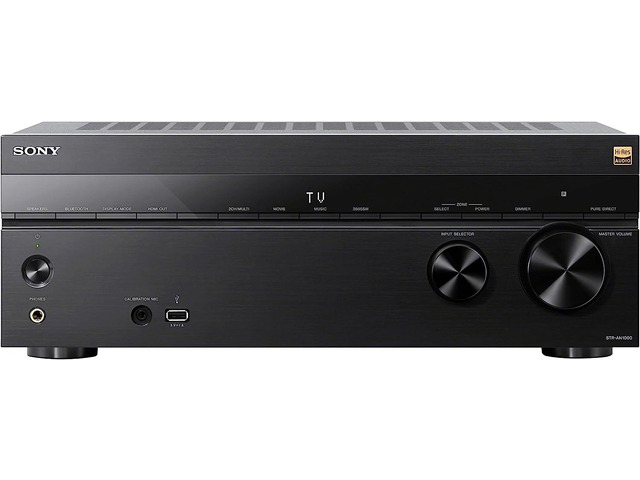
Sony STR-AN1000
Pros
- Google Chromecast built-in -- no other receiver at this price has it
- 360 Spatial Sound Mapping works well with fewer speakers
- D.C.A.C. IX calibration is the most thorough auto-setup here
- 165W at 6 ohms is genuinely powerful output
Cons
- $449 jump over the Yamaha RX-V6A for incremental gains
- Currently listed above Sony's own $998 MSRP
- Sony multiroom ecosystem is smaller than HEOS or MusicCast
Price as of Jul 12, 2026 — see current price on Amazon.
The STR-AN1000 leans hard on smart home features, and for Google ecosystem users that's a real differentiator. Chromecast built-in means you can cast audio directly from your phone without any additional hardware or app switching. No other receiver at this price point offers that.
360 Spatial Sound Mapping is actually clever. If you've only got three or four physical speakers, it synthesizes virtual speakers to fill in the gaps. Reviewers report it does a reasonable job creating width and some overhead presence from a 5.1 setup. Not the same as physical height channels, but better than nothing for smaller setups.
D.C.A.C. IX -- Digital Cinema Auto Calibration, ninth generation -- is Sony's auto-setup system, and it's thorough. It measures nine calibration points rather than the typical one or two, adjusting distance, angle, sound pressure, and frequency response separately for each speaker. Setup takes longer, but the imaging tightens up noticeably compared to Audyssey basic.
The price is where this gets complicated. It's listed at $1,148 right now, which is above Sony's own $998 MSRP, and it puts the STR-AN1000 $399 above the Denon S770H for gains that are real but incremental. If you're already deep in the Google ecosystem, it still makes sense. If you're not, buy the Denon and spend the difference on speakers.
Marantz Cinema 50: Premium Pick for Audiophiles

Marantz Cinema 50
Pros
- HDAM amplification delivers audiophile-grade music quality
- 110W per channel measures better than most receivers' rated specs
- Dirac Live plus Audyssey XT32 for dual-system room correction
- Premium build quality and chassis weight signal long-term durability
Cons
- $1,001 more than the X3800H for incremental gains in most use cases
- Size and weight require planning -- this is a heavy unit
Price as of Jul 12, 2026 — see current price on Amazon.
Marantz's approach has always been to spend more on the amplifier section than competitors at the same price. The Cinema 50 runs HDAM (Hyper Dynamic Amplifier Module) circuitry that Marantz has been refining since the 1990s. In practice, this means cleaner noise floors and a more analog-feeling sound compared to receivers that prioritize DSP features over amp hardware quality.
On paper the Cinema 50 matches the X3800H spec-for-spec: same channel count, same input configuration, same format support. Where it separates itself is on two-channel music playback. Put the same recording through both and most critical listeners can tell the difference. The Cinema 50 has more air in the high frequencies and tighter definition in the bass. It's subtle, but it's real.
Dirac Live is here too, and the 110W per channel rating is slightly above the X3800H's 105W. Not a meaningful real-world difference on its own, but Marantz's 110W tends to measure better in independent amplifier tests than the rated spec suggests.
Look, the Cinema 50 earns its premium for people who listen to a lot of music through their home theater system and want the amplifier quality to match. With the X3800H out of stock it's also the only receiver here that ships with Dirac Live, which is a big part of why it's still on this list at $2,800.
Denon AVR-X3800H: The 9.4-Channel Pick When It's in Stock
On spec the X3800H is the most capable receiver here: the first step into 9.4-channel territory, IMAX Enhanced and Auro 3D alongside Dolby Atmos and DTS:X, Audyssey MultEQ XT32, and Dirac Live as a free download from Denon's site. Nine amplifier channels run a full 7.1.2 setup with no external amp, and six HDMI 2.1 inputs with three outputs handle a PS5, an Xbox Series X, an Apple TV and a streaming box at once.
Stock comes and goes, so check the listing before you plan around it. If it's out and you want Dirac Live, the Marantz Cinema 50 is the alternative. If you want the best receiver you can reliably put in a cart, that's the Denon AVR-S770H at the top of this guide.

Denon AVR-X3800H
Pros
- 9.4 channels with IMAX Enhanced and Auro 3D support
- Dirac Live room correction included as a free download
- Six HDMI 2.1 inputs plus three outputs
- Audyssey MultEQ XT32 for deep bass management
Cons
- Often out of stock, so check availability first
- $1,799 is a serious investment when it is in stock
- Setup takes real time if you want to do Dirac Live properly
Price as of Jul 12, 2026 — see current price on Amazon.
How to Pick the Right AV Receiver
How Many Channels Do You Actually Need?
Most people start with a 5.1 system and wonder if they need to go higher. A 7.2.2 configuration (seven speakers, two subs, two height channels) covers Dolby Atmos well in most rooms. A 5.1.2 setup handles it adequately. Fewer than five channels and you're missing significant surround effect.
If your room is under 300 square feet, a 5.2 receiver is plenty. Larger rooms benefit from the 7.2 channel configurations found in every receiver on this list.
HDMI 2.1: Why Every Input Should Be 2.1 Now
The PS5 Pro, Xbox Series X, and RTX 5070-class gaming PCs all output 4K at 120Hz. HDMI 2.0 tops out at 4K/60Hz. Look for receivers where every HDMI input is 2.1, not just one or two "gaming" labeled ports while the rest are 2.0. All five receivers in this guide have six HDMI 2.1 inputs -- that's the standard to look for in 2026.
Room Correction Systems: A Quick Breakdown
Audyssey MultEQ (basic, found in the S770H): solid, fully automatic, handles most rooms well with no adjustment needed.
YPAO (Yamaha RX-V6A): best performance for music listening, slightly less aggressive bass correction than Audyssey.
D.C.A.C. IX (Sony): the most measurement points of any system here, produces the tightest stereo imaging and speaker placement accuracy.
Audyssey MultEQ XT32 (X3800H, Cinema 50): deeper precision than basic MultEQ, better sub-bass management below 40Hz, more filter points for frequency correction.
Dirac Live (X3800H, Cinema 50): the most complete room correction system available at any price. Full-spectrum correction, custom target curves, dramatically improves listening in untreated rooms. Worth the price step on its own.
Power Output: What's Actually Enough?
75W per channel at 8 ohms handles most bookshelf and tower speaker setups in medium-sized rooms. The spec that often matters more is 4-ohm performance. Budget receivers clip noticeably at lower impedance loads. Every receiver on this list handles 4-ohm loads without significant distortion, which matters if you're pairing with speakers that dip below 6 ohms.
For rooms above 400 square feet, aim for 100W per channel or more.
Streaming and Smart Home Integration
All five support Bluetooth and Wi-Fi streaming. The differentiators worth knowing:
- AirPlay 2: all five models
- HEOS multiroom: both Denon models, both Marantz models
- MusicCast multiroom: Yamaha only
- Google Chromecast: Sony only
- Spotify Connect: all five
- Alexa voice control: all five
Frequently asked questions
- Do I need an AV receiver or can I just use a soundbar?
- A soundbar is easier to set up and takes less space, but even a premium soundbar can't match the headroom and speaker flexibility of a dedicated receiver. If you have existing speakers or plan to buy a set, a receiver delivers significantly better value above $400 than any soundbar at the same price. The difference in dynamic range and bass control is not subtle.
- What's the difference between Dolby Atmos and DTS:X?
- Both are object-based surround formats that add height channel support. Dolby Atmos is more widely supported in streaming content from Netflix, Disney Plus, and Apple TV Plus. DTS:X handles Blu-ray content better in many cases. Every receiver in this guide supports both formats, so you don't need to choose between them.
- Can I use an AV receiver with just two speakers?
- Yes, and it works well. You can start with a 2.0 stereo setup and add speakers later as your budget allows. Room correction systems run even in stereo mode. Don't let the multi-channel spec push you toward a simpler stereo amp if you think you might want surround sound eventually -- a receiver gives you that path.
- Is HDMI eARC necessary on my receiver?
- If you're connecting your receiver to a TV via HDMI ARC, you should have at least one eARC port on both devices. eARC passes lossless Dolby Atmos and DTS:X audio from streaming apps running on your TV back to the receiver. Without it, you're limited to compressed versions of those formats. All five receivers in this guide include eARC on at least one HDMI output.
- How often do I need to upgrade an AV receiver?
- Honestly, the upgrade trigger is usually HDMI standard changes. The jump from HDMI 1.4 to 2.0 mattered. The jump from 2.0 to 2.1 matters now for 4K at 120Hz gaming and variable refresh rate support. If you buy any receiver on this list in 2026, HDMI 2.1 should keep you current for at least five to seven years -- assuming no sudden new standard arrives.
- Does Dirac Live make a real audible difference?
- In a typical living room, yes -- noticeably. The biggest improvement comes in the bass range, where room modes cause peaks and dips that make bass sound uneven at different spots in the room. Dirac Live can flatten those curves in ways that basic correction systems miss entirely. In an acoustically treated room, the difference is smaller but still present in the upper bass and lower midrange. Of the receivers in this guide you can actually buy today, only the Marantz Cinema 50 includes it.
Bottom Line
The Denon AVR-S770H at $749 is the right buy for most people building a home theater right now. Six full HDMI 2.1 inputs, clean Atmos and DTS:X decoding, HEOS multiroom, and Audyssey calibration that needs no tuning. Go with the Yamaha RX-V6A instead if you listen to a lot of music and want YPAO doing the tuning. Google-house people should look at the Sony STR-AN1000, though at $1,148 it's currently sitting above MSRP and that's worth waiting out if you're not in a hurry. Marantz's Cinema 50 earns its premium when music playback matters as much to you as movies, and it's the only receiver here you can buy today with Dirac Live. As for the X3800H: best spec-for-dollar on this page when it's in stock, and it isn't, so it sits at the bottom until that changes.
How We Test
We score products by combining spec-level research, pricing history, trusted third-party benchmarks, and owner sentiment from high-signal sources.
- Performance and real-world value in the category this guide targets
- Price-to-performance and deal consistency over recent pricing windows
- Build quality, reliability patterns, and known long-term issues
- Recommendation refresh cadence to keep these picks current
Author
TheTechSearch Editorial Team
Independent product reviewers & PC builders
We test and compare real-world specs, price trends, and user feedback to recommend gear that actually makes sense to buy.