Best Golf Launch Monitors 2026
Five golf launch monitors from $479 to $4,999.99, with the room size, subscription cost and spin data each one needs before you buy. Expert picks, pros and c...
As an Amazon Associate we earn from qualifying purchases made through our links — this doesn't affect our picks.
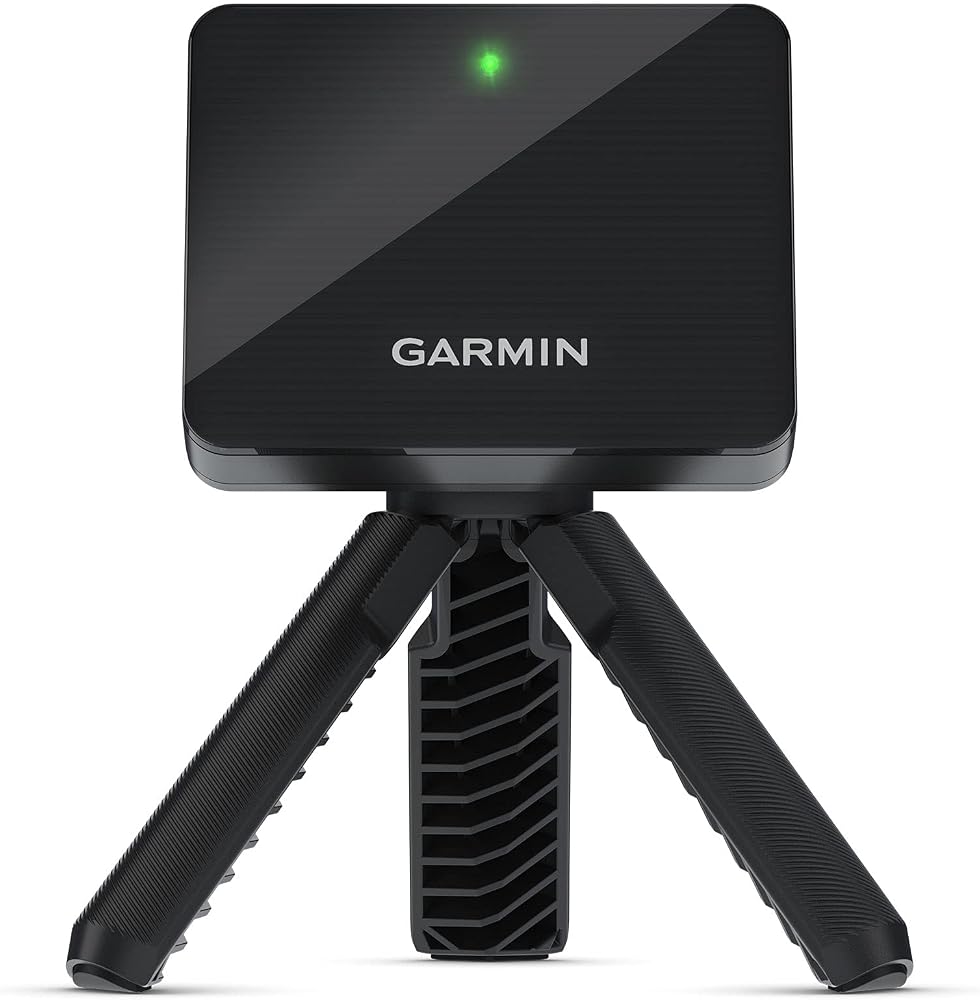
Garmin Approach R10
Our top recommendation for this category
Price as of Oct 10, 2026 — see current price on Amazon.
Launch monitors used to be a tour pro's toy, priced like a used car. Now a radar the size of a phone sits behind your ball for under $500, and a camera unit beside the mat can run a full simulator round in your garage.
The catch is that the cheap ones and the expensive ones measure golf in very different ways. Some estimate spin, some read it off the ball. Some need 16 feet of room, others need 10. And several charge a yearly fee for the features that sell them.
This guide covers five worth buying, from the $479 Garmin Approach R10 to the $4,999.99 Approach R50, with the space, software and subscription math for each.
| Monitor | Tech | Placement | Subscription | Price | |
|---|---|---|---|---|---|
| Garmin Approach R10 | Doppler radar | Behind ball | Optional | $479.00 | Check Price |
| Rapsodo MLM2PRO | Cameras + radar | Behind ball | Yearly, for most features | $599.98 | Check Price |
| FlightScope Mevo Gen2 | Radar + camera | Behind ball | None | $1,299.00 | Check Price |
| SkyTrak ST MAX | Camera + radar | Beside ball | 1 year included | $1,695.00 | Check Price |
| Garmin Approach R50 | Three cameras | Beside ball | Optional | $4,999.99 | Check Price |
Garmin Approach R10: Best Under $500
Garmin Approach R10
Pros
- Cheapest way into real radar ball and club data
- Up to 10 hours of battery, small enough for a range bag
- Works with Garmin's Home Tee Hero and third-party simulators
- No subscription needed for core range data
Cons
- Spin is estimated unless you use Titleist RCT balls
- Needs a deep room indoors, sitting 6 to 8 feet behind the ball
Price as of Oct 10, 2026 — see current price on Amazon.
The R10 is the launch monitor most people should start with. It's a palm-sized Doppler radar that sits behind you, tracks the ball's flight, and sends ball speed, club speed, launch angle, carry and more to the Garmin Golf app on your phone.
Garmin lists it at $499.99. For that, you get numbers good enough to gap your irons on a range and see whether that new driver actually adds yards.
Two caveats matter indoors. First, radar needs to watch the ball fly, so Garmin's manual says the tee must sit at least 8 feet from the net, with the unit 6 to 8 feet behind the ball. PlayBetter's space guide suggests about 21 feet deep as ideal, with 14 feet as a tight minimum. Second, spin is calculated rather than read in most setups. Titleist's RCT balls, which carry a reflective patch, sharpen it a lot.
Home Tee Hero, Garmin's simulator with more than 43,000 courses, needs a Garmin Golf membership at $99.99 a year. Skip it and the R10 still works as a practice tool.
Rapsodo MLM2PRO: Best for Measured Spin on a Budget
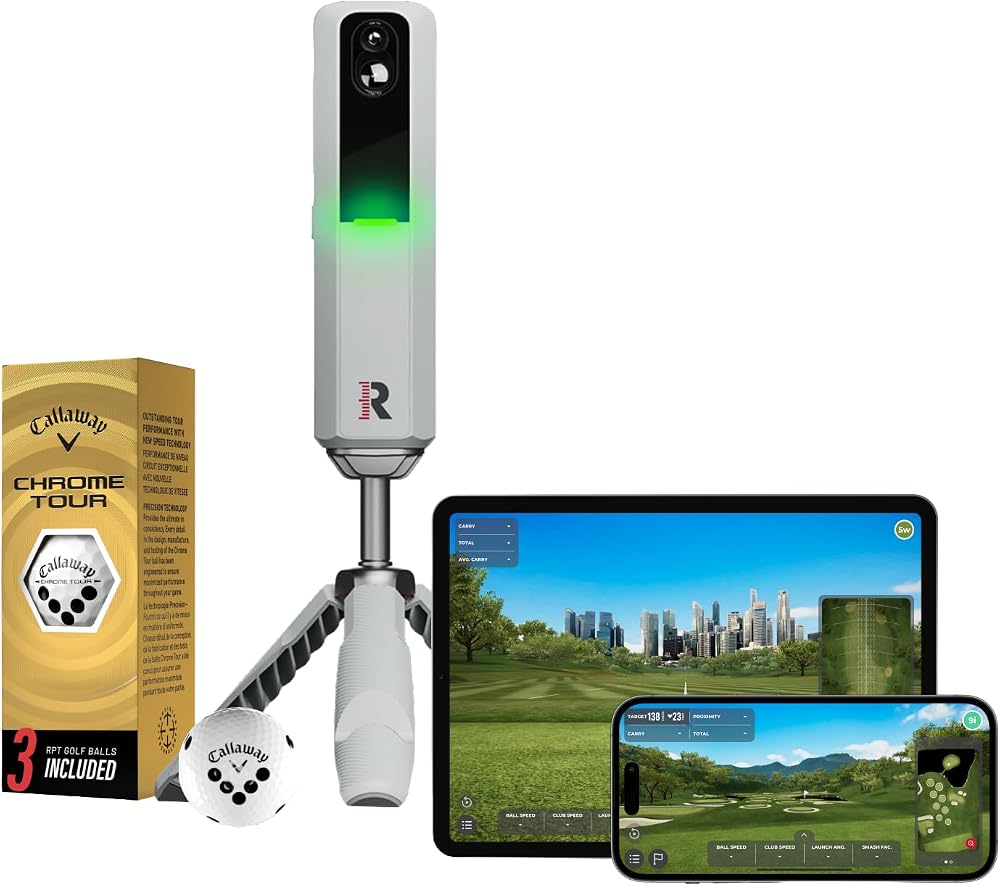
Rapsodo MLM2PRO
Pros
- Dual cameras plus radar, 15 metrics
- Measures spin rate and spin axis with Callaway RPT balls
- Impact Vision video at 240 frames per second
- Ships with tripod, case and 3 Chrome Tour RPT balls
Cons
- Premium membership needed for simulation and the best data after a 45-day trial
- Room depth around 16 feet indoors, like other behind-the-ball units
Price as of Oct 10, 2026 — see current price on Amazon.
Rapsodo's pitch is simple: measured spin, not estimated spin, for about the price of an R10. The MLM2PRO pairs two cameras with radar processing, and when you hit the marked Callaway RPT balls it reads spin rate and spin axis directly. Three of those balls come in the box.
That matters more than it sounds. Spin decides carry and curve, and a monitor that guesses spin will also be guessing why your 7-iron balloons.
Rapsodo lists 15 metrics in all, including club path and angle of attack. Its Impact Vision camera records your strike at 240 frames per second, and Shot Vision records the swing itself.
The subscription is the trade-off. The MLM2PRO includes a 45-day Premium trial, then bills yearly unless you cancel. Without it you keep basic range data but lose most of what makes this unit special. Rapsodo's store lists it at $599.99 against a $699.99 regular price.
FlightScope Mevo Gen2: Best With No Subscription
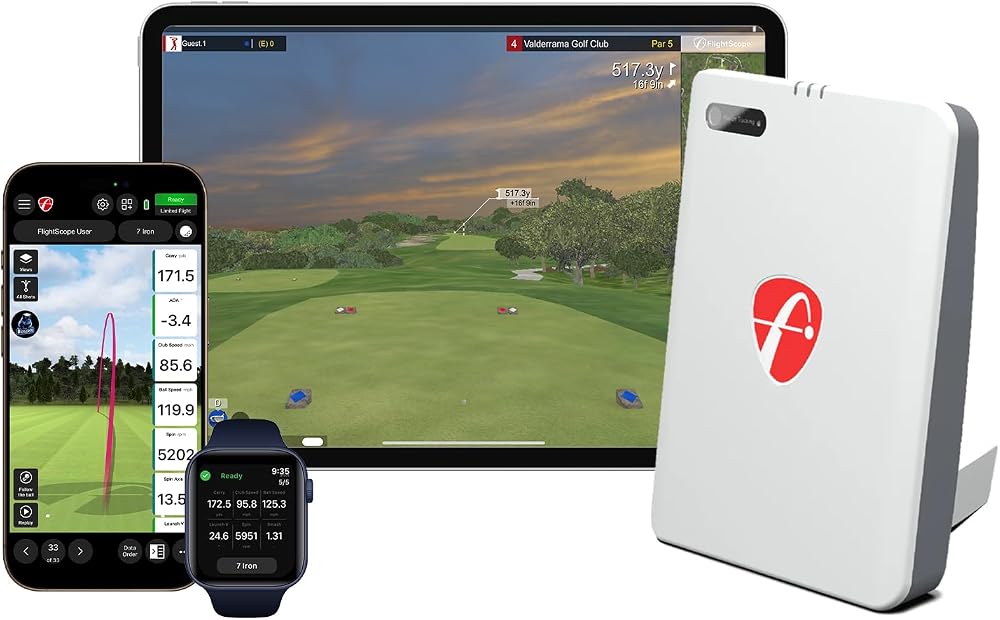
FlightScope Mevo Gen2
Pros
- Fusion Tracking combines 3D Doppler radar and a camera
- No annual subscription for its data
- Includes 8 E6 courses and works with GSPro
- Full swing, chipping and putting data
Cons
- About 6 hours of battery
- Still wants roughly 16 feet of total room depth indoors
Price as of Oct 10, 2026 — see current price on Amazon.
FlightScope has made radar launch monitors for tour coaches for years, and the Mevo Gen2 brings that tracking into a portable unit. Its Fusion Tracking pairs Doppler radar with synchronized image processing, which helps it read the ball both outdoors and in shorter indoor flights.
The headline for many buyers is what's missing: a yearly fee. FlightScope says the Mevo Gen2 has no annual subscription, and it bundles 8 E6 simulation courses with GSPro compatibility for the full sim experience. FlightScope's own store lists it at $1,299, the same as the card price above.
Indoors, FlightScope asks for about 16 feet in total, 8 feet from ball to screen and 8 feet behind the ball for the unit. That's a long garage, not a spare bedroom. FlightScope also sells a Pro Package with D-Plane club data and a Face Impact Location add-on separately.
SkyTrak ST MAX: Best for a Small Room
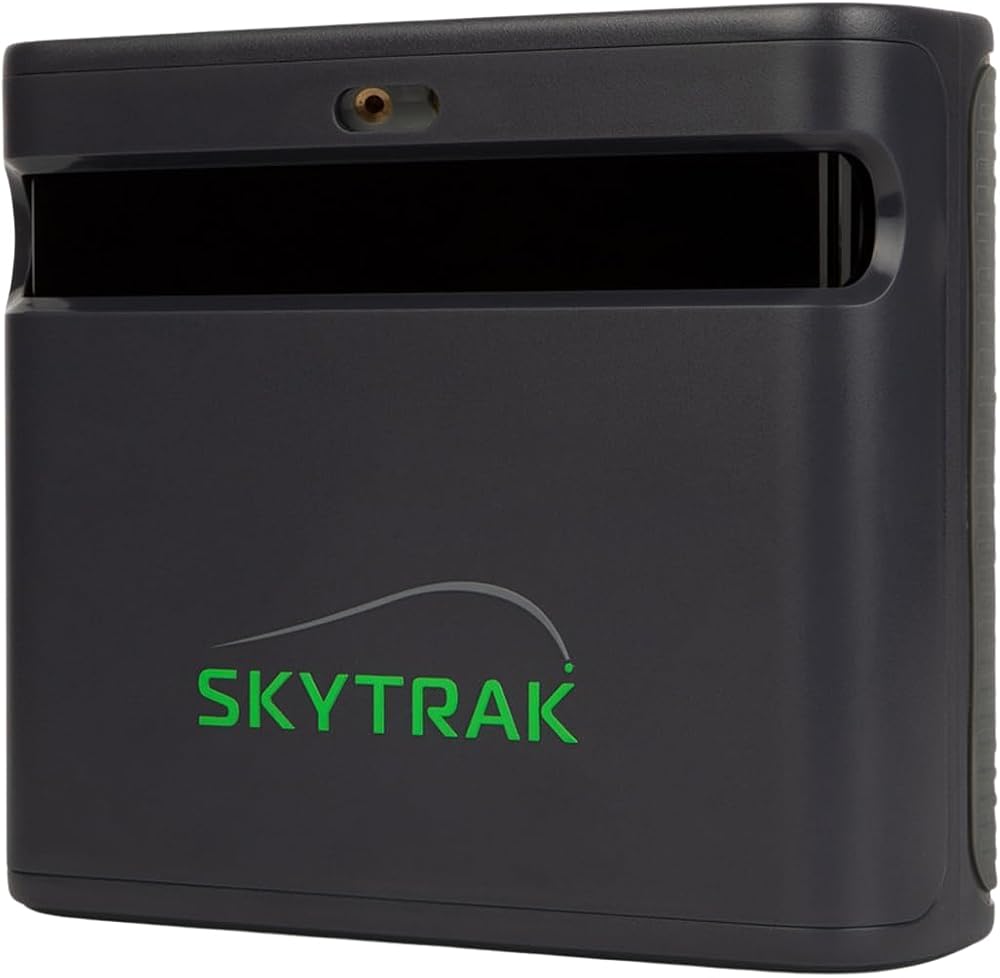
SkyTrak ST MAX
Pros
- Sits beside the ball, so it needs far less depth
- No stickers or special balls required
- 21 data points, including face angle and club path
- First year of software included
Cons
- Software renews at $349.99 a year for Core
- Around 4 hours of battery
Price as of Oct 10, 2026 — see current price on Amazon.
If your room can't spare 16 feet, a side-of-ball unit is the answer, and the ST MAX is the cheapest strong one here. It sits next to the hitting mat instead of behind you, combining a photometric camera with radar to read the ball right after impact.
Reviewers at Golfers Authority put its minimum area at about 10 by 10 feet. That's a spare bedroom or a one-car garage, which no behind-the-ball radar here can match.
SkyTrak counts 21 data points: 9 ball, 5 club and 7 calculated. You don't need stickers on your clubs or marked balls. SkyTrak's store lists the ST MAX at $1,695.00 with a year of software, against a regular $2,995.00. After year one, Core membership is $349.99 a year and Elite is $599.99.
Garmin Approach R50: Best All-in-One Simulator
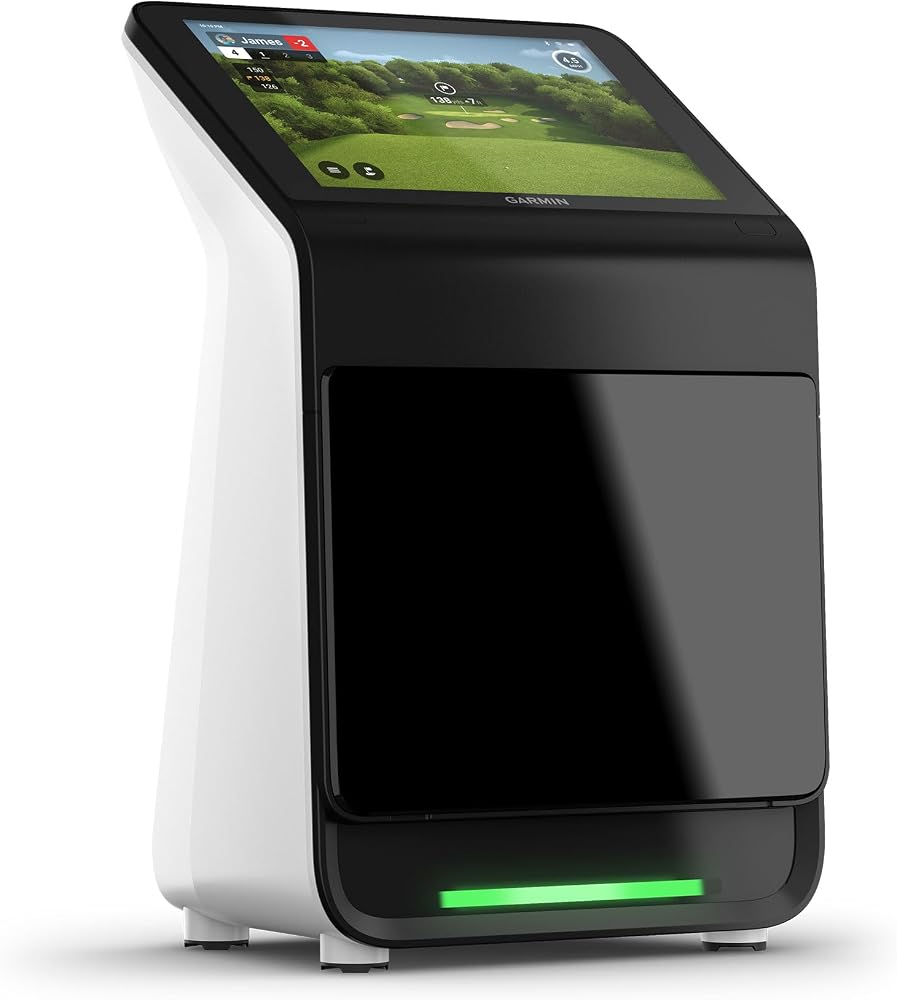
Garmin Approach R50
Pros
- Three cameras read ball and club data from beside the ball
- Built-in 10-inch touchscreen runs the simulator, no PC needed
- HDMI out to a projector or TV
- Works with any golf ball
Cons
- Club data needs a tracking sticker
- Only about 4 hours of battery
- Price is in a different league from the rest
Price as of Oct 10, 2026 — see current price on Amazon.
The R50 is what happens when Garmin builds the whole simulator into the launch monitor. Three cameras sit beside the ball and track more than 15 ball and club metrics, including measured spin rate and spin axis, with any ball you like.
The difference from everything else here is the 10-inch built-in touchscreen. It runs Home Tee Hero on the device, so you can play any of 43,000-plus courses with up to four players by plugging HDMI into a projector. No gaming PC, no laptop on a stand.
Garmin lists it at $4,999.99, the same as the card. That's a lot. It makes sense if you're building a dedicated sim room and want one box that does everything. For a range bag, the R10 is the smarter Garmin.
How to Choose a Launch Monitor
Radar vs camera
Radar units like the R10 and Mevo Gen2 watch the ball fly, so they love the driving range and need room to track indoors. Camera units like the R50 and ST MAX photograph the ball at impact, so they handle short indoor setups better. Hybrids like the MLM2PRO mix both.
Measure your room first
Behind-the-ball radars typically want 14 to 21 feet of depth. Side-of-ball cameras can work in about 10. Measure the room before you fall for a spec sheet, and leave height for your full swing with a driver.
Measured vs estimated spin
Spin decides how far and how straight the ball flies. Cheaper radars estimate it from launch data unless you use marked balls. If you're chasing a slice or a high-spin driver, buy something that measures spin directly.
Count the subscription
Garmin's simulator membership is $99.99 a year. Rapsodo and SkyTrak gate their best features behind yearly plans after a trial. FlightScope charges no annual subscription for the Mevo Gen2's data. Over three years, those fees can outweigh the price gap between units.
Simulator software
GSPro, E6 Connect and Awesome Golf are the big third-party simulators, and most of these monitors work with at least one. Check that the course software you want supports your monitor before you buy, since some charge their own fees.
Which one fits your setup
- Range rat with a small budget: Garmin Approach R10. It's light, it's cheap, and radar is happiest outdoors.
- Fixing a slice at home: Rapsodo MLM2PRO. Measured spin axis tells you why the ball curves, not just that it did.
- Allergic to subscriptions: FlightScope Mevo Gen2. Pay once and the data is yours.
- Spare bedroom or one-car garage: SkyTrak ST MAX. Side-of-ball placement saves several feet of depth.
- Building a dedicated sim room: Garmin Approach R50, paired with a short-throw projector and an impact screen.
A word on accuracy
No consumer unit matches a $20,000 tour radar on every single shot, though FlightScope says independent testing puts the Mevo Gen2 within 1% of units in that class. What separates the good ones is consistency. A monitor that's off by two yards every time is still useful for gapping clubs, because the gaps stay true. Erratic readings are the real problem, and they usually come from poor setup: wrong distance behind the ball, a crooked unit, or too little ball flight before the net. Follow each maker's placement guide to the inch before blaming the hardware.
Frequently asked questions
- What's the best golf launch monitor under $1,000?
- The Garmin Approach R10 at $479.00 is the best value for range work, and the Rapsodo MLM2PRO at $599.98 is better if you want measured spin rate and spin axis, as long as you're fine with its yearly membership.
- How much room do I need for a home golf simulator?
- Behind-the-ball radars like the R10 and Mevo Gen2 typically need 14 to 21 feet of depth. Side-of-ball cameras like the SkyTrak ST MAX can work in about 10 by 10 feet. Leave enough ceiling height for a full driver swing.
- Do launch monitors need a subscription?
- It depends. The FlightScope Mevo Gen2 has no annual subscription. Garmin's units work without one but Home Tee Hero needs a $99.99 yearly Garmin Golf membership. Rapsodo and SkyTrak include a trial or first year, then charge yearly for their full feature sets.
- Can I use a launch monitor outdoors at the range?
- Yes. Radar units like the R10 and Mevo Gen2 are at their best outdoors with full ball flight. The R50 and ST MAX work outdoors too, but their shorter battery life favors indoor setups with power nearby.
- Do I need special golf balls?
- Not always. The R50 and ST MAX work with regular balls. The R10 gives better spin numbers with Titleist RCT balls, and the MLM2PRO needs Callaway RPT balls to measure spin directly.
Bottom Line
For most golfers, the Garmin Approach R10 at $479.00 is the right first launch monitor, and the Rapsodo MLM2PRO at $599.98 is the upgrade if you want measured spin and don't mind a yearly plan. The FlightScope Mevo Gen2 suits people who hate subscriptions, the SkyTrak ST MAX fits a small room, and the Garmin Approach R50 at $4,999.99 is the one-box simulator for a dedicated golf room. Measure your space first. It will narrow the list faster than any spec sheet.
How We Test
We score products by combining spec-level research, pricing history, trusted third-party benchmarks, and owner sentiment from high-signal sources.
- Performance and real-world value in the category this guide targets
- Price-to-performance and deal consistency over recent pricing windows
- Build quality, reliability patterns, and known long-term issues
- Recommendation refresh cadence to keep these picks current
Author
TheTechSearch Editorial Team
Independent product reviewers & PC builders
We test and compare real-world specs, price trends, and user feedback to recommend gear that actually makes sense to buy.