Is a Portable Power Station Worth It in 2026?
Who actually needs a portable power station, what 1,000Wh really runs during an outage, and when a generator, UPS or power bank is the smarter buy. Expert pi...
As an Amazon Associate we earn from qualifying purchases made through our links — this doesn't affect our picks.
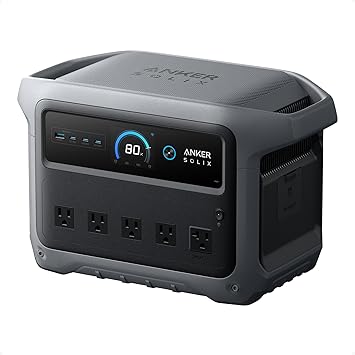
Anker SOLIX C1000 Gen 2
Our top recommendation for this category
Price as of Sep 26, 2026 — see current price on Amazon.
Yes, if you lose power a few times a year, rely on a medical device, or camp somewhere without hookups. No, if you want to run your whole house or your outages last ten minutes.
That's the honest version. The longer version depends on one number most buyers never do the math on: how many watt-hours you actually need. Get that right and a power station is one of the most useful things you can own. Get it wrong and you've bought a very heavy phone charger.
Outages are also getting longer. The U.S. Energy Information Administration says the average customer went without electricity for about 11 hours in 2024, nearly twice the average of the previous decade, with hurricanes Beryl, Helene and Milton driving most of it. Strip out major storms and it's closer to two hours a year. Which bucket you live in decides most of this.
The Short Answer
| Your situation | Verdict | |---|---| | Storm-season outages that last hours or days | Worth it. A 1,000Wh unit keeps a fridge, router and phones going. | | You use a CPAP or other powered medical device | Worth it. This is the strongest case of all. | | Apartment or condo, no safe place for a gas generator | Worth it. Power stations run indoors with no fumes. | | Car camping, van trips, tailgates | Worth it, sized to what you plug in. | | You want to back up central AC, a well pump or an electric range | Not this. You need a whole-home battery or a standby generator. | | Outages are rare and short, you just want phones charged | Skip it. A power bank does the job for a tenth of the price. |
What a Power Station Actually Is
Think of it as a big lithium battery with an inverter and a panel of outlets bolted on. It stores energy from the wall, a car socket or solar panels, then gives it back through normal AC plugs, USB-C and a 12V port.
It is not a generator. It makes nothing on its own. Once the battery is empty, you're done until you recharge it, which is why capacity (watt-hours) matters more than anything else on the spec sheet.
Two numbers do all the work:
- Capacity, in Wh. How much energy is in the tank. The three picks below are all in the 1,024 to 1,070Wh range.
- Output, in W. How much it can push at once. This decides whether it can start a microwave or a coffee maker at all.
Most current models use LiFePO4 (LFP) cells. They're heavier than the older lithium-ion packs, but they're rated for thousands of cycles instead of hundreds. Jackery rates the Explorer 1000 v2 for 4,000 cycles to 70% capacity, and Anker rates the SOLIX C1000 Gen 2 for 4,000 cycles to 80%.
The Runtime Math Nobody Does
Here's the rule of thumb: take the capacity, multiply by about 0.85 to cover inverter losses, then divide by the watts your device draws. Runtime calculators from CPAP and power sites use roughly the same 85% figure for AC loads.
So a 1,024Wh station gives you about 870Wh of real AC power. That works out to:
| Device | Typical draw | Rough runtime on 1,024Wh | |---|---|---| | Wi-Fi router plus cable modem | 15 to 20W | 40+ hours | | Laptop while working | 50 to 65W | 13 to 17 hours | | CPAP without heated humidifier | 40 to 60W | 14 to 21 hours, about two nights | | Full-size fridge | 1 to 1.6kWh per day | roughly 13 to 20 hours | | 1,500W space heater | 1,500W | about 35 minutes |
That last row is the one that surprises people. Anything that makes heat, like space heaters, hair dryers, kettles and electric blankets on high, drains a power station fast. They're fine for five minutes. They're a bad plan for a winter night.
The fridge estimate assumes the compressor cycles on and off normally and you're not opening the door every ten minutes. A newer Energy Star model will do better than a 15-year-old garage fridge. And if your CPAP has a DC input, running it off the 12V port instead of AC skips the inverter and stretches the runtime further.
When a Power Station Is Worth It
You live somewhere with real outages. If you're in hurricane country, or on a rural line that goes down with every ice storm, a 1kWh station is the difference between losing a fridge of food and not. Add a 200W solar panel and you can top it back up during the day.
Someone in the house depends on powered medical gear. CPAP machines, oxygen concentrators (check the draw, some are 300W or more) and powered wheelchairs make this an easy yes. Look for a fast UPS switchover so the machine doesn't blink off when the grid does.
You can't run a gas generator safely. Apartments, condos, townhomes with no yard. The Consumer Product Safety Commission estimates that about 100 people die in the U.S. each year from carbon monoxide poisoning linked to portable generators. A power station makes no exhaust and can sit in your bedroom.
You want a UPS that does more than five minutes. The Anker and EcoFlow picks below both switch over in under 10 milliseconds, which is fast enough for most desktop PCs and networking gear. A traditional UPS gives you enough time to save and shut down. A 1kWh station gives you an afternoon. If a clean shutdown is all you need, our guide on whether you need a UPS for a gaming PC covers the cheaper option.
You camp, tailgate or work remotely off-grid. Run a 12V fridge, charge camera batteries and drones, power a laptop for a full day. That's what these were built for before storm prep made them mainstream.
When It Isn't Worth It
You want whole-home backup. A 1kWh station can't run central air, a well pump or an electric range. Whole-home setups use 5kWh to 10kWh or more of stacked batteries and a transfer switch, and they cost thousands. The DELTA 3 Plus can expand to about 5kWh with extra batteries, but even then you're backing up circuits, not a house.
Your outages are short and rare. If the lights go out twice a year for 20 minutes, a $500 station sits in a closet slowly losing charge. A good power bank from our best power banks guide keeps phones and a laptop alive for far less.
You need the cheapest watts possible. Per watt of output, a gas inverter generator is still cheaper, and it runs as long as you have fuel. The trade is noise, fumes, fuel storage and the fact that it has to live outside. Plenty of rural households own both.
Power Station vs Generator vs UPS
| | Power station | Gas generator | UPS | |---|---|---|---| | Where it runs | Indoors or out | Outdoors only, away from windows | Indoors | | Noise | Near silent (fans only) | Loud | Silent until it beeps | | Runtime | Hours, limited by battery | As long as there's fuel | Minutes | | Recharge | Wall, car or solar | Refuel | Wall only | | Upkeep | Top it up every few months | Fuel, oil, stabilizer | Battery swap every few years | | Best for | Outages, medical gear, camping | Long outages, big loads | Clean PC shutdowns |
What to Look For Before You Buy
Size it from your list, not the box. Write down what you'd actually run during an outage, add up the watt-hours per day, then buy about 20% more than that. For most people who want a fridge, router and phones, that lands at 1,000Wh.
Check the continuous output. A 1,800 to 2,000W inverter will start most microwaves, coffee makers and small power tools. A 300W unit won't.
Look at the recharge time. After an outage you want it full again before the next one. All three picks below recharge from the wall in about an hour.
Weight is real. At 24 to 27 pounds, a 1kWh station is carryable, but you won't want to haul it far from the car.
Solar input decides off-grid life. The Jackery tops out at 400W of solar, the Anker at 600W and the EcoFlow at 1,000W. More input means shorter cloudy-day recharges.
For a wider range of sizes, including small 300Wh units and big 2kWh-plus stations, see our full best portable power stations roundup.
The Power Stations Worth Buying
Every price below comes from a live Amazon listing checked on September 26, 2026, and each one is at or below the brand's own list price. Anker lists the C1000 Gen 2 at $799, Jackery launched the 1000 v2 at $799, and EcoFlow's own store lists the DELTA 3 Plus at $799 with a $669 sale price.
| Model | Capacity | AC output | Wall recharge | Weight | Price | |
|---|---|---|---|---|---|---|
| Anker SOLIX C1000 Gen 2 | 1,024Wh | 2,000W | 49 min | 24.9 lb | $499.99 | Check Price |
| Jackery Explorer 1000 v2 | 1,070Wh | 1,500W | 1 hr (emergency mode) | 23.8 lb | $499.00 | Check Price |
| EcoFlow DELTA 3 Plus | 1,024Wh (expandable) | 1,800W | 56 min | about 27 lb | $654.00 | Check Price |
Anker SOLIX C1000 Gen 2
Anker SOLIX C1000 Gen 2
Pros
- 2,000W continuous, 3,000W peak starts almost anything in a kitchen
- Full wall recharge in 49 minutes at 1,600W input
- UL1778 UPS with under 10ms switchover
- Rated for 4,000 cycles to 80% capacity
Cons
- Not expandable with extra batteries, unlike the original C1000
- Solar input still caps at 600W
Price as of Sep 26, 2026 — see current price on Amazon.
For most homes, this is the one to buy.
The C1000 Gen 2 has the most output of the three, 2,000W continuous, so it'll run a microwave or a small window AC without tripping. It recharges from empty in 49 minutes, which matters when a storm knocks the power out and back on a few times in one week.
The UPS side is certified to UL1778 and switches in under 10 milliseconds. At $499.99 it's $300 under Anker's list price. If you only buy one, buy this.
Jackery Explorer 1000 v2

Jackery Explorer 1000 v2
Pros
- Most capacity here at 1,070Wh
- Lightest of the three at 23.8 lb
- 4,000 cycles to 70% capacity
- One-hour emergency charge through the app
Cons
- 1,500W output won't start some bigger appliances
- Solar input caps at 400W
Price as of Sep 26, 2026 — see current price on Amazon.
The Jackery trades a little muscle for a little more battery.
Its 1,070Wh is the largest tank in this group, and at 23.8 pounds it's also the easiest to carry to a campsite. The 1,500W inverter (3,000W surge) covers fridges, CPAPs, laptops and most tools, but a 1,700W microwave is out.
Charging defaults to about 1.7 hours to protect the battery. Turn on emergency mode in the Jackery app and it'll go full in one. At $499 it's the same price as the Anker, so pick it if you care more about weight and runtime than raw output.
EcoFlow DELTA 3 Plus

EcoFlow DELTA 3 Plus
Pros
- Expands to about 5kWh with extra batteries
- 1,000W solar input for a 70-minute solar recharge
- 10ms UPS switchover and 140W USB-C
- Quiet at about 30 dB in normal use
Cons
- $154 more than the Anker for similar base capacity
- Heaviest of the three
Price as of Sep 26, 2026 — see current price on Amazon.
This is the one to buy if you think you'll want more later.
Out of the box, the DELTA 3 Plus is a 1,024Wh, 1,800W station much like the other two. The difference is the port on the side. Add EcoFlow's extra batteries and it grows toward 5kWh, which moves it from "storm kit" toward "back up the fridge, the furnace blower and the office for a day."
Its 1,000W of solar input is also the best here. With enough panels it can refill in about 70 minutes of good sun. At $654 you're paying for that headroom. If you'll never add a battery or a big solar array, the Anker is the better deal.
Frequently asked questions
- Is a portable power station worth it for power outages?
- Yes, if your outages last hours rather than minutes. A 1,000Wh unit runs a router and modem for 40+ hours, a CPAP for about two nights, or a full-size fridge for roughly 13 to 20 hours. The EIA says the average U.S. customer lost power for about 11 hours in 2024.
- Can a portable power station run a refrigerator?
- Yes. A modern full-size fridge uses about 1 to 1.6kWh per day, so a 1,024Wh station at roughly 85% efficiency keeps it running for about 13 to 20 hours. Keeping the door closed helps, and a solar panel can top it up during the day.
- Is a power station better than a gas generator?
- It's safer and quieter, and it can run indoors. A gas generator is cheaper per watt and runs as long as you have fuel, but it must stay outdoors. The CPSC estimates about 100 U.S. deaths a year from carbon monoxide linked to portable generators.
- What size power station do I need?
- Add up the watt-hours you'd use in a day, then buy about 20% more. For a fridge, router, phones and a laptop, that usually lands around 1,000Wh. For a CPAP only, 500Wh can cover one night. For central AC or a well pump, you need a whole-home system instead.
- Can I use a portable power station as a UPS for my PC?
- Many can. The Anker SOLIX C1000 Gen 2 and EcoFlow DELTA 3 Plus both switch over in under 10 milliseconds, which is fast enough for most desktops. A traditional UPS is cheaper if all you need is time to save and shut down.
Bottom Line
A portable power station is worth it if outages in your area last hours, if someone at home relies on a CPAP or other powered device, or if you camp without hookups. Buy around 1,000Wh, because that's where a fridge, a router and a night of CPAP all fit. The Anker SOLIX C1000 Gen 2 at $499.99 is the best all-rounder, the Jackery Explorer 1000 v2 at $499 is lighter with a bit more capacity, and the EcoFlow DELTA 3 Plus at $654 is the one to get if you plan to expand. Skip it entirely if your outages are rare and short, and look at a whole-home system if you need to run the entire house.
How We Test
We score products by combining spec-level research, pricing history, trusted third-party benchmarks, and owner sentiment from high-signal sources.
- Performance and real-world value in the category this guide targets
- Price-to-performance and deal consistency over recent pricing windows
- Build quality, reliability patterns, and known long-term issues
- Recommendation refresh cadence to keep these picks current
Author
TheTechSearch Editorial Team
Independent product reviewers & PC builders
We test and compare real-world specs, price trends, and user feedback to recommend gear that actually makes sense to buy.