Best Mirrorless Cameras 2026
The best mirrorless cameras for beginners and enthusiasts in 2026: Sony a6700, Canon R10, Nikon Z50 II, Fujifilm X-S20 tested and ranked. Expert picks, pros...
As an Amazon Associate we earn from qualifying purchases made through our links — this doesn't affect our picks.
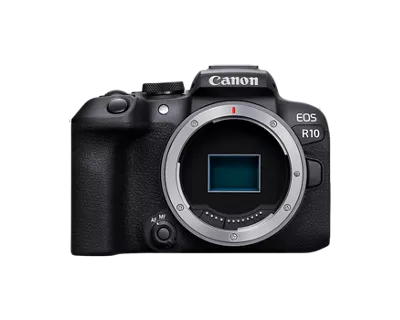
Canon EOS R10 Mirrorless Camera (Body Only)
Our top recommendation for this category
Price as of Jun 21, 2026 — see current price on Amazon.
The smartphone wars are basically over, and a lot of creators are now realizing the phone ceiling is real. If you want genuinely better images for travel, portraits, wildlife, or YouTube, you're looking at mirrorless cameras. And the APS-C market in 2026 is genuinely the best it's ever been.
Sony's a6700 brought AI-powered autofocus to the enthusiast tier. Nikon followed with the Z50 II and its EXPEED 7 processor. Canon's R10 keeps dropping in price and remains one of the most beginner-friendly bodies money can buy. Fujifilm's X-S20 is a content creator's dream machine. And the OM System OM-5 is quietly one of the best values if you ever shoot outdoors in bad weather.
I've gone through the specs, real-world test results, and community feedback across r/photography, r/mirrorless, and r/videography to put together this guide. Here's where things actually stand.
| Camera | Price | Sensor | Stabilization | Best For | |
|---|---|---|---|---|---|
| Canon EOS R10 | $829 | 24.2MP APS-C | None (in-body) | Budget beginners | Check Price |
| Nikon Z50 II | $909 | 20.9MP APS-C | None (in-body) | Video creators | Check Price |
| OM System OM-5 | $999 | 20MP Micro 4/3 | 7.5-stop IBIS | Outdoor / weather | Check Price |
| Sony a6700 | $998 | 26MP APS-C | 5-axis IBIS | Enthusiasts / wildlife | Check Price |
| Fujifilm X-S20 | $1,299 | 26.1MP APS-C | 7-stop IBIS | Content creators / vlog | Check Price |
Canon EOS R10: Best Budget Mirrorless Under $900
The R10 is the entry point that actually makes sense. Twenty-four megapixels, Dual Pixel CMOS AF II (which is genuinely excellent autofocus, not budget-tier autofocus), and 15 fps mechanical burst make this a camera you won't outgrow quickly. Body-only is around $829, which is a real price drop from its original $979 launch.
What you give up is in-body stabilization, and that's a legitimate tradeoff. For most beginners shooting stills in decent light, it doesn't matter much. For video handheld? You'll want a gimbal or a stabilized lens. Canon's RF-S 18-150mm f/3.5-6.3 IS STM is the obvious companion if you want optical stabilization baked in.
The ergonomics are impressive for a camera this affordable. Canon's layout is intuitive: the dial placement, the menu system, the touchscreen all click naturally. Friends of mine who switched from iPhones specifically called out how fast they felt comfortable with the controls. That matters more than people admit.
Video tops out at 4K 30p (actually oversampled from 6K, so it looks sharp), and 4K 60p exists but with a crop. For most YouTube or Instagram creators, 4K 30p is all you need. The subject tracking in video (faces, eyes, even pets) works well in practice, not just on the spec sheet.
Canon EOS R10 Mirrorless Camera (Body Only)
Pros
- Dual Pixel CMOS AF II with genuinely great autofocus
- 15 fps mechanical burst for action shooting
- Compact and lightweight at 429g
- 4K oversampled from 6K for sharp video
Cons
- No in-body image stabilization
- 4K 60p has a crop factor applied
- Small buffer compared to prosumer bodies
Price as of Jun 21, 2026 — see current price on Amazon.
Nikon Z50 II: Best for Video Beginners
Released in late 2024, the Z50 II runs Nikon's EXPEED 7 processor, the same chip inside the Z9 and Z8 flagships. That matters because subject detection, 3D tracking, and low-light performance all benefit directly from it. At $909 body-only, you're getting flagship-grade autofocus in an entry-level body.
The N-Log and 10-bit internal recording are where this camera pulls ahead of the R10. If you plan to grade your footage in DaVinci Resolve or Premiere, N-Log gives you real dynamic range headroom. Most cameras at this price hand you flat profiles that aren't actually log. The Z50 II gives you the real thing.
That said, I'll be honest: the Z50 II feels slightly less intuitive than the Canon for first-timers. The menu system is good but takes more time to get comfortable with. And the Nikon Z lens ecosystem, while growing, doesn't have as many native APS-C options as Canon RF-S or Fujifilm X.
Battery life is solid, rated around 300 shots per charge, which is middle-of-the-pack. The flip screen works for vlogging, though it's only a tilting design, not fully articulating. A genuinely annoying omission at this price point.
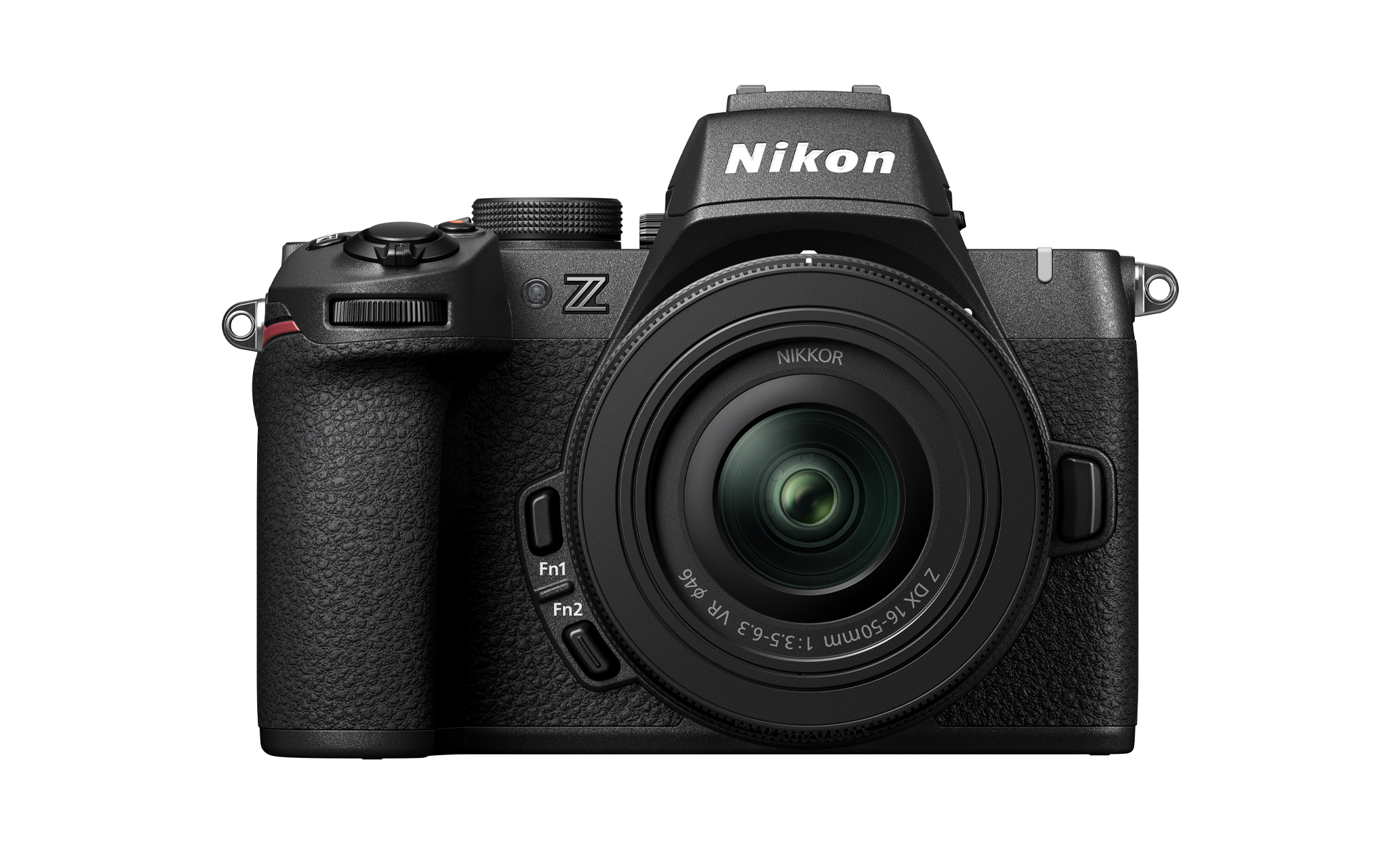
Nikon Z50 II Mirrorless Camera (Body Only)
Pros
- EXPEED 7 processor, same as Z9 flagship
- N-Log 10-bit internal recording for serious video
- 3D subject tracking with subject detection
- Compact APS-C body at 395g
Cons
- No in-body image stabilization
- Tilting screen only, not fully articulating
- Narrower native APS-C lens selection
Price as of Jun 21, 2026 — see current price on Amazon.
OM System OM-5: Best for Outdoor Shooters
The OM-5 is the odd one out on this list, and I mean that as a compliment. Micro Four Thirds means a smaller sensor than APS-C, which is a real tradeoff in low light. But the 7.5-stop in-body stabilization is something no other camera at this price can touch. We're talking shoot-at-1/8 second handheld and get sharp images. That's a party trick that has real consequences if you shoot in forests, at dusk, or anywhere a tripod isn't practical.
IP53 weather sealing is fully operative here. Canon's R10 has no weather sealing. Nikon's Z50 II has minimal protection. The OM-5 survives rain, dust, and splashes without you thinking about it. Street price has dipped to around $749-$899 depending on where you look, which makes the sealing argument even stronger.
The 20MP sensor delivers excellent colors and detail in good light. Low-light performance lags behind APS-C sensors (you're looking at pushing to ISO 1600-3200 rather than 6400+), but the stabilization compensates significantly. Landscape photographers, hikers, and travel shooters who need a durable compact body with real stabilization should look here first.
The computational features (Focus Stacking, Live ND Filter, Starry Sky AF, Handheld High Res Shot) are genuinely impressive and not marketing fluff. Olympus, now OM System, pioneered some of these features, and they work.

OM System OM-5 Micro Four Thirds Camera (Black)
Pros
- 7.5-stop in-body image stabilization, class-leading at this price
- IP53 weather and dust sealing
- Compact and lightweight for outdoor use
- Live ND, Focus Stacking, Handheld High Res Shot built-in
Cons
- Smaller Micro 4/3 sensor means weaker high-ISO performance
- Smaller lens ecosystem than Sony or Canon
- Contrast-detect AF only (no on-sensor phase detection)
Price as of Jun 21, 2026 — see current price on Amazon.
Sony Alpha a6700: Best Enthusiast APS-C Camera
The a6700 is what you buy when you're serious about getting the most capable APS-C body available. Sony's AI Processing Unit is a dedicated chip that does nothing but run subject recognition, and it shows. The autofocus tracks birds in flight, insects, cars, human poses, faces, eyes, and animals with accuracy that was, until recently, only in full-frame flagships.
Twenty-six megapixels on a back-illuminated Exmor R sensor gives you real low-light capability. I've pushed this to ISO 12800 and still gotten usable files after noise reduction. The 5-axis in-body stabilization is rated at 5 stops, which is solid though not as aggressive as the OM-5's system.
4K 120p is the headline video spec and it's real, not a crop. Ten-bit 4:2:2 recording, S-Cinetone profiles, Log S-Log3: this is a camera that can deliver professional video output without an external recorder. Tom's Guide called the a6700 "the most capable APS-C camera available" in their early 2026 update, and honestly that's still accurate.
What you give up is the premium price. Body-only has settled around $998 but regularly sits closer to $1,098-$1,198 depending on stock and seller. And the menu system is notoriously un-intuitive for first-timers. Sony's buried settings three menus deep for years and the a6700 doesn't fix this. Budget extra time for setup if you're new to Sony.
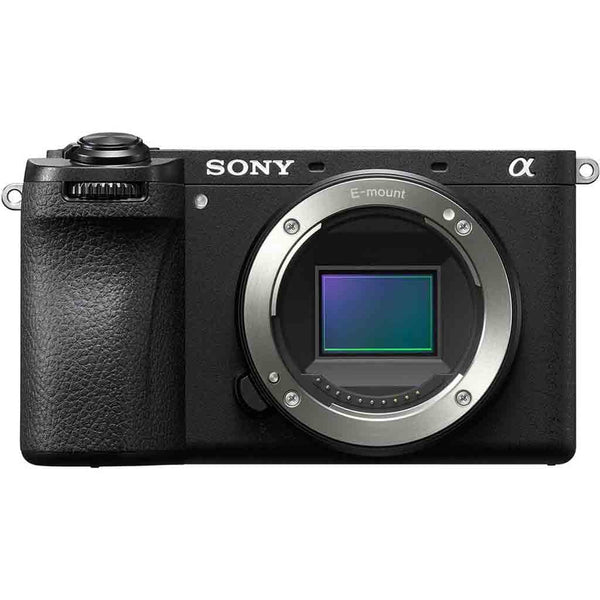
Sony Alpha a6700 APS-C Mirrorless Camera (Body Only)
Pros
- Dedicated AI Processing Unit for best-in-class autofocus
- 4K 120p uncropped with 10-bit 4:2:2 internal recording
- 5-axis in-body stabilization
- 26MP back-illuminated sensor with strong high-ISO performance
Cons
- Menu system has a steep learning curve for beginners
- Body-only often costs over $1,000 in practice
- Shorter battery life than competitors (approx 440 shots CIPA)
Price as of Jun 21, 2026 — see current price on Amazon.
Fujifilm X-S20: Best for Content Creators
Look, Fujifilm cameras have always been a different kind of purchase. You don't buy an X-S20 just for specs. You buy it because Fujifilm's film simulations (Velvia, Classic Chrome, Eterna Cinema, Nostalgic Neg) produce straight-out-of-camera JPEGs that look genuinely cinematic without any editing. For content creators posting to social media, this is underrated.
The practical credentials are real, though. Seven stops of in-body stabilization, 6.2K video recording, 4K 60p in full-frame equivalent with no overheating issues (an improvement over the X-T4), and a fully articulating screen that flips all the way around for vlogging. The NP-W235 battery is the same as the X-T4 and lasts significantly longer than Sony's NP-FZ100: around 750 shots CIPA versus Sony's 440.
Both the 3.5mm mic and headphone jacks are here. The USB-C port charges while recording. And the creative controls (film simulation dials, exposure compensation dial) feel premium in a way the Canon and Nikon at this price don't quite match.
At $1,299 body-only, it's the priciest camera on this list. The Fujifilm X ecosystem has excellent prime lenses but fewer budget zoom options than Canon RF-S. And Fujifilm autofocus, while much improved in 2026 firmware updates, still trails Sony's AI system for fast-action subjects.

Fujifilm X-S20 Mirrorless Camera (Body Only)
Pros
- 7-stop in-body stabilization
- Film simulations produce stunning straight-out-of-camera JPEGs
- 6.2K video, 4K 60p without overheating
- 750-shot battery life, best on this list
- Fully articulating screen for vlogging
Cons
- Most expensive body on this list at $1,299
- Autofocus trails Sony for fast-moving subjects
- Smaller lens ecosystem for budget zooms
Price as of Jun 21, 2026 — see current price on Amazon.
How to Pick the Right Mirrorless Camera
Sensor Size: APS-C vs Micro Four Thirds
Four of the five cameras here use APS-C sensors. The OM-5 uses a smaller Micro Four Thirds sensor. In practical terms, APS-C handles low light better (roughly one stop advantage), while MFT gives you smaller bodies and that 7.5-stop stabilization. For most people, the APS-C advantage in low light is real and worth prioritizing.
Do You Need In-Body Stabilization?
If you shoot video handheld without a gimbal, yes. The Canon R10 and Nikon Z50 II lack IBIS, so you're relying on optical stabilization in the lens or digital stabilization (which crops your field of view). The Sony a6700, Fujifilm X-S20, and OM-5 all have IBIS. If you're primarily a stills shooter in good light, IBIS is nice-to-have but not essential.
Lens Ecosystem Matters as Much as the Body
This is something first-time buyers consistently underestimate. The body is a starting point. The lenses are the long-term investment. Canon RF-S has the most beginner-friendly ecosystem with affordable kit lenses. Sony E-mount has the widest selection of third-party glass. Fujifilm X has excellent primes but fewer budget zooms. Nikon Z APS-C is growing but still limited compared to the others.
Budget: Body vs Kit Lens
For most beginners, a kit lens bundle is the right move. A body-only purchase makes sense if you're already invested in a lens ecosystem or know exactly what glass you want. The Canon RF-S 18-45mm kit is a solid starting point. The Fujifilm XF 18-55mm f/2.8-4 kit gives you something more versatile at a higher price.
Video vs Stills Priority
If video is your primary use case, the ranking shifts: Fujifilm X-S20 (no overheating, great codecs, articulating screen), Nikon Z50 II (10-bit N-Log, EXPEED 7), Sony a6700 (4K 120p, best autofocus). For stills only, Sony a6700 autofocus is peerless for action. Canon R10 is the best value for general photography. OM-5 is best if you shoot outdoors or in challenging conditions.
Frequently asked questions
- Is mirrorless better than DSLR in 2026?
- For new buyers, yes. Mirrorless is the right choice. The DSLR market is essentially frozen with no new flagship models from Canon or Nikon. Mirrorless gets all the R&D investment, has faster autofocus (especially for video), and the bodies are generally lighter. The only remaining DSLR advantage is battery life and legacy lens selection, and both gaps have largely closed.
- Can you use old DSLR lenses on mirrorless cameras?
- Yes, with an adapter. Sony E-mount, Canon RF, and Nikon Z all have manufacturer adapters that let you use their respective F-mount (Nikon) or EF-mount (Canon) lenses. Autofocus performance through adapters varies. Canon's RF adapter with EF lenses is excellent. Fujifilm and OM System require third-party adapters for DSLR glass and AF performance is more limited.
- What's the minimum budget for a good mirrorless camera in 2026?
- Around $700-$800 for a body with a kit lens. Below that, you're looking at used market options or very entry-level models with significantly compromised autofocus. The Canon R10 at $829 or $949 with the 18-45mm kit lens is the sweet spot for first-time buyers who want a camera that will last 4-5 years before they feel limited.
- Is the Sony a6700 worth the extra money over the Canon R10?
- It depends entirely on your use case. The a6700's AI autofocus is genuinely in a different class for wildlife, sports, and video. If you shoot action or fast-moving subjects, yes, the a6700 is worth the $170 premium. For portraits, landscapes, family shots, and general photography, the R10's Dual Pixel CMOS AF is excellent and the money saved goes toward lenses, which is a better investment.
- Do mirrorless cameras work well for video in 2026?
- Absolutely, and this is arguably where they shine most. The Z50 II, X-S20, and a6700 all support 10-bit internal recording, log profiles, and resolutions beyond 4K. For YouTube, the Canon R10's 4K oversampled footage is clean and sharp. For color grading in post, the Fujifilm X-S20 and Nikon Z50 II's log options give you the most flexibility.
- How long do mirrorless camera batteries last?
- This varies a lot. The Fujifilm X-S20 leads this group with around 750 shots CIPA. The Canon R10 manages around 430 shots. Sony a6700 is rated 440 shots but heavy video use drains it faster. In practice, budget for a spare battery for any all-day shoot. They're typically $15-40 from third-party brands like Watson or Wasabi Power.
Bottom Line
For most people buying their first mirrorless camera in 2026, the Canon EOS R10 at $829 is the right answer. It's intuitive, the autofocus is excellent, and the RF-S lens ecosystem is friendly to beginners. If you're willing to spend more and want the most capable body available, the Sony a6700 at $998 delivers AI-powered autofocus, 4K 120p video, and in-body stabilization that the R10 can't match.
The Nikon Z50 II is the sleeper pick for video creators who want 10-bit log recording on a budget. The Fujifilm X-S20 is genuinely the best option if you care about film simulations, content creation, and battery life. And if you shoot outdoors in rain, dust, or harsh conditions, the OM System OM-5's weather sealing and 7.5-stop stabilization make it the only sensible choice.
Whatever you pick, the APS-C mirrorless market in 2026 is legitimately impressive at every price point. The entry-level cameras today outperform the professional cameras of a decade ago. Getting the right one is about matching the camera to how you actually shoot.
How We Test
We score products by combining spec-level research, pricing history, trusted third-party benchmarks, and owner sentiment from high-signal sources.
- Performance and real-world value in the category this guide targets
- Price-to-performance and deal consistency over recent pricing windows
- Build quality, reliability patterns, and known long-term issues
- Recommendation refresh cadence to keep these picks current
Author
TheTechSearch Editorial Team
Independent product reviewers & PC builders
We test and compare real-world specs, price trends, and user feedback to recommend gear that actually makes sense to buy.