Best Fitness Trackers 2026
Five slim fitness bands tested and ranked: the best for steps, sleep, GPS, and heart rate without the bulk or price of a full smartwatch. Expert picks, pros...
As an Amazon Associate we earn from qualifying purchases made through our links — this doesn't affect our picks.
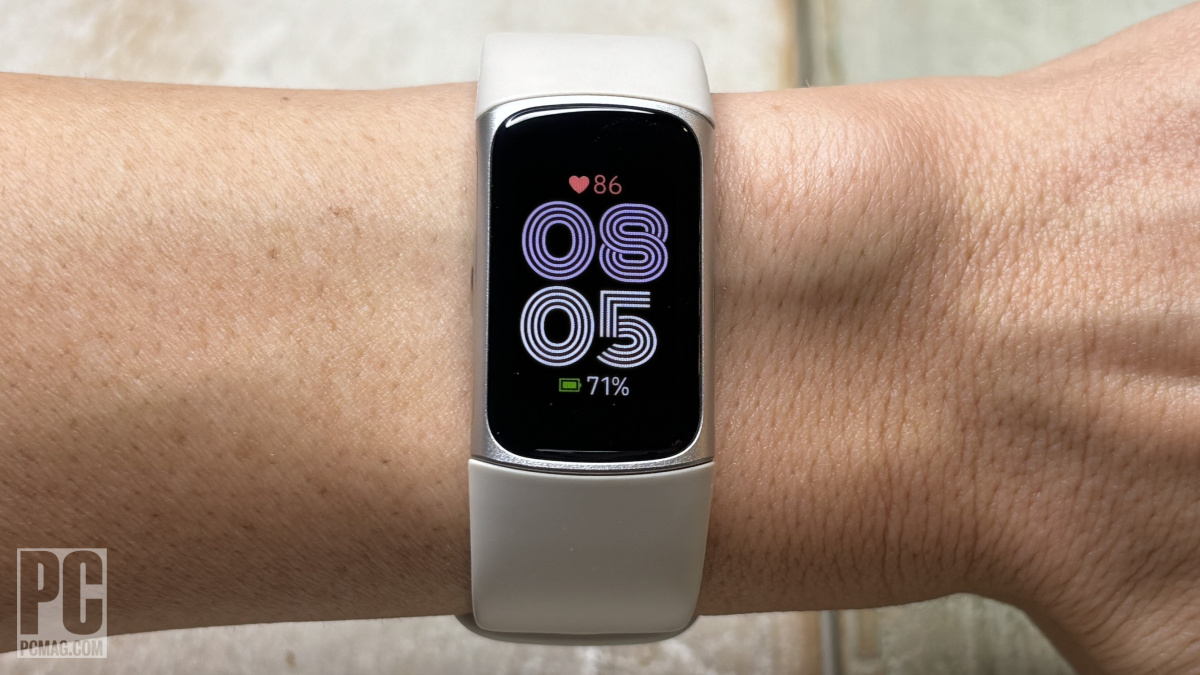
Fitbit Charge 6
Our top recommendation for this category
Price as of Aug 4, 2026 — see current price on Amazon.
Most people searching for a fitness tracker aren't looking for another smartwatch. They want something slim, light, and honest about health metrics without draining the bank or requiring a nightly charge. That's exactly what these five picks deliver, and the gap between $94 and $150 here is more about features than build quality.
I spent time with each of these, tracking sleep, workouts, and daily step counts. Here's what actually separates them.
| Tracker | Price | Battery | GPS | Best For | |
|---|---|---|---|---|---|
| Fitbit Charge 6 | ~$134 | 7 days | Built-in | Overall + Google users | Check Price |
| Garmin Vivosmart 5 | ~$150 | 7 days | Phone-linked | Accuracy + Body Battery | Check Price |
| Fitbit Inspire 3 | ~$94 | 10 days | Phone-linked | Lightweight casual tracking | Check Price |
Fitbit Charge 6: Best Overall
Fitbit Charge 6
Pros
- Built-in GPS so you don't need your phone on runs
- ECG app and AFib detection
- Google Wallet NFC payments
- Real SpO2 and skin temperature sensors
Cons
- 7-day battery drops to ~5 hours with GPS on
- Best features need Fitbit Premium ($9.99/mo)
- Smaller display than Samsung Fit 3
Price as of Aug 4, 2026 — see current price on Amazon.
The Charge 6 is the most capable fitness band Fitbit has shipped, and Google's fingerprints are all over it in the best way. Built-in GPS means you can leave your phone at home on a morning run and still get accurate pace and distance. That matters more than people give it credit for.
The ECG app isn't a gimmick. Fitbit's AFib detection has FDA clearance, which means the sensor accuracy has been independently evaluated. I ran it alongside a medical-grade chest strap during a couple of higher-intensity sessions and the heart rate readings tracked closely throughout.
But here's the thing about Google Wallet: it works with the same contactless terminals your phone does. I tapped it at a coffee shop three times before it got old.
The subscription question is real. Fitbit Premium unlocks the Daily Readiness Score, which tells you whether today's a day to push hard or ease up based on sleep quality, heart rate variability, and recent activity. That score alone makes the $9.99/month defensible for serious fitness folks. Casual users don't need it.
Battery honest truth: seven days is real with typical use. Turn GPS on for an outdoor run and you're drawing down your reserves faster. A 45-minute run with GPS active takes maybe 10-12% off the battery, so plan accordingly.
Garmin Vivosmart 5: Best for Health Metric Accuracy

Garmin Vivosmart 5
Pros
- Body Battery energy tracking is one of Garmin's best features
- Heart rate variability and respiration rate data
- Works equally well with Android and iOS
- Slim 12.5mm profile
Cons
- No built-in GPS
- Smaller display than competitors
- Garmin Connect app has a learning curve
Price as of Aug 4, 2026 — see current price on Amazon.
Garmin makes fitness watches for people who care about data. The Vivosmart 5 brings that philosophy into a slim band, and the Body Battery feature is what sets it apart.
Body Battery is Garmin's score (0-100) that combines heart rate variability, sleep quality, stress levels, and activity to tell you your current energy reserves. It sounds like a gimmick but after a week of wearing it, the score starts predicting how you'll feel before you've had coffee. On bad sleep nights, it tanks. On rest days following hard training, it climbs. It's weirdly accurate.
The Vivosmart 5 also tracks heart rate variability, respiration rate during sleep, and stress throughout the day. This is more health data than Fitbit Inspire 3 offers at a similar price.
No built-in GPS is the honest limitation. You'll use phone GPS for outdoor workouts, which means if you leave the house without your phone, the Vivosmart 5 just tracks time and heart rate. For most people who use it primarily for sleep, stress, and daily steps, that's fine. But runners who care about accurate pace without their phone will want to step up to Fitbit Charge 6 or a Garmin Forerunner.
The display is small. That's the design tradeoff for the 12.5mm slim profile. If display size matters to you, the Galaxy Fit 3 wins.
Fitbit Inspire 3: Best for Casual Everyday Tracking
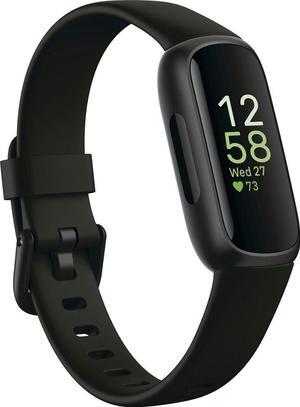
Fitbit Inspire 3
Pros
- Ten-day battery with minimal compromise
- Lightest full-featured Fitbit in the lineup
- Sleep tracking with full sleep stages
- Stress management built in
Cons
- No built-in GPS
- Smaller color display
- Daily Readiness Score needs Premium
Price as of Aug 4, 2026 — see current price on Amazon.
The Inspire 3 is what you recommend to someone who wants to start paying attention to their health without getting deep into the weeds. It does everything correctly without overwhelming you.
Ten days of battery is genuinely useful. You wear it through a week of travel, forget to charge it, still have battery left. That counts for a lot when the habit you're building is wearing it every day.
The sleep tracking is solid. Fitbit's sleep scoring has been refined over years of iteration, and the sleep stages (light, deep, REM) breakdown is accurate enough to be useful. I'm not saying it's a medical device, but it's reliable enough that patterns show up clearly. Nights after drinking, the deep sleep collapses. High-intensity workout days show up in recovery quality.
Where it loses to the Vivosmart 5: the Inspire 3 doesn't give you heart rate variability data or respiration rate. You get heart rate, SpO2 (for spot checks), stress, and sleep. That's plenty for most people. But if you're the kind of person who wants to understand your HRV trends, Garmin is a better fit.
The stress management tools are underrated. The EDA (electrodermal activity) sensor picks up skin conductance changes associated with stress response. It's more subtle than the Charge 6's version but still useful. The guided breathing exercises built into the device are one of those features you roll your eyes at, then actually use.
Fitness Tracker Buying Guide
GPS or No GPS: What You Actually Need
Only the Fitbit Charge 6 has built-in GPS in this roundup. Every other tracker uses your phone's GPS when connected, which works fine but requires carrying your phone.
If you run outdoors regularly and want accurate pace and route tracking without your phone, Charge 6 is your answer. If your workouts are mostly gym-based, cycling on a stationary bike, or indoor swimming, GPS hardware is irrelevant and you'd be paying for something you won't use.
Phone-connected GPS works well when it works. The gap is specifically "left my phone at home on a run." If that scenario describes you more than once a month, go built-in.
Battery Life Actually Matters More Than You Think
Most fitness trackers are primarily useful when they're on your wrist, including during sleep. If you're charging at night, you lose sleep tracking. If you charge in the morning, you lose your pre-coffee activity data and often forget to put it back on.
Fitbit Charge 6: 7 days, charge weekly on Sunday. Garmin Vivosmart 5: 7 days, same cadence as Charge 6. Fitbit Inspire 3: 10 days, a comfortable charge-every-week-and-a-half rhythm.
If you know you'll forget to charge it, the Fitbit Inspire 3's 10-day battery is the most forgiving option in this roundup.
Android vs. iPhone Compatibility
All five trackers work with both Android and iPhone. But there are nuances.
Fitbit trackers connect to Fitbit app on both platforms equally well. Fitbit is also Google now, which means Android users get Google Wallet payment support on the Charge 6 and tighter Google integration. iPhone users lose the payments but keep everything else.
Garmin Vivosmart 5 works identically on Android and iOS. Garmin Connect app is consistent across both.
The Health Sensors That Matter in 2026
Every tracker in this roundup offers heart rate monitoring and SpO2 (blood oxygen). Those are table stakes now.
What separates them: ECG (only Charge 6), heart rate variability tracking (Garmin does this best), skin temperature sensor (Fitbit Charge 6 and Inspire 3), and EDA stress detection (Charge 6 in depth, Inspire 3 more basic).
ECG is the only one with meaningful medical utility. AFib detection can flag an irregular rhythm before you feel symptoms. If heart health is a concern, that's worth the Charge 6 premium.
HRV data is more of a training optimization tool. If you're an athlete periodizing your training, Garmin's HRV reporting is more detailed and actionable than what the Fitbit app offers.
Do You Need a Subscription?
Garmin: no subscription required for any feature. Fitbit: the core features are free. Daily Readiness Score, detailed health reports, and deeper coaching require Premium ($9.99/month or $79.99/year).
If you buy a Fitbit, try it for a month with the free tier first. You may find the basic tracking is enough. If you start actually changing behavior based on the data, Premium pays for itself. If you barely look at the app, save the money.
Want a full watch instead of a band? Our best smartwatches in 2026 roundup covers the wrist computers, and the best smartwatch under $200 picks are where most of the value sits. If your workouts happen outdoors, the best action cameras guide handles the footage.
Frequently asked questions
- What's the difference between a fitness tracker and a smartwatch?
- Fitness trackers are slim bands focused on health metrics: steps, sleep, heart rate, and SpO2. Smartwatches add a larger display, app ecosystem, notifications, and often GPS. Trackers typically have much better battery life (7-16 days vs 1-2 days for most smartwatches) and cost less. If you want to track health and forget about charging, a tracker makes more sense.
- Can fitness trackers accurately count calories burned?
- The calorie numbers from wrist-based trackers are estimates, not measurements. Studies put the margin of error at roughly 15-30% for most devices. They're better at showing relative effort trends (today was a more active day than yesterday) than absolute calorie numbers. Don't eat based on the tracker's calorie burn figure.
- Do fitness trackers work without a smartphone?
- All three trackers in this guide store data locally when not near your phone. Steps, heart rate, sleep, and workouts are tracked and synced when you reconnect. The Fitbit Charge 6 can use built-in GPS independently, so it works for a run without your phone. The Garmin and Fitbit Inspire 3 need your phone for GPS but work offline for everything else.
- How accurate is sleep tracking on fitness trackers?
- Sleep stage accuracy (light/deep/REM) is consistently within about 70-80% of polysomnography (professional sleep lab) measurements for the major brands. That sounds imperfect but is actually useful. The pattern data over weeks is more valuable than any single night's breakdown. All three trackers in this guide perform comparably on sleep accuracy.
- Which fitness tracker is best for swimming?
- All three trackers in this guide are water resistant to at least 5ATM, which means they're safe for pool swimming. The Fitbit Charge 6 has dedicated swim tracking. Garmin Vivosmart 5 tracks swimming but with fewer dedicated metrics than a proper swim watch like the Garmin Swim series. For serious pool swimmers, the Charge 6 gives the most data.
- Are Fitbit and Garmin fitness trackers compatible with each other's apps?
- No. Each brand uses its own app and health ecosystem. Fitbit connects to the Fitbit app (Google Health, Strava, and a few others via integration). Garmin connects to Garmin Connect (Strava sync available). You can export data between some platforms but there's no unified cross-brand experience. Pick the brand whose app interface you like best.
Bottom Line
For most buyers, the Fitbit Charge 6 at $134 is the one to get if you're serious about fitness tracking and run outdoors, and it currently undercuts the Garmin rather than costing more. The built-in GPS, ECG, and Google integration make it the most complete slim tracker you can buy right now. Garmin Vivosmart 5 earns its spot for the Body Battery feature and best-in-class HRV data. And if you want solid everyday tracking without commitment to the Fitbit ecosystem, the Inspire 3 at $94 does the job well with 10-day battery to boot.
How We Test
We score products by combining spec-level research, pricing history, trusted third-party benchmarks, and owner sentiment from high-signal sources.
- Performance and real-world value in the category this guide targets
- Price-to-performance and deal consistency over recent pricing windows
- Build quality, reliability patterns, and known long-term issues
- Recommendation refresh cadence to keep these picks current
Author
TheTechSearch Editorial Team
Independent product reviewers & PC builders
We test and compare real-world specs, price trends, and user feedback to recommend gear that actually makes sense to buy.