Best Sunrise Alarm Clocks 2026: Wake-Up Lights Worth Buying
Five sunrise alarm clocks compared on light, sounds, apps and price, from the Hatch Restore 3 to Philips and Lumie wake-up lights. Expert picks, pros and con...
As an Amazon Associate we earn from qualifying purchases made through our links — this doesn't affect our picks.
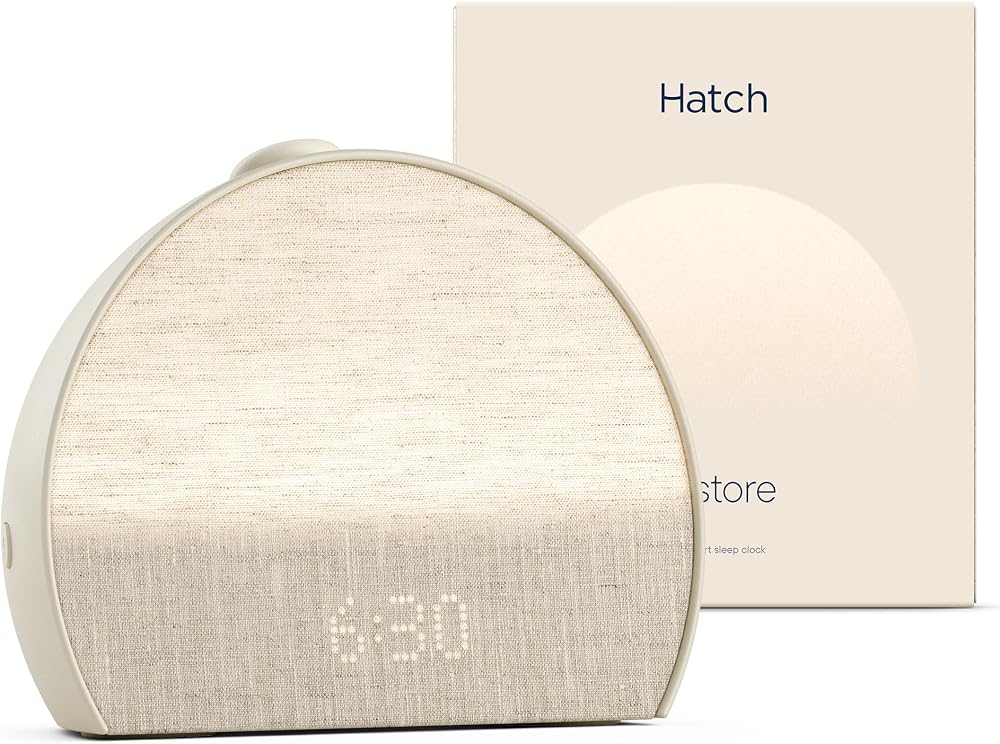
Hatch Restore 3 (Putty)
Our top recommendation for this category
Price as of Oct 11, 2026 — see current price on Amazon.
A phone alarm drags you out of sleep in one second. A sunrise alarm clock takes 20 to 90 minutes to do the same job, slowly brightening the room so your body starts waking before the sound ever plays. For a lot of people, that's the difference between a groggy first hour and a normal one.
The category has split in two. Hatch sells an app-driven sleep clock with a sound library and an optional subscription. Philips and Lumie sell dedicated wake-up lights with buttons, FM radio and no account to create. Both approaches work. Which one suits you depends on how much you want your bedside clock to do.
Here are the five worth buying, with what each one does best.
| Clock | Sunrise length | Sounds | App | Price | |
|---|---|---|---|---|---|
| Hatch Restore 3 (Putty) | Adjustable | Sound library, more with Hatch+ | Yes | $169.99 | Check Price |
| Philips SmartSleep HF3650 | Adjustable | 7 wake sounds plus FM radio | No | $143.99 | Check Price |
| Lumie Bodyclock Shine 300 | 15 to 90 min | 15 sounds plus FM radio | No | $169.00 | Check Price |
| Philips SmartSleep HF3520 | Adjustable | 5 wake sounds plus FM radio | No | $76.29 | Check Price |
| Lumie Bodyclock Rise 100 | 30 min | 1 beep | No | $109.00 | Check Price |
Why a Sunrise Alarm Works
Light is the strongest signal your body clock gets. As light hits your eyes, melatonin production drops and cortisol starts its normal morning rise. A sunrise alarm triggers that process gradually while you're still asleep.
The research backs this up, at least for the basics. Lab and at-home studies of dawn simulation have used light that ramps up over about 30 minutes to somewhere between 100 and 300 lux. Results consistently point to easier waking, better mood after waking, and less of the heavy-headed fog called sleep inertia.
It isn't magic. If you sleep five hours a night, no lamp fixes that. But if you already sleep enough and still wake up feeling hit by a truck, especially on dark winter mornings, a wake-up light is one of the cheaper things worth trying.
Hatch Restore 3: Best Overall
Hatch Restore 3 (Putty)
Pros
- Sunrise alarm, sound machine and reading light in one clock
- On-device buttons run your routine without picking up a phone
- Fabric front looks like decor, not a gadget
- Comes in Putty, Greige and Cocoa
Cons
- The larger sound library needs Hatch+ at $4.99 a month or $49.99 a year
- No battery, so it must stay plugged in
Price as of Oct 11, 2026 — see current price on Amazon.
The Restore 3 is less an alarm clock than a full bedtime routine. You build a sequence in the Hatch Sleep app, say a warm reading light, then a wind-down sound, then white noise all night, then a sunrise that starts before your alarm. After that, one tap on the clock runs the whole thing.
That on-device control is the big change from the Restore 2. You can skip, pause or swap content with the buttons, which keeps your phone out of the bedroom if that's the goal. The fabric front and soft glow also look much better on a nightstand than most wake-up lights.
Here's the catch: the subscription. The clock works without one and ships with a base set of sounds and lights. Hatch+ unlocks the bigger library of sleep stories, meditations and sounds. Hatch includes a month free, then charges $4.99 a month or $49.99 a year. If you only want the sunrise and white noise, you can skip it.
Hatch lists the Restore 3 at $169.99.
Philips SmartSleep HF3650: Best Light Quality
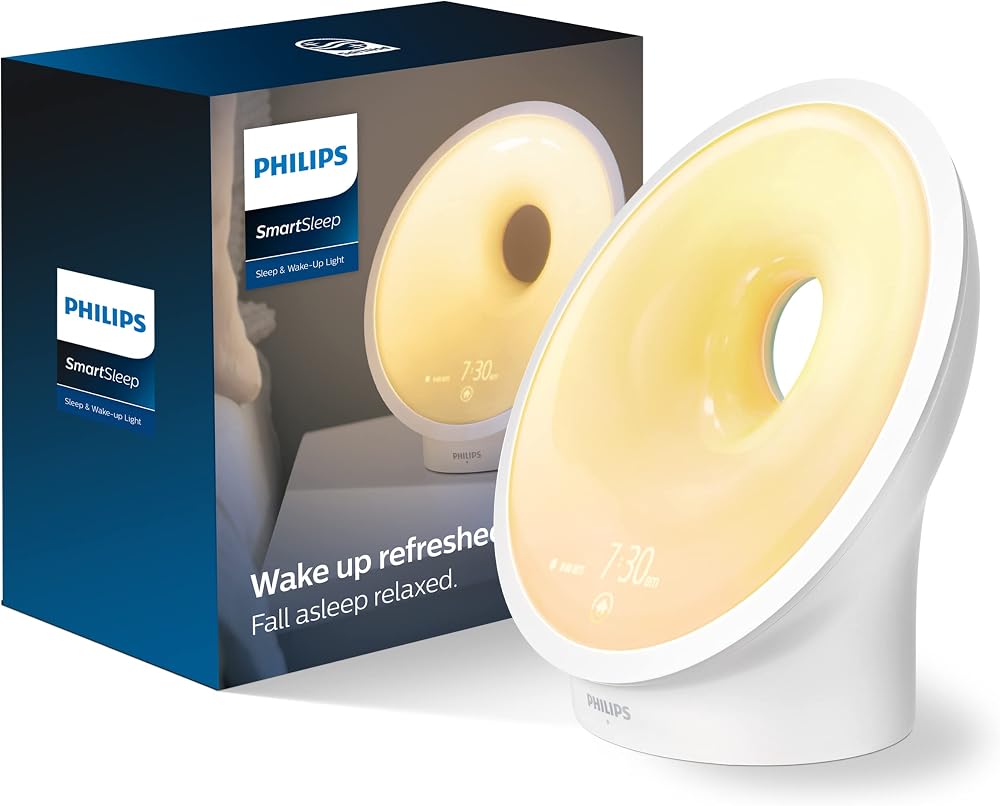
Philips SmartSleep HF3650
Pros
- Up to 310 lux, among the brightest here
- 25 brightness settings and colored sunrise from red to yellow
- Sunset mode plus RelaxBreathe light-guided breathing
- No app or subscription
Cons
- Large, round design takes real nightstand space
- Menu takes a few minutes to learn
Price as of Oct 11, 2026 — see current price on Amazon.
If the sunrise itself is what you care about, this is the one. Philips rates the HF3650 at up to 310 lux with 25 brightness settings, which puts it at the top of the range sleep researchers have used. The sunrise moves from deep red through orange to bright yellow, closer to a real dawn than a lamp that simply gets brighter.
There's a sunset mode for bedtime that dims slowly over a set time, plus RelaxBreathe, which pulses light or sound at a slow rhythm to pace your breathing. You also get seven wake sounds and FM radio.
Everything runs from the clock. No app, no account, no subscription. Philips lists it at $199.99, and it's listed at $143.99 on Amazon as of October 2026.
Lumie Bodyclock Shine 300: Most Adjustable Sunrise
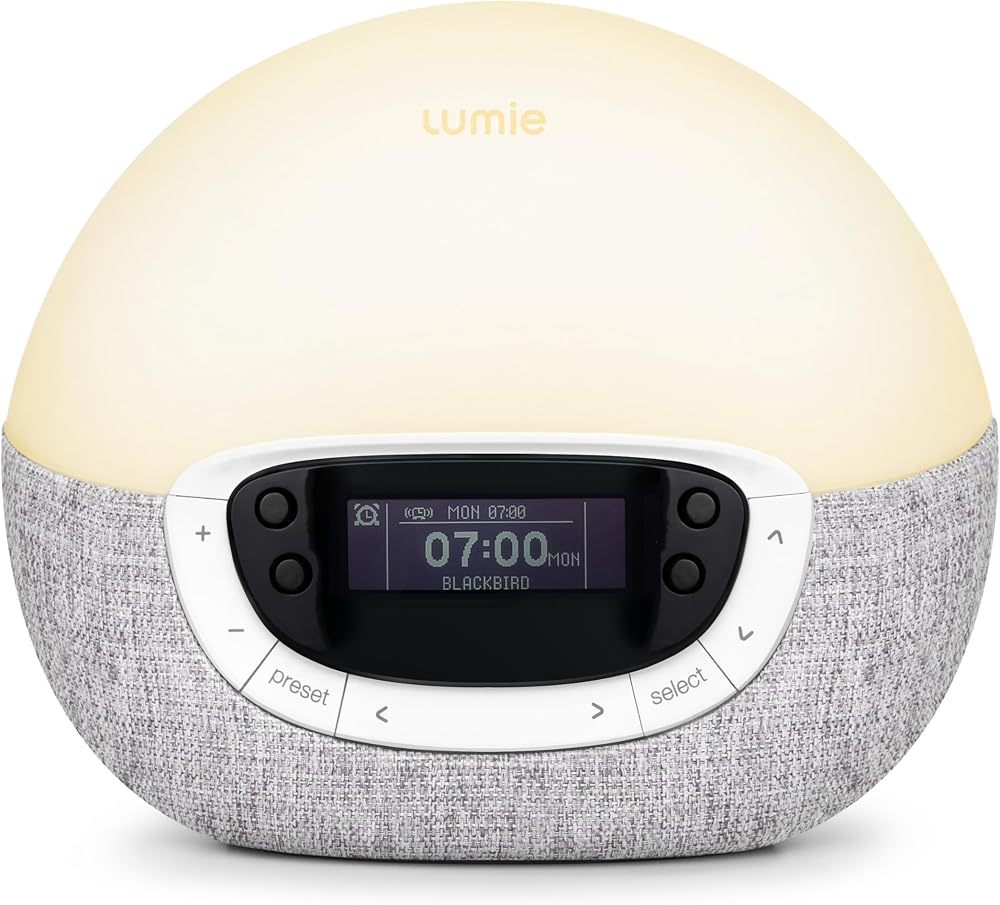
Lumie Bodyclock Shine 300
Pros
- Sunrise and sunset from 15 to 90 minutes
- 15 sleep and wake sounds plus FM radio
- Display auto-dims at night
- Three-year warranty from Lumie
Cons
- Button menus feel dated next to Hatch
- No app control
Price as of Oct 11, 2026 — see current price on Amazon.
Lumie is a UK light-therapy specialist, and the Shine 300 is the sweet spot of its range. The headline feature is range. You can set a sunrise as short as 15 minutes or as long as 90, which matters if you're a heavy sleeper who needs a long, slow lead-in.
The light uses warm white, orange and red LEDs and doubles as a dimmable reading lamp. You get 15 sounds, FM radio and a tap-to-snooze top. The display dims itself at night, so it won't light up the room at 3 a.m.
Lumie backs it with a three-year warranty, longer than Hatch or Philips. Lumie lists it at $169.
Philips SmartSleep HF3520: Best Budget Pick
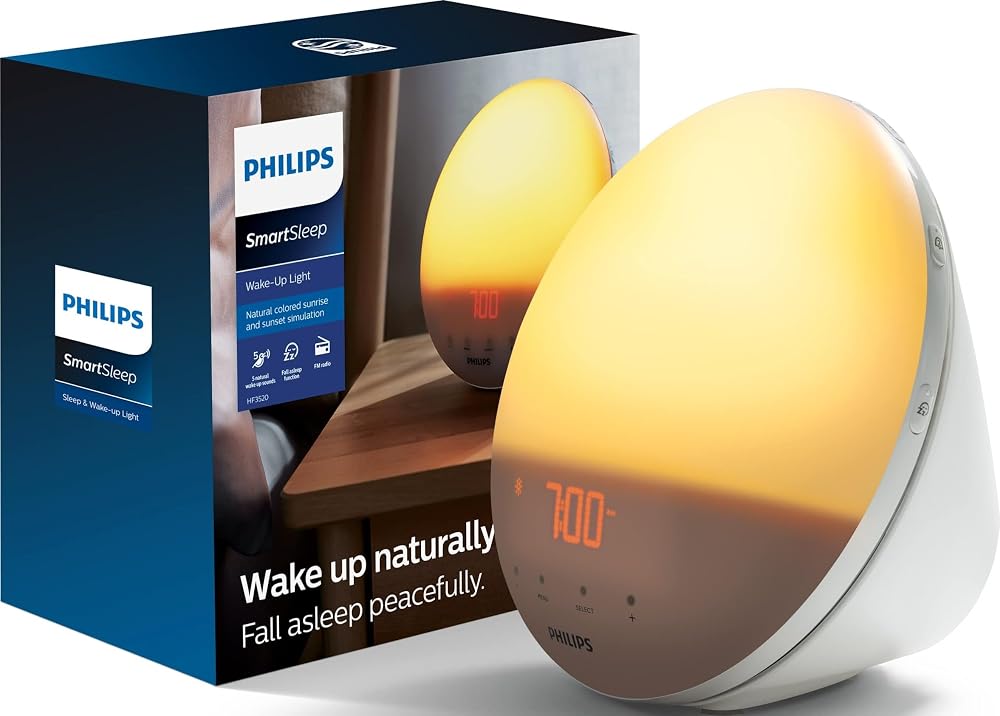
Philips SmartSleep HF3520
Pros
- Colored sunrise and sunset simulation
- Five natural wake sounds plus FM radio
- Tap snooze and reading-lamp mode
- Lowest price in this guide
Cons
- Fewer sounds and settings than the HF3650
- No breathing or wind-down extras
Price as of Oct 11, 2026 — see current price on Amazon.
Philips calls the HF3520 its best-selling wake-up light, and it covers the core job well. You get a colored sunrise, a sunset for bedtime, five natural wake sounds, FM radio and a reading-lamp mode. Tap the top to snooze.
What you give up against the HF3650 is the extras: fewer sounds, no RelaxBreathe and a simpler set of light options. For most people who just want a gentler morning, none of that is a dealbreaker.
Philips lists it at $169.99, and it's listed at $76.29 on Amazon as of October 2026. At that price it's the easiest way to find out whether a wake-up light works for you.
Lumie Bodyclock Rise 100: Simplest Wake-Up Light
Lumie Bodyclock Rise 100
Pros
- 30-minute sunrise and sunset
- Sunset can fade to off or to a nightlight
- Fully dimmable bedside light
- Three-year warranty
Cons
- Only a beep for sound
- Fixed sunrise length
Price as of Oct 11, 2026 — see current price on Amazon.
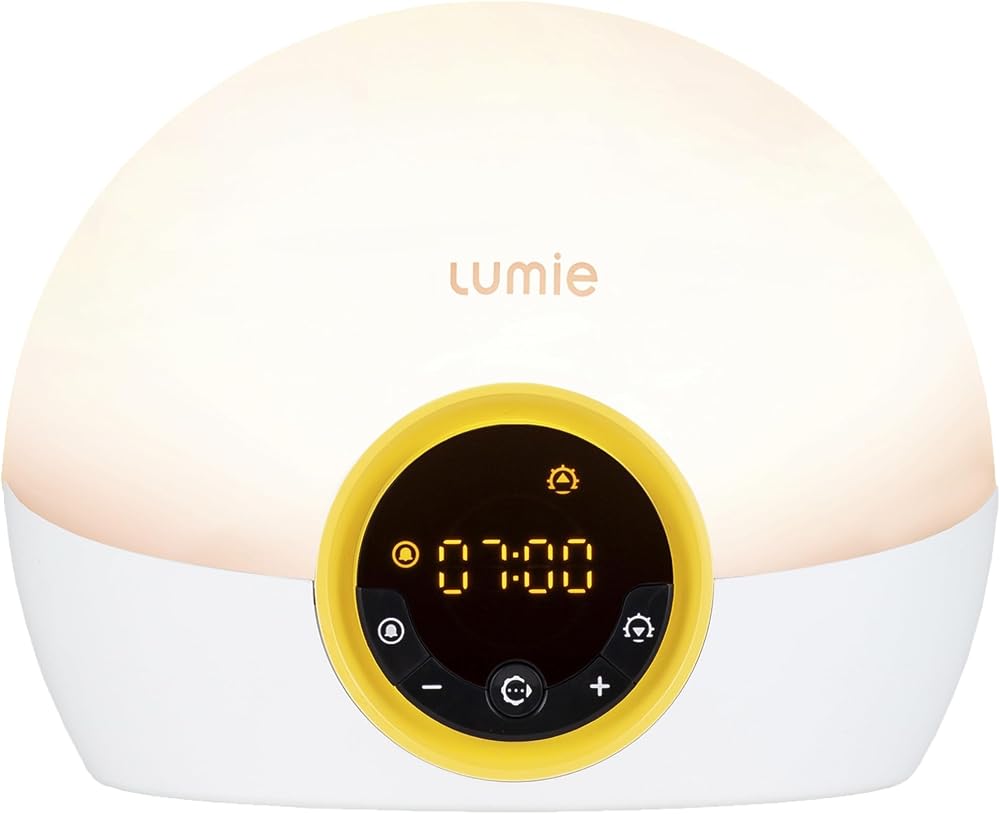
The Rise 100 does one thing. It gives you a 30-minute sunrise and a matching sunset, and that's about it. There's a single beep for a backup alarm, a dimmable bedside light and a display that dims itself overnight.
That simplicity is the appeal. There's nothing to configure beyond the alarm time, which suits kids, older relatives, or anyone who'd rather wake to light alone. Lumie lists it at $109 with the same three-year warranty as the Shine 300.
How to Choose a Sunrise Alarm Clock
Brightness
Look for a light that reaches at least 100 lux at pillow distance, since that's the low end of what dawn-simulation studies have used. Brighter is useful if your room gets street light or you sleep through dim cues. The Philips HF3650's 310-lux rating is the highest here.
Sunrise length
Thirty minutes is the most common default and works for most people. Heavy sleepers often do better with 45 to 60 minutes. If you want control over this, the Lumie Shine 300's 15-to-90-minute range is the widest.
App or buttons
An app-based clock like the Hatch makes routines easy and adds a sound library. Button-based lights from Philips and Lumie work the day you plug them in, need no Wi-Fi and won't change if a company changes its app. Think about who will use it.
Subscriptions
Only the Hatch has one, and it's optional. Count $49.99 a year into the cost if you think you'll want the full content library.
Sound
If you share a bed, a quiet sound or no sound at all may be better, letting light do the work. If you're a deep sleeper, FM radio or a loud final alarm matters more.
Want your existing bedroom lights to join in? Smart bulbs can run sunrise scenes too. Our smart lights guide covers which systems handle schedules best. And for a bedside clock that also runs a voice assistant, see our smart displays roundup.
Frequently asked questions
- Do sunrise alarm clocks actually work?
- For most people, yes. Studies of dawn simulation using light that ramps up over about 30 minutes to 100 to 300 lux have found easier waking and better mood on waking. They work best when you already get enough sleep.
- Is the Hatch Restore 3 worth it without Hatch+?
- Yes, if you mainly want the sunrise alarm, white noise and reading light. Hatch+ at $4.99 a month or $49.99 a year adds a larger library of sounds, stories and meditations.
- How bright should a sunrise alarm clock be?
- At least 100 lux at the pillow is a sensible floor. The Philips HF3650 is rated up to 310 lux, the brightest in this guide.
- Can a sunrise alarm help with dark winter mornings?
- That's where they help most. A sunrise light gives your body a morning light signal before the real sun is up. It isn't a replacement for a 10,000-lux light therapy lamp prescribed for seasonal depression.
- Do I need Wi-Fi for a sunrise alarm clock?
- Only for the Hatch Restore 3, which uses an app to set routines. The Philips and Lumie models in this guide are set up entirely with buttons on the clock.
Bottom Line
The Hatch Restore 3 at $169.99 is the best sunrise alarm clock for most people, because it combines the wake-up light with a full bedtime routine and keeps the phone out of reach. If the quality of the sunrise matters most, the Philips SmartSleep HF3650 at $143.99 is brighter and needs no app. The Lumie Bodyclock Shine 300 at $169.00 gives the widest sunrise range, and the Philips SmartSleep HF3520 at $76.29 is the cheapest way to try one.
How We Test
We score products by combining spec-level research, pricing history, trusted third-party benchmarks, and owner sentiment from high-signal sources.
- Performance and real-world value in the category this guide targets
- Price-to-performance and deal consistency over recent pricing windows
- Build quality, reliability patterns, and known long-term issues
- Recommendation refresh cadence to keep these picks current
Author
TheTechSearch Editorial Team
Independent product reviewers & PC builders
We test and compare real-world specs, price trends, and user feedback to recommend gear that actually makes sense to buy.