RTX 5060 Ti vs RX 9060 XT: Which Mid-Range GPU Should You Buy in 2026?
RTX 5060 Ti or RX 9060 XT? July 2026 street prices, 1440p benchmarks, and DLSS 4 vs FSR 4.1 compared so you can pick the right mid-range GPU. Expert picks, p...
As an Amazon Associate we earn from qualifying purchases made through our links — this doesn't affect our picks.
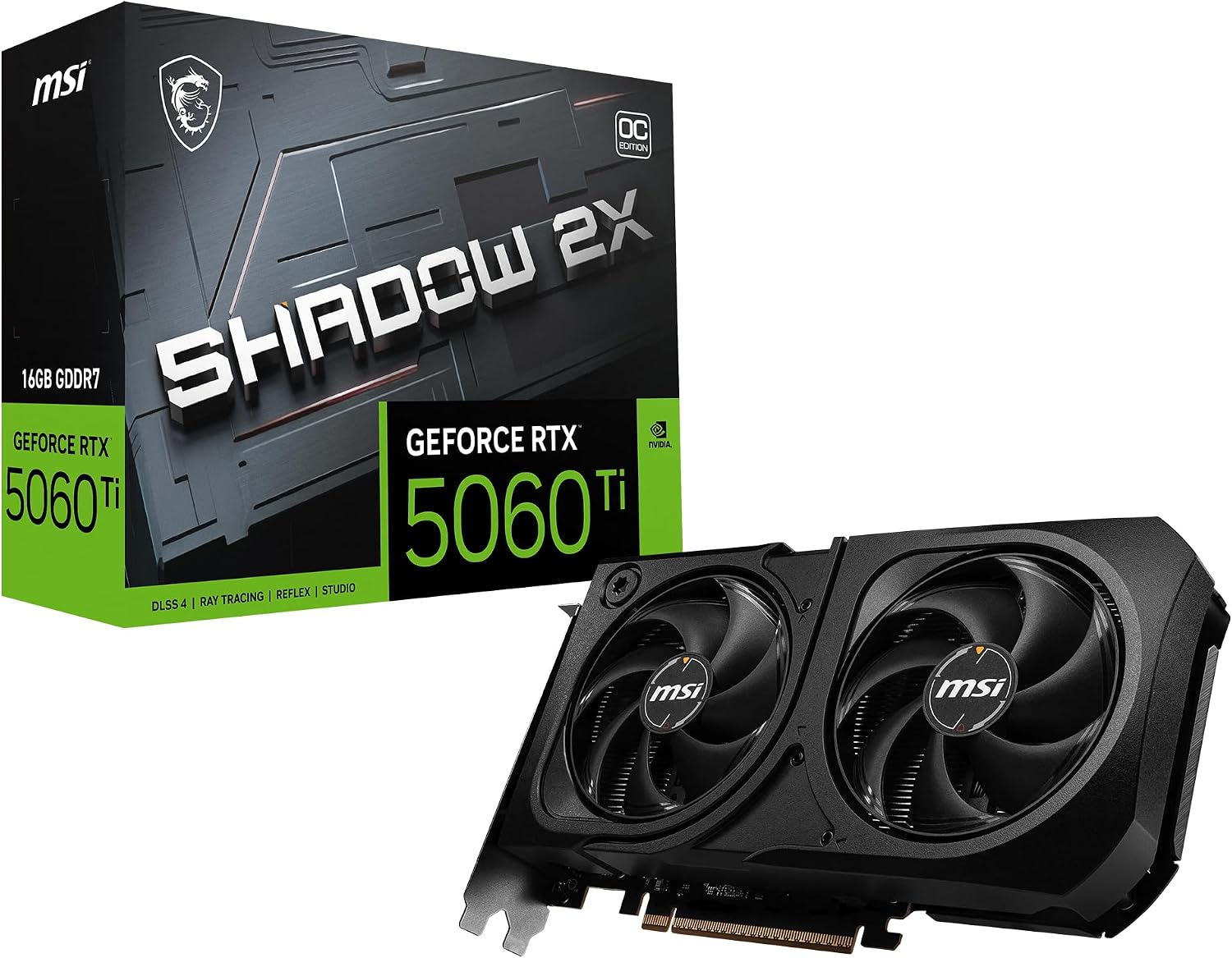
MSI Gaming RTX 5060 Ti 16G Shadow 2X OC Plus
Our top recommendation for this category
Price as of Jul 4, 2026 — see current price on Amazon.
The mid-range GPU fight finally got interesting. NVIDIA's RTX 5060 Ti 16GB and AMD's RX 9060 XT 16GB are close enough at 1440p that raw speed no longer settles the argument, and July's memory shortage has shoved both cards past their sticker prices. I've been tracking street pricing on both all week, and the honest answer depends less on benchmarks than on which software features you'll actually turn on.
This guide covers the four partner cards I'd actually buy right now, what the benchmark gap really looks like, and how the current pricing mess changes the math.
Quick Picks
| Card | GPU | Street Price | Best For | |
|---|---|---|---|---|
| MSI Shadow 2X OC Plus | RTX 5060 Ti 16GB | $429 | Cheapest path to DLSS 4 | Check Price |
| ASUS Dual OC Edition | RTX 5060 Ti 16GB | $449 | Quietest NVIDIA pick | Check Price |
| Sapphire Pulse | RX 9060 XT 16GB | $449 | The AMD card to get | Check Price |
Spec Comparison: RTX 5060 Ti vs RX 9060 XT
| Spec | RTX 5060 Ti 16GB | RX 9060 XT 16GB |
|---|---|---|
| MSRP | $429 | $349 |
| Street price (July 2026) | $429 to $449 | $449 |
| Memory | 16GB GDDR7 | 16GB GDDR6 |
| Memory bandwidth | 448 GB/s | 320 GB/s |
| Board power | 180W | 160W to 182W depending on card |
| Upscaling | DLSS 4 with Multi Frame Gen | FSR 4.1 |
| Title support | 250+ games (DLSS 4) | 300+ games (FSR 4) |
| 1440p raster | Ahead by 1 to 5 percent | Effectively tied |
| 1440p ray tracing | Ahead by 15 to 25 percent | Trails NVIDIA |
| Power connector | Single 8-pin | Single 8-pin |
That table is the whole debate in miniature. Raster performance is a wash. NVIDIA pulls ahead the moment ray tracing enters the picture, AMD counters with broader upscaler support, and the pricing situation flipped upside down during the mid-2026 memory shortage. More on that below.
MSI Gaming RTX 5060 Ti 16G Shadow 2X OC Plus
MSI Gaming RTX 5060 Ti 16G Shadow 2X OC Plus
Pros
- Only card in this matchup still selling at MSRP
- Twin-fan design fits smaller cases without drama
- 16GB of GDDR7 at 448 GB/s, same silicon as cards costing more
Cons
- Cooler is adequate rather than impressive under sustained load
- Zero visual flair if you care about a windowed build
Price as of Jul 4, 2026 — see current price on Amazon.
The Shadow 2X is the boring pick, and I mean that as a compliment. It's the only card of the four still sitting at its launch price, which in this market feels almost like a clerical error someone forgot to fix.
You get the full RTX 5060 Ti 16GB experience: GDDR7, DLSS 4 with Multi Frame Generation, and enough grunt for high-refresh 1440p in esports titles or 60-plus fps in heavier single-player fare with upscaling. The twin-fan cooler runs warmer than the triple-fan competition under a long session, but it never throttled in the reviews I trust, and it slots into compact mid-towers that would reject a longer card.
If you just want the cheapest competent path into NVIDIA's ecosystem, stop reading here. This is it.
ASUS Dual GeForce RTX 5060 Ti 16GB OC Edition
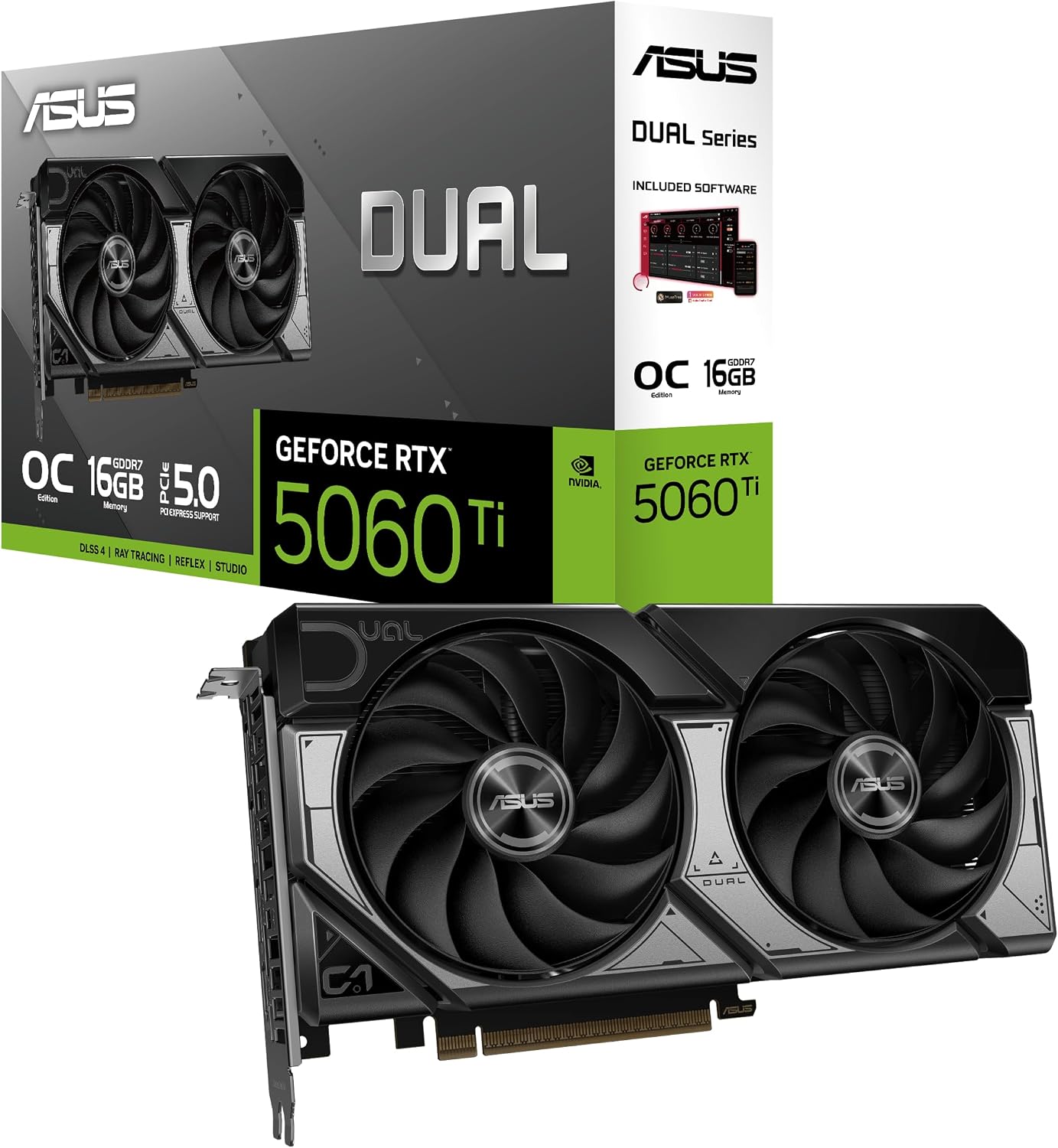
ASUS Dual GeForce RTX 5060 Ti 16GB OC Edition
Pros
- Noticeably quieter than the MSI under gaming load
- Fans stop completely at idle, so desktop use is silent
- ASUS build quality, solid factory OC out of the box
Cons
- You pay $20 more for the same frames as the Shadow 2X
- Still a two-fan cooler, just a better-tuned one
Price as of Jul 4, 2026 — see current price on Amazon.
The ASUS Dual costs $20 more than the MSI and delivers the same performance. So why is it my main NVIDIA recommendation? Noise. The Dual's fan curve is tuned conservatively, the fans shut off entirely below light loads, and under a full gaming session it's the kind of card you hear only if you're listening for it.
That matters more on a 180W card than people think. This class of GPU ends up in living-room builds and bedroom PCs where a whiny cooler is a daily annoyance, not a spec-sheet footnote.
Performance is exactly what our RTX 5060 Ti roundup found across the board for this chip: strong 1440p results, excellent efficiency, and DLSS 4 doing a lot of heavy lifting in the newest releases. Nothing about the Dual changes that formula. It just delivers it more quietly.
Sapphire Pulse AMD Radeon RX 9060 XT Gaming OC 16GB
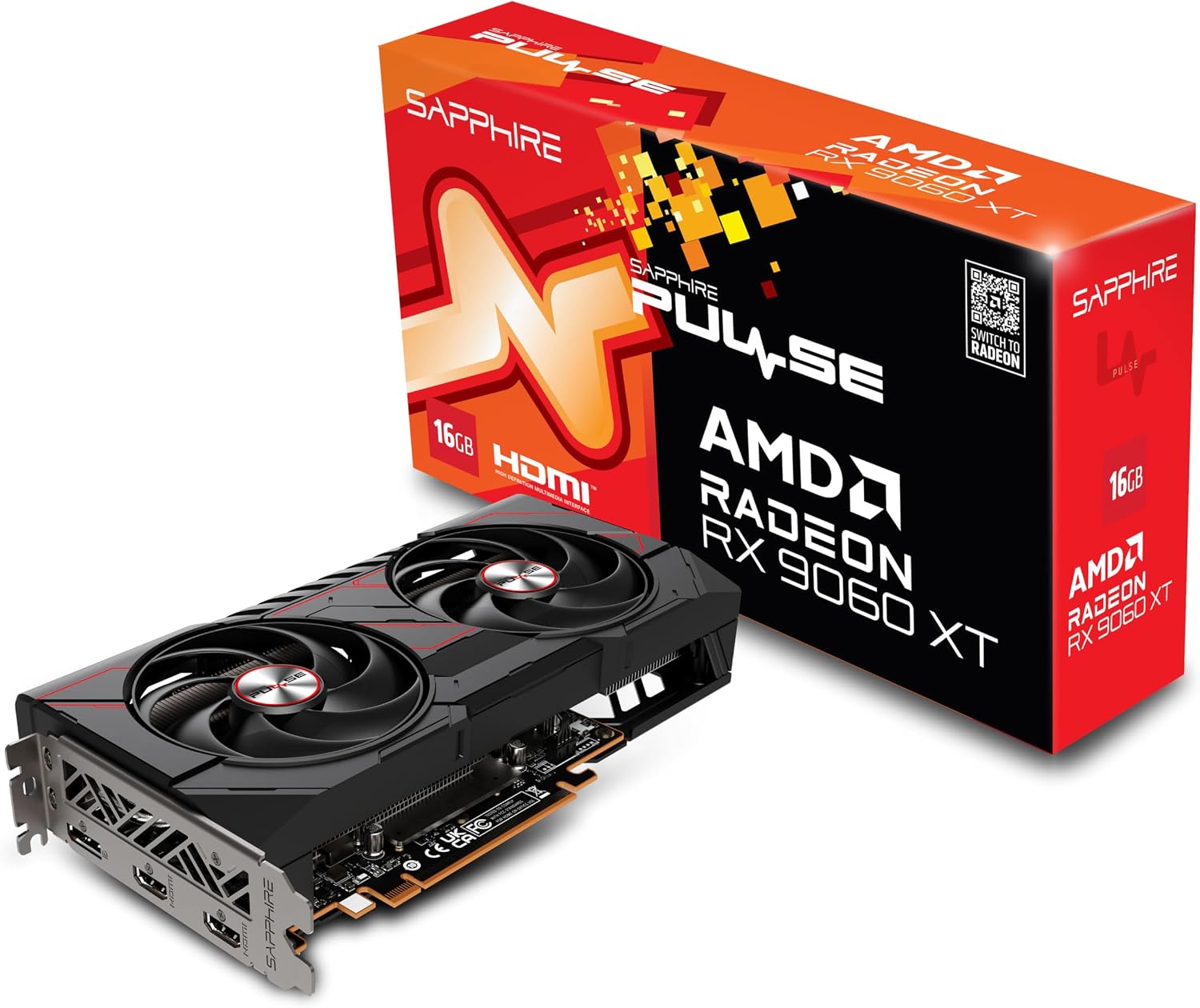
Sapphire Pulse AMD Radeon RX 9060 XT Gaming OC 16GB
Pros
- Sapphire remains the partner brand AMD buyers trust most, and it shows in the tuning
- Compact dual-fan card that fits ITX and small micro-ATX builds
- Matches the RTX 5060 Ti in raster at 1440p
Cons
- Up roughly 10 percent in mid-2026 thanks to the memory shortage
- Gives up 15 to 25 percent in ray-traced games
Price as of Jul 4, 2026 — see current price on Amazon.
Sapphire has built AMD-only cards for over two decades, and the Pulse line is its value tier done right. Quiet cooler, no gimmicks, consistent quality control. If I were buying the RX 9060 XT today, this is the one.
The frustrating part is the price. The Pulse hovered near $410 in June, then AMD partner pricing jumped about 10 percent across the board as the memory shortage squeezed GDDR6 supply. At $449, it now costs the same as the ASUS Dual while losing the ray-tracing comparison. The card didn't get worse. Its value argument did.
What you still get: raster performance that trades blows with the 5060 Ti at 1440p, FSR 4.1 support across a genuinely huge library, and drivers that have matured nicely since the RDNA 4 launch. Linux gamers should also note AMD's open-source driver support remains the better experience there, which no NVIDIA card in this price range can claim.
How the Two GPUs Actually Compare
Raster performance at 1440p
Strip away the upscalers and the two chips are nearly identical. Across the launch reviews and the mid-2026 driver revisions, the RTX 5060 Ti averages 1 to 5 percent ahead at 1440p depending on the test suite. That's margin-of-error territory. You would not notice the difference in a blind test, and neither card struggles to hold high frame rates in esports titles or solid 60-plus performance in demanding single-player games at high settings.
For years the AMD counterargument was simple: same frames, lower price. That argument took a beating in mid-2026, and it's the main reason this comparison no longer has an obvious winner.
Resolution changes the picture a little. At 1080p, both cards have more muscle than most games can use and your CPU becomes the limiting factor first. At 4K, neither chip is built for native rendering in new releases, though upscaling keeps lighter titles very playable. These are 1440p cards first and foremost, and that's where your money goes furthest. Pair either one with a screen from our 1440p monitor guide and the whole setup makes sense for years.
Ray tracing is still NVIDIA's turf
Turn on ray tracing and the gap opens to 15 to 25 percent in NVIDIA's favor at 1440p. RDNA 4 improved AMD's RT hardware substantially over the previous generation, but Blackwell's RT cores still finish the race first in nearly every title with meaningful ray-traced effects.
Whether that matters depends on your library. If you mostly play competitive shooters, RT performance is trivia. If you're the type to max out lighting in big single-player releases, the 5060 Ti is measurably the better card, and DLSS 4 widens that lead further in supported games.
DLSS 4 vs FSR 4.1
Here's where 2026 got interesting. NVIDIA's DLSS 4 with Multi Frame Generation now covers 250-plus games, and its image quality in motion is still the reference point everyone else gets measured against. AMD's answer used to be the weak spot. Not anymore. FSR 4 support passed 300 titles with the 4.1 release, and the quality gap at 1440p has narrowed to the point where most players won't spot the difference without freeze-framing.
I'd still give NVIDIA the overall nod for consistency, especially with frame generation enabled where Reflex keeps latency in check. But the days of writing off AMD's upscaler are over, and the coverage numbers now actually favor the red team.
Power, heat, and case fit
Both GPUs are efficient by modern standards. The 5060 Ti draws 180W, partner RX 9060 XT cards land between 160W and 182W, and every card in this guide feeds off a single 8-pin connector. A quality 550W or 600W power supply handles either chip with room to spare. If yours is older or from a brand you can't remember, check our power supply guide before spending anything on a GPU.
Physically, the Sapphire Pulse and MSI Shadow 2X are the compact-build picks. The ASUS Dual is the longest card of the three, so measure your case before you order it.
The July 2026 price problem
The memory shortage was the story of summer 2026. GDDR6 and GDDR7 supply both tightened, every partner raised prices, and AMD cards took the harder hit with a roughly 10 percent jump. The result is genuinely strange: the RX 9060 XT, a card with a $349 MSRP, now sells for more than the $429-MSRP RTX 5060 Ti in most listings.
Every price above was checked against the live Amazon listing before this guide was last updated, so they reflect what the cards actually sell for rather than launch-day wishful thinking. If AMD partner pricing settles back toward $400, the value calculus flips again. At today's prices, NVIDIA is simply the cheaper buy.
Frequently asked questions
- Is the RTX 5060 Ti or RX 9060 XT better for 1440p gaming?
- In pure rasterization they are effectively tied, with the RTX 5060 Ti averaging 1 to 5 percent ahead depending on the game suite. Both handle 1440p high settings comfortably. The 5060 Ti pulls meaningfully ahead in ray-traced titles by 15 to 25 percent, so lean NVIDIA if you play games with heavy RT effects.
- Why does the RX 9060 XT cost more than its MSRP right now?
- A memory supply shortage hit GDDR6 and GDDR7 production in mid-2026, and AMD partner card prices rose about 10 percent in July alone. The RX 9060 XT launched with a $349 MSRP but currently sells in the $449 range, while RTX 5060 Ti cards sit closer to their $429 MSRP.
- Is 16GB of VRAM enough for 1440p in 2026?
- Yes. The pressure point in current releases is 8GB and to a lesser degree 12GB. At 16GB, both of these cards handle maxed textures, frame generation buffers, and background tasks at 1440p without running out of memory. Neither card gives you a VRAM advantage over the other since both ship with 16GB.
- Should I buy the 8GB version of either card to save money?
- Not for 1440p. Several 2025 and 2026 releases already exceed 8GB at high texture settings, which causes stutter and texture pop-in that no amount of GPU horsepower fixes. The 16GB versions cost more up front but will age far better. For 1080p esports on a tight budget the 8GB cards are still defensible.
- What power supply do these cards need?
- Every card in this guide uses a single 8-pin PCIe connector and draws between 160W and 182W. A quality 550W unit covers either GPU paired with a mid-range CPU. If you run a power-hungry processor or want headroom for a future upgrade, 650W is the comfortable choice.
- Should I wait for GPU prices to drop before buying?
- Supply analysts expect the memory shortage to run through fall 2026, so relief is not imminent. If you need a card now, the four models here are fairly priced against the current market. Just avoid paying above the street ranges listed in this guide, because some third-party sellers are listing far higher hoping shortage panic does the work.
Bottom Line
Six months ago this was a one-line verdict: buy the RX 9060 XT and pocket the difference. The July pricing situation killed that answer.
At today's street prices, the RTX 5060 Ti is the better buy for most people. It costs the same or less, matches AMD in raster, wins by 15 to 25 percent with ray tracing on, and DLSS 4 Multi Frame Generation remains the stronger upscaling package in the games that support it. The MSI Shadow 2X at $429 is the value play, and the ASUS Dual is worth the extra $20 for a quieter build.
Pick the RX 9060 XT if FSR 4.1's broader title coverage matters to your library, you game on Linux, or you find one back near the $400 mark where its raster-per-dollar case works again. The Sapphire Pulse is the one to grab when that happens.
And if your budget can stretch past $500, the calculus changes entirely. Our RX 9070 XT guide covers the next tier up, where AMD's value story currently holds together much better.
Related Guides
How We Test
We score products by combining spec-level research, pricing history, trusted third-party benchmarks, and owner sentiment from high-signal sources.
- Performance and real-world value in the category this guide targets
- Price-to-performance and deal consistency over recent pricing windows
- Build quality, reliability patterns, and known long-term issues
- Recommendation refresh cadence to keep these picks current
Author
TheTechSearch Editorial Team
Independent product reviewers & PC builders
We test and compare real-world specs, price trends, and user feedback to recommend gear that actually makes sense to buy.