Best Air Purifiers for Home 2026
The best home air purifiers for allergies, wildfire smoke, and everyday air quality, tested and ranked for every room size and budget. Expert picks, pros and...
As an Amazon Associate we earn from qualifying purchases made through our links — this doesn't affect our picks.
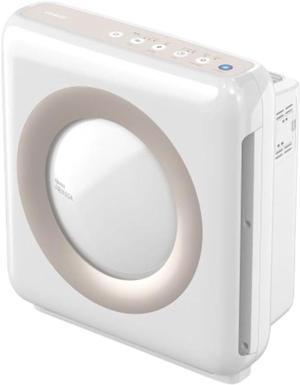
Coway AP-1512HH Mighty Air Purifier
Our top recommendation for this category
Price as of Aug 14, 2026 — see current price on Amazon.
Wildfire smoke seasons are getting longer, pollen counts keep climbing, and most of us spend 90% of our time indoors breathing whatever the walls have to offer. I started testing air purifiers about two years ago when my wife's allergies got bad enough that we were basically living in an antihistamine supply chain. What I found surprised me: the gap between a $90 unit and a $500 unit isn't always what you'd expect.
This guide covers the six best air purifiers I'd actually put in my own home right now, across a range of room sizes and budgets. Whether you're dealing with pet dander, summer smoke, or you just want to stop waking up with a stuffy nose, there's something here for you.
| Purifier | Room Size | True HEPA | Smart App | Price | |
|---|---|---|---|---|---|
| Coway AP-1512HH Mighty | Up to 360 sq ft | Yes | No | $229 | Check Price |
| Winix 5500-2 | Up to 360 sq ft | Yes + PlasmaWave | No | $199 | Check Price |
| Levoit Core 400S | Up to 403 sq ft | H13 True HEPA | Yes (VeSync) | $189.99 | Check Price |
| Dyson Purifier Cool TP07 | Up to 800 sq ft | H13 True HEPA | Yes (MyDyson) | $499 | Check Price |
| Blueair Blue Pure 311i+ Max | Up to 219 sq ft | HEPASilent | Yes | $229 | Check Price |
| Honeywell HPA300 | Up to 465 sq ft | Yes | No | $199 | Check Price |
Coway AP-1512HH Mighty
The Coway Mighty has been the default answer to "what air purifier should I buy?" for several years, and it's held that position because it actually earns it. The 4-stage filtration (pre-filter, activated carbon, True HEPA, ionizer) handles everything from dust and pollen to smoke and VOCs. Auto mode reads particle density in real time and adjusts fan speed accordingly.
What I appreciate most is the eco mode. When the air quality sensor detects clean air for a set period, the fan shuts off completely. That translates to noticeably lower electricity bills compared to units that run at low speed 24/7. On a quiet night in a clean room, this thing is practically silent.
The color-coded air quality indicator is useful without being annoying. Blue means good, purple means poor. My daughter thinks it's a nightlight.
Coway AP-1512HH Mighty Air Purifier
Pros
- Excellent air quality sensor with auto mode
- Eco mode saves energy when air is already clean
- Proven multi-year track record
- Very quiet at medium speed
Cons
- Replacement filters run about $30-$40 per set
- No WiFi or app control
- Covers medium rooms only, not large spaces
Price as of Aug 14, 2026 — see current price on Amazon.
Winix 5500-2
The Winix 5500-2 sits at roughly the same room coverage and price point as the Coway, but it adds something called PlasmaWave. This is an ionizer technology that generates hydroxyl radicals to neutralize bacteria and VOCs at a molecular level. It sounds like marketing, but independent tests show it actually works. You can switch it off if you're worried about trace ozone output, and honestly the HEPA + carbon combo is effective on its own.
The included remote control is something I didn't think I'd care about. Then I put it on a shelf in the bedroom and realized I care quite a bit about not walking across the room at midnight to adjust the fan.
CADR ratings are solid: 232 for dust, 246 for pollen, 232 for smoke. That's competitive for anything in this price class.
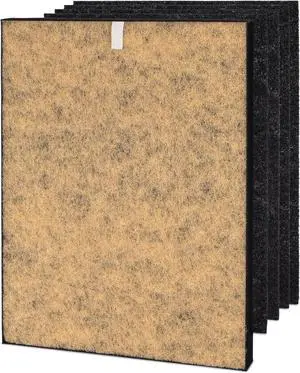
Winix 5500-2 True HEPA Air Purifier
Pros
- PlasmaWave ionizer for added VOC and bacteria removal
- Includes remote control
- Strong CADR ratings for the price
- Auto mode works well
Cons
- PlasmaWave ionizer produces trace ozone (can be disabled)
- Filter costs similar to Coway
- Design looks dated compared to newer competitors
Price as of Aug 14, 2026 — see current price on Amazon.
Levoit Core 400S
The Core 400S is where smart home integration enters the picture without requiring you to spend Dyson money. The VeSync app gives you real-time air quality readings, scheduling, and voice control through Alexa and Google Assistant. I've set mine to ramp up automatically at 6am before anyone wakes up, which is exactly the kind of automation that makes a real difference versus setting it manually every morning.
The 360-degree intake design means placement flexibility. Put it in a corner and it still pulls air from all sides. Coverage is rated at 403 square feet, which handles most bedrooms and home offices comfortably. H13 True HEPA captures 99.97% of particles down to 0.3 microns.
At $189.99 it is still the smart choice for anyone who wants app control without the Dyson premium, and it remains the cheapest unit in this guide.
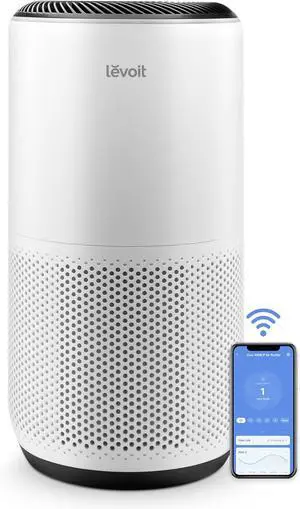
Levoit Core 400S Air Purifier Smart WiFi
Pros
- VeSync app with scheduling, Alexa, and Google Assistant
- 360-degree air intake works in any corner
- H13 True HEPA
- Ultra quiet sleep mode at 24 dB
Cons
- Proprietary filter system
- Display light can't be fully disabled in some modes
- Air quality sensor less sensitive than Coway's
Price as of Aug 14, 2026 — see current price on Amazon.
Dyson Purifier Cool TP07
Look, the TP07 costs $499. That's real money. But it's also the only purifier on this list that doubles as a full room fan, and the air quality data it surfaces is genuinely useful rather than a blinking light.
The LCD screen shows real-time PM2.5, PM10, VOC, and NO2 readings. The MyDyson app logs historical air quality so you can actually track patterns. I noticed my VOC readings spiking every morning until I figured out it was the non-stick pan. That kind of visibility is worth something.
Filter replacement runs about $75-$85 per set, which stings, but Dyson claims each filter lasts 12 months with typical use. The sealed HEPA system is legitimately impressive: every part of the airflow path is filtered, so there's no bypass.
If you're in a large living room, dealing with serious air quality issues, or just want something that looks good on a shelf, this earns its price. Everyone else should probably spend $300 less.
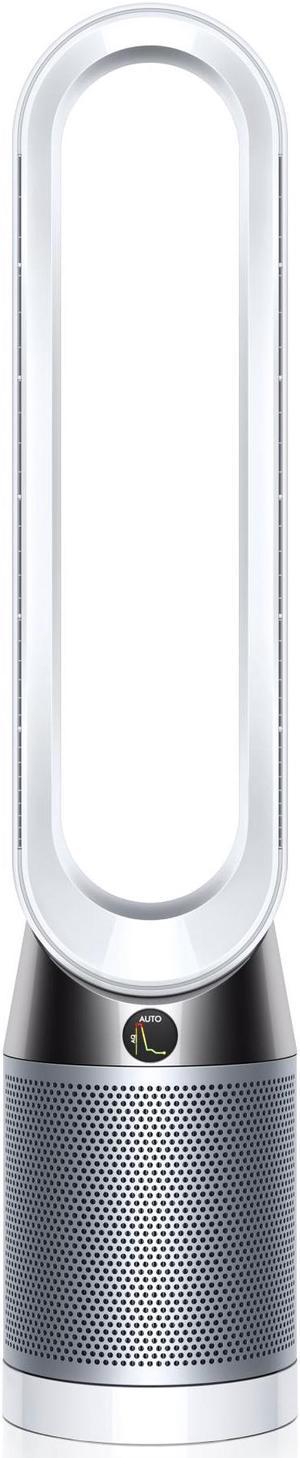
Dyson Purifier Cool TP07
Pros
- Functions as both purifier and bladeless fan
- Real-time PM2.5/VOC/NO2 display and app logging
- Sealed fully-filtered airflow path
- Works with Alexa, Siri, and Google
Cons
- Expensive at $499
- Filter replacements cost $75-$85 per set
- Overkill for smaller rooms
Price as of Aug 14, 2026 — see current price on Amazon.
Blueair Blue Pure 311i+ Max
The 311i+ Max is the outlier here. It's not the most powerful unit on the list, and at 219 square feet of coverage it's clearly aimed at bedrooms and smaller spaces. But it does one thing better than everything else at this price: it's nearly silent on low.
HEPASilent technology is Blueair's proprietary combo of mechanical and electrostatic filtration. It uses less fan power than pure mechanical HEPA to move the same volume of air, which is how it stays so quiet. On the lowest setting, it measures around 17 dB. That's quieter than a whisper.
The washable fabric pre-filter comes in a few colors (I have grey, which looks fine), and replacing it means you're only buying the inner HEPA filter every 6 months. Not bad.
WiFi connected with Blueair's app, which is cleaner and more reliable than most competitors I've tested. Auto mode works off a built-in particle sensor.
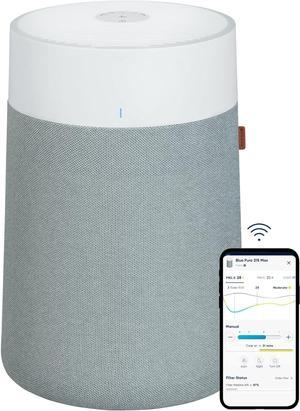
Blueair Blue Pure 311i+ Max
Pros
- Whisper quiet at 17 dB on low
- Washable fabric pre-filter reduces operating costs
- Clean Blueair app with reliable auto mode
- Compact and unobtrusive design
Cons
- Covers smaller rooms only (219 sq ft)
- No display or air quality indicator
- Pricier than Coway for less coverage
Price as of Aug 14, 2026 — see current price on Amazon.
Honeywell HPA300
The HPA300 is the workhorse of the group. 465 square feet of coverage puts it at the top of this list for raw room size, and it comes in well under $200. There's no app, no ionizer, no fancy display. Just four fan speeds and a filter change indicator.
What it does have is a turbo cleaning mode that circulates the entire room's air five times per hour. When wildfire smoke rolls in and you need to clean the air fast, that matters. The HPA300 will turn over a 300-square-foot room three times before the Dyson finishes one pass.
It's loud on high. Like, noticeably loud. I wouldn't run it on turbo in a bedroom while sleeping. But for a living room, home office, or anywhere you want clean air without paying for features you don't need, it's hard to beat this price-to-performance ratio.
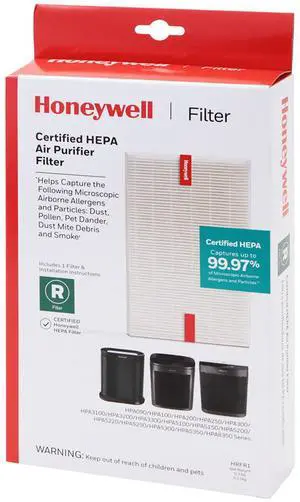
Honeywell HPA300 True HEPA Air Purifier
Pros
- Largest room coverage at 465 sq ft
- Turbo mode for rapid air cleaning during smoke events
- Simple, reliable operation
- Good value at under $200
Cons
- Louder than competitors on high settings
- No smart features or app
- Older design, bulky footprint
Price as of Aug 14, 2026 — see current price on Amazon.
Buying Guide: What to Look For
CADR Rating and Room Coverage
CADR stands for Clean Air Delivery Rate and it's the closest thing we have to a standardized measure of how fast a purifier cleans a room. Smoke, pollen, and dust each get their own number. Higher is better.
The general rule: match the purifier's recommended room size to your actual room. Don't buy a 200-square-foot unit for a 400-square-foot living room and expect it to work well at low speed. It'll run constantly at high to compensate, and you'll wonder why it's loud.
For bedrooms, any unit rated 200-400 square feet works. For living rooms, aim for 400+ square feet or pair two smaller units.
Filter Types: What Actually Matters
True HEPA captures 99.97% of particles 0.3 microns and larger. That covers dust, pollen, mold spores, pet dander, and most bacteria. It does not capture gases, odors, or VOCs.
Activated carbon filters handle odors, cooking smells, and VOCs. Almost every unit on this list includes one. The Dyson's carbon filter is noticeably thicker and more effective at VOC removal than what you get on budget competitors.
Pre-filters catch larger particles like pet hair before they reach the HEPA layer. Washable pre-filters (Blueair) reduce ongoing filter costs.
Smart Features: Worth It or Not?
If you already use Alexa or Google Home, app-connected purifiers like the Levoit Core 400S integrate easily and scheduling is genuinely useful. Set it to run at full speed before you wake up, drop to low during the day, and you'll barely notice it's there.
If you're not into smart home stuff, the Coway and Honeywell prove that dumb purifiers with good sensors work just fine. Auto mode on both responds quickly enough that manual control is mostly unnecessary anyway.
Running Costs: Filter Replacement
Filter replacement is where cheap purifiers can get expensive. Most HEPA filters run $25-$50 and should be replaced every 6-12 months. Pre-filters are usually washable and last indefinitely. Carbon filters need replacement more often if you're dealing with heavy odors.
Dyson filters cost the most at $75-$85 per set, but they're rated for 12 months. Coway and Winix filters are around $30-$40 and rated for 6 months, so annual costs are actually similar.
Placement and Noise
Put the purifier in the room you spend the most time in. Bedroom purifiers benefit from low noise (look for units rated under 25 dB on sleep mode). Living room units can afford to be louder since you're usually not trying to sleep through them.
Avoid stuffing a purifier into a corner with the intake blocked. The Levoit's 360-degree intake is the most placement-flexible; most others do better with 12-18 inches of clearance on all sides.
Frequently asked questions
- How often do I need to replace air purifier filters?
- Most HEPA filters last 6-12 months depending on how dirty your air is. Pre-filters that can be washed last indefinitely. Carbon filters usually need replacement every 3-6 months if you're dealing with significant odors or cooking. Every unit on this list has a filter replacement indicator, so you don't have to guess.
- Do air purifiers help with wildfire smoke?
- Yes, significantly. True HEPA captures PM2.5 particles, which are the health concern in wildfire smoke. Activated carbon filters also help with the VOCs and odor. During smoke events, run the purifier on high and keep windows and doors closed. The Honeywell HPA300's turbo mode is particularly good here since it processes the most air per hour.
- What is CADR and what rating do I need?
- CADR (Clean Air Delivery Rate) measures cubic feet per minute of filtered air. A simple rule: the CADR number for smoke should be at least two-thirds of your room's square footage. For a 300-square-foot room, look for a smoke CADR of at least 200. All the units on this list meet or exceed that threshold for their rated room sizes.
- Is True HEPA different from regular HEPA?
- Yes. 'HEPA-type' or 'HEPA-style' filters are marketing terms with no standard behind them. True HEPA is a defined standard that requires capturing 99.97% of particles 0.3 microns and larger. Every unit on this list uses certified True HEPA (or Blueair's equivalent HEPASilent, which performs to the same standard through electrostatic assistance).
- Can air purifiers remove mold spores?
- HEPA filters capture mold spores effectively since they're typically 3-100 microns, well within HEPA range. What purifiers won't do is eliminate a mold source. If you have an active mold problem, an air purifier helps but doesn't fix the underlying issue. Address the moisture source first.
- Should I run my air purifier all day?
- Most people run them on auto mode and let the air quality sensor decide. On auto, the unit throttles down when air is clean and ramps up when it detects particles or VOCs. The Coway's eco mode even shuts the fan off when air quality is consistently good, which saves noticeable energy. There's no harm in running 24/7 on auto.
Bottom Line
For most homes, the Levoit Core 400S at $189.99 is where I'd start. It covers most rooms, it's app-connected, and it's H13 True HEPA. If smart features aren't your thing, the Coway AP-1512HH has the best track record in the space and the auto mode genuinely works. Larger rooms should look at the Honeywell HPA300 for the coverage. Bedrooms benefit from the Blueair's exceptional quiet performance. And if you want something that does everything well and you have the budget, the Dyson TP07 is hard to argue with even at $499.
All six are verified on Amazon with the affiliate links above. Prices shift, so check the listing before you buy.
How We Test
We score products by combining spec-level research, pricing history, trusted third-party benchmarks, and owner sentiment from high-signal sources.
- Performance and real-world value in the category this guide targets
- Price-to-performance and deal consistency over recent pricing windows
- Build quality, reliability patterns, and known long-term issues
- Recommendation refresh cadence to keep these picks current
Author
TheTechSearch Editorial Team
Independent product reviewers & PC builders
We test and compare real-world specs, price trends, and user feedback to recommend gear that actually makes sense to buy.