Is an Air Purifier Worth It in 2026?
Who actually benefits from a HEPA air purifier, how to size one with CADR, what it costs to run, and the four worth buying if the answer is yes. Expert picks...
As an Amazon Associate we earn from qualifying purchases made through our links — this doesn't affect our picks.
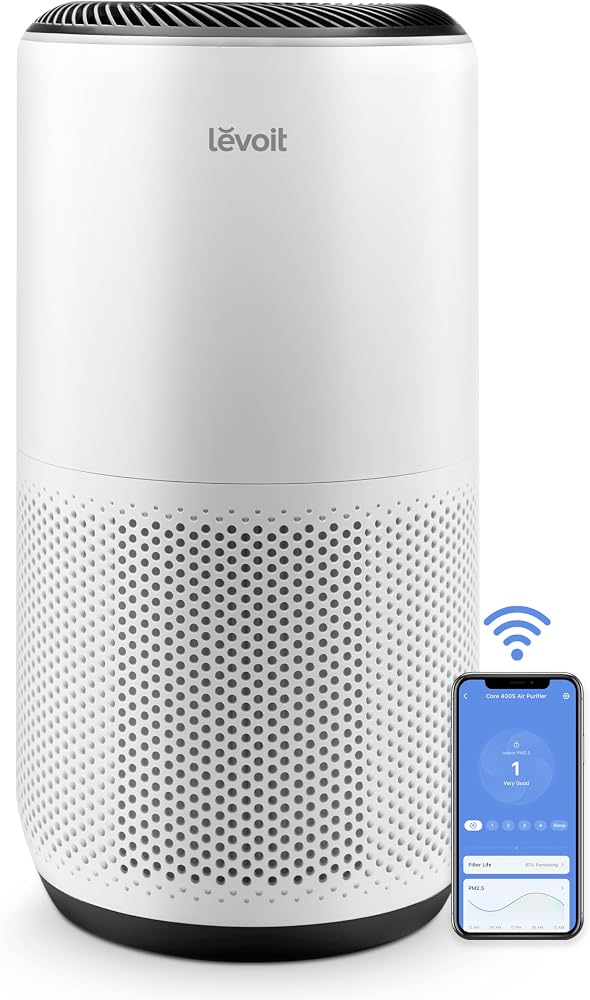
Levoit Core 400S-P (White)
Our top recommendation for this category
Price as of Oct 7, 2026 — see current price on Amazon.
For a lot of homes, yes. But only if it's the right size for the room, it runs most of the day, and the problem you're solving is something floating in the air. A HEPA purifier is very good at pulling fine particles out of a closed room: pollen, pet dander, dust and smoke. It does little for gases, nothing for mold growing in a wall, and it won't fix a room that simply needs a window open.
The American Lung Association puts it plainly: air cleaning "is not an effective substitute for source control or ventilation." It also says studies show "modest health improvements" in people who use portable mechanical air cleaners consistently. Modest and consistent are the two words to hold on to.
The Short Answer
| Your situation | Verdict | |---|---| | Pollen or pet allergies | Worth it, in the bedroom first | | Wildfire smoke reaches your area | Worth it, sized for smoke | | Asthma in the house | Worth it alongside medical advice | | Smoker in the home | Helps, never solves it | | Musty smell or visible mold | Fix the moisture first | | Cooking odors or VOCs | Weak, carbon only helps a bit | | No symptoms, no smoke, good ventilation | Probably skip it |
What an Air Purifier Actually Removes
Almost every purifier worth buying works the same way. A fan pulls room air through a pleated filter and pushes it back out cleaner. Everything else on the box is a variation on that.
Particles: the job it does well
A true HEPA filter catches at least 99.97% of particles at 0.3 microns, the size that's hardest to trap. Pollen, dander and household dust are much bigger and get caught easily. Wildfire smoke is mostly PM2.5, fine enough to reach deep into the lungs, and HEPA handles that too. This is the whole case for owning one.
Gases and odors: the job it does badly
Smells and VOCs are gases. A HEPA filter can't catch a gas. The thin activated-carbon layer in most consumer units absorbs some odor, and it saturates fast. If cooking smells, paint fumes or a new sofa's off-gassing are the problem, a range hood or an open window does more than any purifier here.
The things to avoid
Skip anything sold as an ozone generator, and be wary of ionizers. The Lung Association specifically warns against units with ionizers, UV or disinfection features, or that produce ozone, saying those features can harm health. In California, every purifier sold has to meet the state's ozone limit, so a CARB listing is a quick sanity check wherever you live.
How to Size One: CADR in Two Minutes
CADR, or Clean Air Delivery Rate, is the number that matters. It's measured under an AHAM standard and given in cubic feet per minute, with separate scores for smoke, dust and pollen. Higher means the purifier cleans a room faster.
The two-thirds rule
AHAM's rule of thumb: the smoke CADR should be at least two-thirds of the room's floor area, assuming an 8-foot ceiling. A 300 sq ft bedroom needs a smoke CADR of about 200.
Size up for wildfire smoke
For smoke events AHAM goes further and suggests a smoke CADR equal to the room's full square footage. That same 300 sq ft room wants about 300 CADR. The EPA's advice for smoke days is a "clean room": pick one room, keep the doors and windows shut, and run a correctly sized purifier there continuously.
Ignore the giant square-footage claims
Listings love numbers like "up to 1,748 ft²." That's one air change per hour, which is barely doing anything. For allergies you want four to five air changes an hour, which is why Levoit rates the same Core 400S-P at 1,718 sq ft or 358 sq ft depending on which number you read. Use the smaller one.
What It Costs to Own
The sticker price is the smaller part of the bill over a few years. Filters are where the money goes.
| Model | Price | Filter | Power | |---|---|---|---| | Levoit Core 300-P | $89.24 | $29.99 | 56W max | | Levoit Core 400S-P | $180.47 | $49.99-$64.99 | 38W | | Coway AP-1512HH | $197.07 | about $36 a year | 77W max | | Blueair 211i Max | $199.99 | $59.50-$76.50 | 46W |
Most HEPA filters last six to twelve months in normal use, less during a smoke event. Electricity is cheap by comparison. A 38W purifier running flat out all day uses about 0.9 kWh, roughly 15 cents at a 16-cent rate, and most of the time these run on auto at a fraction of that.
So a budget purifier costs about $130 to $160 in its first year, filters included. A large-room model runs closer to $300. If that sounds steep for "modest" benefits, that's a fair reaction, and it's why the verdict hinges on who's breathing the air.
When an Air Purifier Isn't Worth It
Nobody has symptoms and the air is fine
If no one in the house has allergies or asthma, you don't live where smoke drifts in, and the home is reasonably ventilated, a purifier will produce numbers on a display and not much else you'll notice.
The problem is moisture
Mold spores are particles, so a HEPA filter will catch the ones floating around. It won't stop a damp basement from making more. Fix the leak, run a dehumidifier, and then decide whether you still want a purifier.
You want it for the whole house
A portable unit cleans one room with the door mostly shut. Running one in an open-plan ground floor with a 230 CADR is mostly theater. If whole-home air is the goal, a better HVAC filter (MERV 13 if your system can handle it) treats every room the furnace reaches.
The Four Air Purifiers Worth Buying
Prices are Amazon's on 7 October 2026. Three of the four use a true HEPA filter, and the Blueair reaches HEPA-level capture with its own HEPASilent design.
| Purifier | Smoke CADR | Room (4.8 ACH) | Noise | Price | |
|---|---|---|---|---|---|
| Levoit Core 400S-P (White) | 231 | 358 sq ft | 22-52 dB | $180.47 | Check Price |
| Levoit Core 300-P (Black) | 143 | 222 sq ft | 24-54.5 dB | $89.24 | Check Price |
| Coway Airmega AP-1512HH Mighty (Black) | 233 | 361 sq ft | 24-53 dB | $197.07 | Check Price |
| Blueair Blue Pure 211i Max | 435 | 674 sq ft | 23-53 dB | $199.99 | Check Price |
Levoit Core 400S-P (White): the one most bedrooms need
Levoit Core 400S-P (White)
Pros
- 231 CADR covers a 358 sq ft room at 4.8 air changes an hour
- Laser PM2.5 sensor drives a responsive auto mode
- 38W rated draw, Energy Star and CARB listed
- App scheduling plus Alexa and Google Assistant
Cons
- Replacement filters run $49.99 to $64.99
- Carbon layer is thin, so odors are a weak spot
- Smart features need the VeSync app and an account
Price as of Oct 7, 2026 — see current price on Amazon.
This is the safe answer for a bedroom or a mid-size living room. A 231 CADR passes the two-thirds rule for rooms up to about 350 sq ft, and its 22 dB low setting is quiet enough to sleep beside.
The PM2.5 readout is the useful part of the smart features. It lets you see auto mode react when someone vacuums or cooks, which is a decent way to learn whether the purifier is earning its keep. At $180.47 on Amazon it sits below Levoit's own $219.99 list.
Levoit Core 300-P (Black): the cheap way to find out
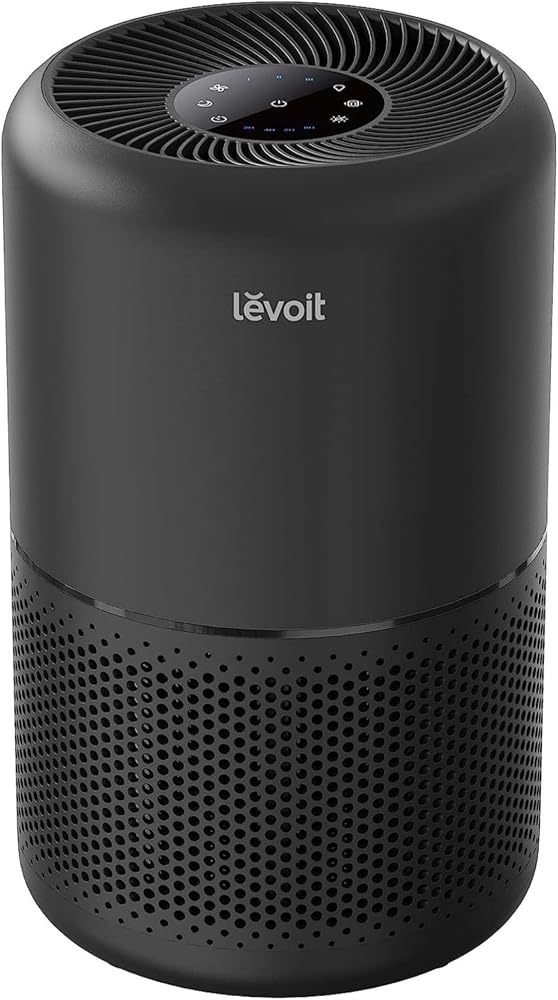
Levoit Core 300-P (Black)
Pros
- Cheapest real HEPA unit here at $89.24
- 143 CADR suits a bedroom or office up to 222 sq ft
- Filters cost $29.99, the lowest running cost in this guide
- CARB compliant, no ionizer
Cons
- Too small for a living room or for smoke in a big space
- No air-quality sensor or auto mode
- 54.5 dB on high is noticeable
Price as of Oct 7, 2026 — see current price on Amazon.
If you're not sure a purifier will help, this is the low-risk test. Put it in the bedroom, run it on low every night for a month, and see whether mornings feel different. If they do, you've learned something worth knowing for under $90.
It's deliberately simple: three fan speeds, a sleep mode and a timer. There's no sensor, so it can't speed up when the air gets worse. For a small closed room, that matters less than you'd think.
Coway Airmega AP-1512HH Mighty (Black): the long-running favorite
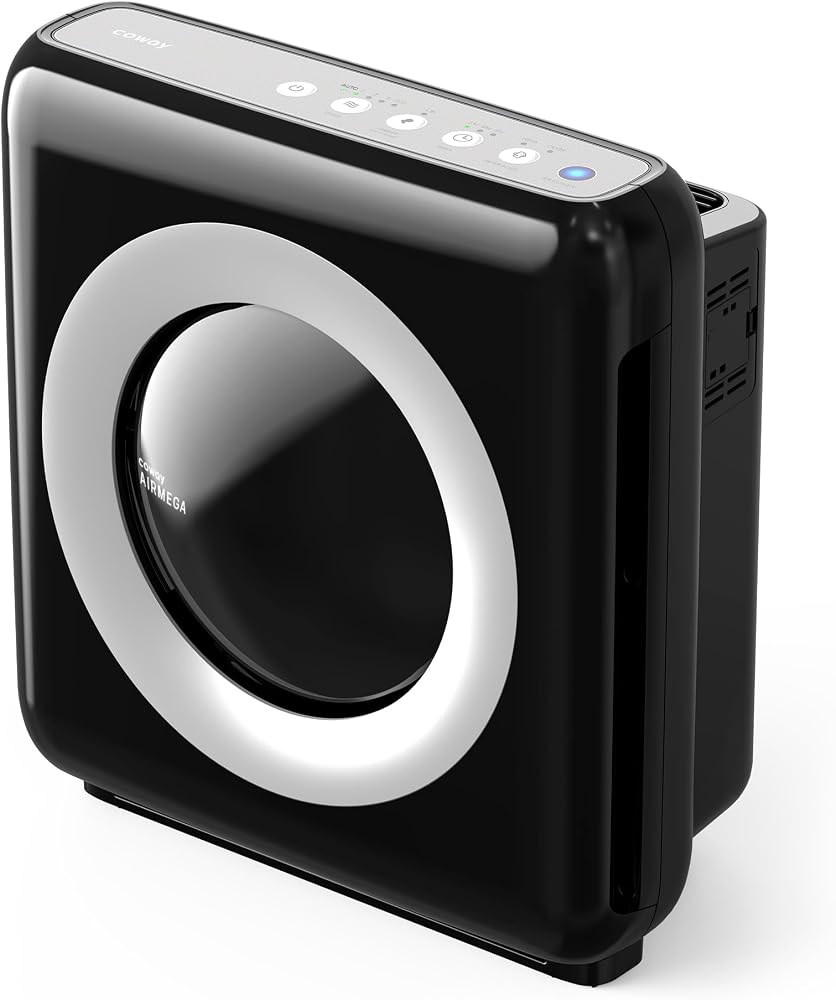
Coway Airmega AP-1512HH Mighty (Black)
Pros
- Smoke 233, dust 246, pollen 240 CADR
- Eco mode shuts the fan off after 30 minutes of clean air
- Cheap filters, about $36 a year
- CARB certified, ionizer is off by default
Cons
- 77W at full speed, the highest draw here
- No app or Wi-Fi
- Boxy design is a decade old
Price as of Oct 7, 2026 — see current price on Amazon.
The Mighty has been the default recommendation in this category for years, and the specs explain why. Its CADR is a hair higher than the Levoit 400S-P and the filters cost less to replace.
The trade is convenience. There's no app, and the ionizer button is worth knowing about: it ships switched off, and given the Lung Association's guidance, leaving it off costs you nothing. Amazon lists the black model at $197.07 against Coway's $239.99.
Blueair Blue Pure 211i Max: for big rooms and smoke
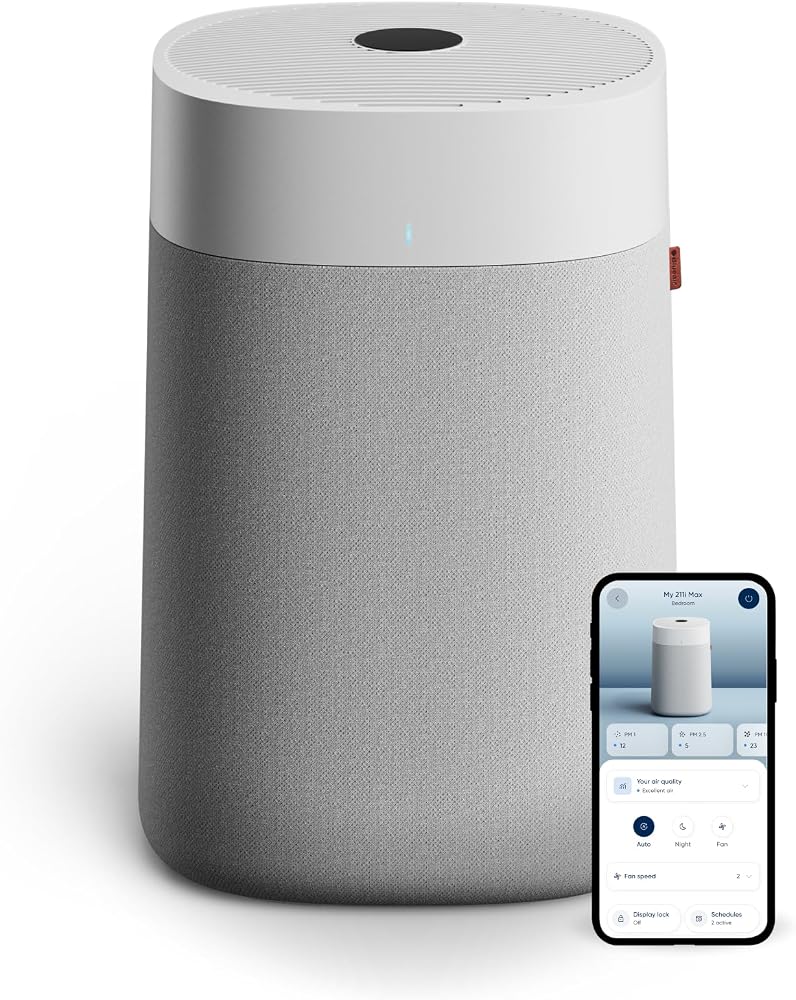
Blueair Blue Pure 211i Max
Pros
- 435 smoke CADR, nearly double anything else here
- Rated for 674 sq ft at 4.8 air changes an hour
- Only 46W despite the airflow
- Wi-Fi app with PM1, PM2.5 and PM10 readings
Cons
- Filters cost $59.50 to $76.50
- Large footprint for a bedroom
- Blueair's own list price is $349.99, so this Amazon price may move
Price as of Oct 7, 2026 — see current price on Amazon.
This is the one to buy for an open living area, or for anyone sizing for wildfire smoke. A 435 smoke CADR clears AHAM's full-square-footage smoke rule for rooms up to about 435 sq ft, which none of the others manage.
Blueair's HEPASilent design combines an electrostatic charge with mechanical filtration, which is how it moves so much air on only 46W. The fabric pre-filter washes and comes in colors, so it looks less like an appliance. Amazon listed it at $199.99 on 7 October 2026, well under Blueair's $349.99 list.
How to Decide in Five Minutes
Measure the room you'll actually use
Length times width, in feet. Multiply by two-thirds for allergies, or use the full number for smoke. That's your minimum smoke CADR.
Find out where the problem is
Allergies at night point to the bedroom. Smoke days point to whichever room you can seal best. Start with one room and one purifier. A second one is a later decision.
Price the filters before the purifier
Look up the replacement filter on the brand's own site and multiply by two for a year. If that number annoys you now, it'll annoy you more in twelve months.
Plan to leave it running
Most of the benefit comes from running continuously on auto. A purifier you switch on once a week because it's loud is the most expensive one you can own.
Frequently asked questions
- Do air purifiers really work?
- For airborne particles, yes. A true HEPA filter captures at least 99.97% of particles at 0.3 microns, and a correctly sized unit noticeably lowers PM2.5 in a closed room. The American Lung Association describes the health gains as modest and tied to consistent use. They do little for gases, odors or mold growing on surfaces.
- What size air purifier do I need?
- Use AHAM's two-thirds rule: the smoke CADR should be at least two-thirds of the room's square footage with an 8-foot ceiling. For wildfire smoke, aim for a smoke CADR equal to the full square footage. A 300 sq ft room needs about 200 CADR for allergies and about 300 for smoke.
- Should an air purifier run all the time?
- Yes, on auto mode. Air quality changes constantly and a purifier only cleans what passes through it, so most of the benefit comes from continuous running. Modern units draw roughly 30 to 80 watts at full speed and far less on low.
- Are air purifiers with ionizers safe?
- The American Lung Association advises against air cleaners with ionizers, UV or disinfection features, or that produce ozone. If a purifier has an ionizer you can switch off, like the Coway Mighty, you can run it on HEPA alone. Avoid anything marketed as an ozone generator.
- How often do HEPA filters need replacing?
- Typically every 6 to 12 months, sooner during smoke events or with pets. Replacement filters for the purifiers in this guide range from $29.99 for the Levoit Core 300-P to about $76.50 for Blueair's AllergenBlock filter.
- Will an air purifier help with dust?
- It will capture dust while it's airborne, which reduces how much settles. It won't replace vacuuming, because most household dust sits on floors and fabrics and only becomes airborne when disturbed.
Bottom Line
An air purifier is worth it when someone in the house reacts to particles in the air, or when smoke is a real possibility where you live. Size it by smoke CADR against the room you'll use, budget for filters, and leave it running. For most bedrooms the Levoit Core 400S-P is the one to buy, and our best air purifiers for home roundup has more options by room size. If nobody's sneezing and the air outside is clean, open a window and keep the money.
How We Test
We score products by combining spec-level research, pricing history, trusted third-party benchmarks, and owner sentiment from high-signal sources.
- Performance and real-world value in the category this guide targets
- Price-to-performance and deal consistency over recent pricing windows
- Build quality, reliability patterns, and known long-term issues
- Recommendation refresh cadence to keep these picks current
Author
TheTechSearch Editorial Team
Independent product reviewers & PC builders
We test and compare real-world specs, price trends, and user feedback to recommend gear that actually makes sense to buy.