ClickFunnels vs Systeme.io in 2026: Which Funnel Builder Should You Actually Use?
ClickFunnels starts at $97/month. Systeme.io has a real free tier. Here's who should use which, and when switching makes sense. Expert picks, pros and cons,...
As an Amazon Associate we earn from qualifying purchases made through our links — this doesn't affect our picks.
Here's the short version: if you're starting out and don't want to spend money before you've made any, use Systeme.io. It has a real free tier, not a trial. If you're scaling a business that already converts and you need deeper integrations, A/B testing at scale, and a bigger community of users who've built what you're building, ClickFunnels is worth the $97 a month.
The longer version is where it gets interesting: because neither platform is obviously right for everyone, and the choice depends a lot on how big your operation is, what you're selling, and whether you need an all-in-one platform or just a focused funnel builder.
The Core Difference in One Paragraph
ClickFunnels is purpose-built for funnels. It does landing pages, order forms, upsells, downsells, and checkout flows better than almost anything else, and it has years of conversion data baked into its templates. The community is huge. The integrations are deep. It costs $97/month to start, with the plan most businesses actually want running $197/month.
Systeme.io is an all-in-one platform that does funnels, email marketing, course hosting, affiliate management, and blogging under one subscription. At $17/month for serious use (or literally free for up to 2,000 contacts), it competes on price in a way ClickFunnels can't. The tradeoff is that each individual feature is slightly less refined than the specialist tool.
Pricing Side by Side
| | ClickFunnels | Systeme.io | |---|---|---| | Free tier | No (14-day trial) | Yes, 2,000 contacts, 3 funnels, 1 course | | Entry-level paid | $97/month | $17/month | | Most popular plan | $197/month (Scale) | $47/month (Webinar) | | Full-featured | $297/month | $97/month | | Annual discount | ~17% off | Not prominently advertised | | Transaction fees | None | None |
The pricing gap is real and it's not small. If you're comparing the "full-featured" plans: ClickFunnels at $297/month versus Systeme.io at $97/month for the same billing period. That's a $2,400/year difference.
That said, ClickFunnels at $197/month (the Scale plan, which is the "most popular" tier) includes capabilities that Systeme.io's $47 Webinar plan doesn't match: more integrations, dedicated affiliate center features, and an established template ecosystem. You're paying for depth.
Who Should Use ClickFunnels
You're already making money and want to optimize conversions
ClickFunnels shines when you have an existing product with proven demand and you want to squeeze more out of your funnel. The A/B testing is good, the analytics show where people drop off, and the template library is full of things that have already worked for businesses in your niche.
If you're running a course business doing $5k–$50k a month and want to add an upsell sequence, ClickFunnels does that with minimal friction. You're not figuring out how to make things work. You're using patterns that have already been tested by thousands of other operators.
You sell high-ticket offers or run webinars at scale
ClickFunnels was built around direct response marketing, which means webinar funnels, VSL (video sales letter) pages, and high-ticket application flows are very well-templated. You can find examples from other operators in the ClickFunnels community, model what's working, and adapt quickly.
Your team needs a documented setup
The ClickFunnels ecosystem is massive. There are certified consultants, YouTube channels, books, and courses dedicated entirely to building in ClickFunnels. If you hire a VA or contractor to build something, there's a good chance they know ClickFunnels already.
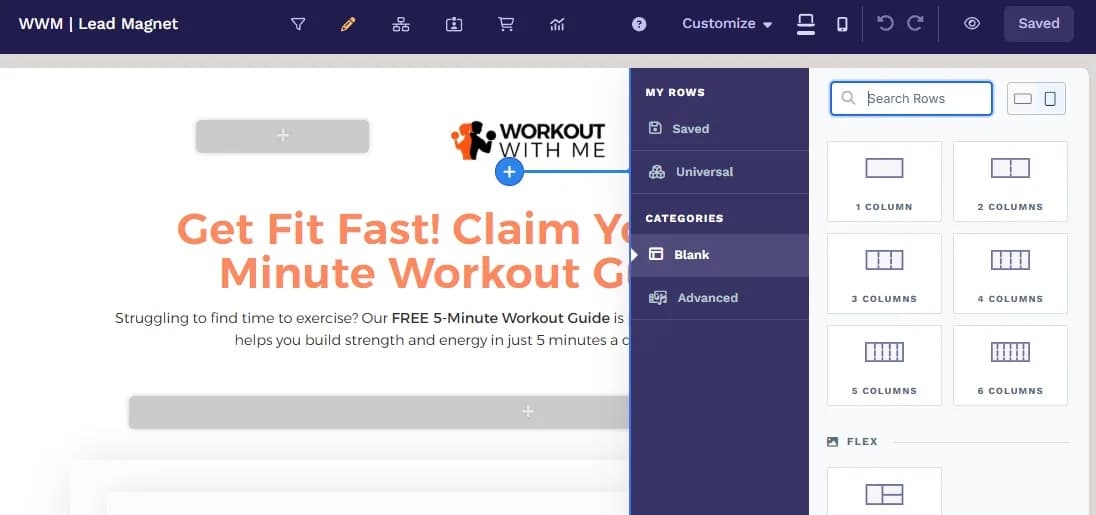
Sales funnels
ClickFunnels
Best for scaling businesses with proven offers
$97 a month, or $81 a month billed annually. Renews at $97 a month after the 14-day trial, or $970 a year on the annual plan.
Read our ClickFunnels pageWho Should Use Systeme.io
You're getting started and don't want to pay before you earn
This is Systeme.io's best argument. The free plan isn't crippled. You get 2,000 contacts, 3 funnels, 1 course, and unlimited email sends. You can build and launch a real product without a credit card. That's not true of ClickFunnels.
For a creator launching their first digital product, Systeme.io lets you get to $0 → first dollar without monthly overhead. Once you're making money, upgrading to $17/month covers most early-stage businesses.
You want everything in one place
Email marketing, course hosting, affiliate program management, a blog. Systeme.io includes all of it in every plan. With ClickFunnels, those things require either add-ons or integrations with other tools (ActiveCampaign, Kajabi, ThriveCart, etc.). Each integration is another monthly cost and another thing that can break.
Systeme.io isn't as good as Kajabi for courses, or as good as ConvertKit for email. But it's "good enough" for all of them at a price that makes the math work for most solo operators and small teams.
You're building a course or membership business
Systeme.io handles course delivery, student access, drip content, and community features natively. Combined with the email marketing and funnel capabilities, it's a complete course business platform for under $50/month for most stages. That's hard to beat.
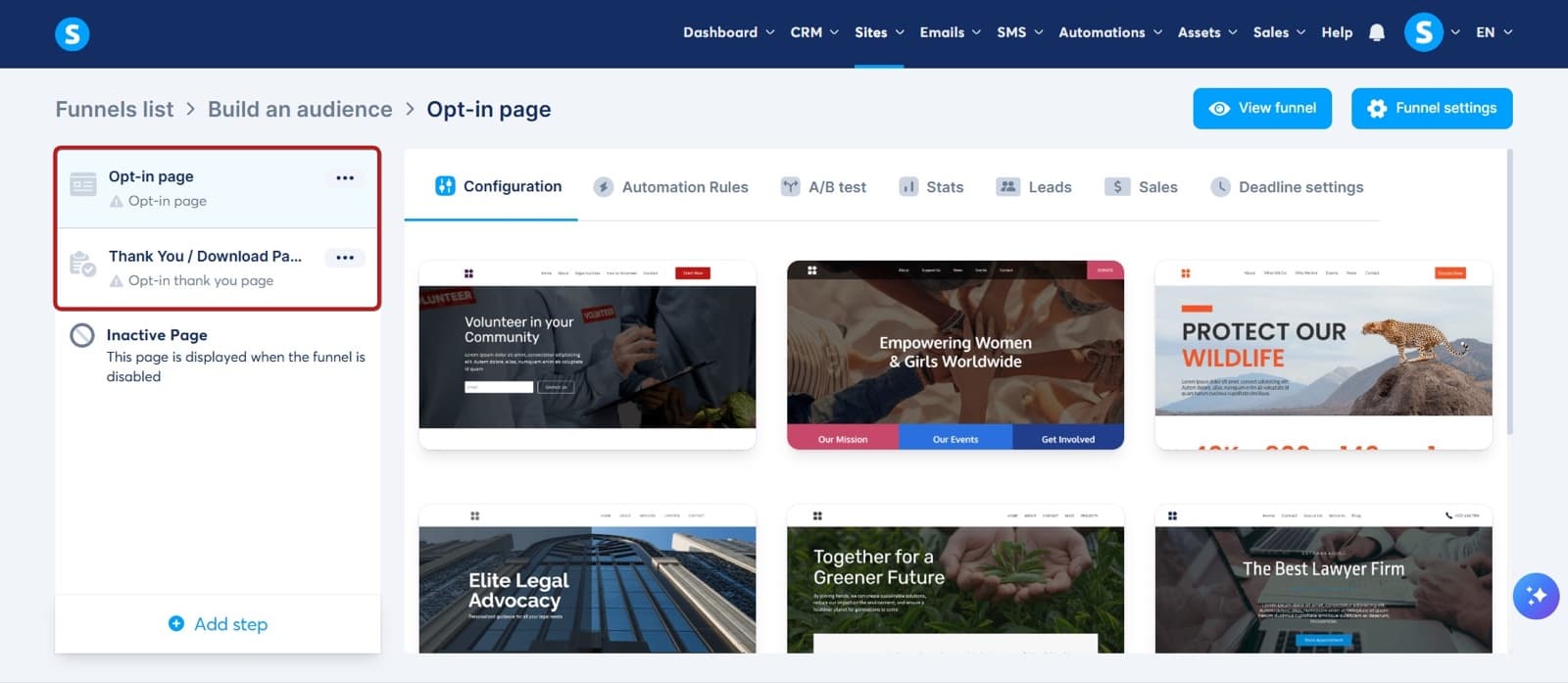
All-in-one marketing platform
Systeme.io
Best for beginners and all-in-one operators
Free plan $0 forever, paid from $17 a month. Yearly is $170, $470 or $970 — two months free, prices include tax.
Read our Systeme.io pageFeatures That Actually Matter
Funnel templates: ClickFunnels has more and they've been tested longer. Systeme.io's templates are functional but newer.
Email marketing: Systeme.io includes it. ClickFunnels technically has email functionality but most serious ClickFunnels users pair it with a dedicated email tool.
Course hosting: Systeme.io is purpose-built for this. ClickFunnels has basic course features but isn't the first choice.
Affiliate management: Both have it. Systeme.io includes it in all plans. ClickFunnels offers it but the full affiliate center is tied to higher tiers.
A/B testing: ClickFunnels is stronger here. Split testing individual page elements and tracking funnel variants is where ClickFunnels earns its price.
Third-party integrations: ClickFunnels connects to more tools out of the box (Stripe, PayPal, Kajabi, Mailchimp, ActiveCampaign, and hundreds more via Zapier). Systeme.io has a growing integration list but it's shorter.
Support: Both have email support. ClickFunnels at the higher tiers gets priority support. Systeme.io advertises 24/7 support across all plans.
The Switching Consideration
A lot of people start on Systeme.io's free plan, grow to $17/month, and stay there for years. Some hit a point where they want ClickFunnels' depth and switch. That process takes time (rebuilding funnels, migrating email lists, updating integrations), so it's worth thinking through before you start.
If you know you're building toward a complex, high-volume direct response business, starting on ClickFunnels even at the $97 entry point might save you a migration headache later. If you're testing a concept, there's no reason to pay $97/month for it.
One Honest Caveat on ClickFunnels
ClickFunnels has had a complicated few years. The launch of ClickFunnels 2.0 was bumpy for a lot of users who'd built on 1.0. Some of that friction is resolved. Some users still prefer the old version's simplicity. If you're building fresh, 2.0 is where to start, but it's worth knowing the platform has had a rough transition period that isn't fully behind it.
Frequently asked questions
- Can I switch from Systeme.io to ClickFunnels later?
- Yes, but it's not zero-effort. Funnels need to be rebuilt (the page editors work differently), email lists need to be exported and imported, and automations need to be recreated. Systeme.io offers a migration service on higher plans. The cleaner move is to decide before you build which platform fits your long-term direction.
- Does Systeme.io work for physical products?
- It works for order forms and checkout, but it's not as strong as a dedicated e-commerce platform like Shopify for physical goods. It handles digital products, online courses, services, and software well. For physical products with inventory management needs, you'd want something more purpose-built.
- Is ClickFunnels worth $97/month for a solo creator?
- Depends on your funnel volume and revenue. If you're making $1,000–$2,000/month from digital products and want to scale, $97/month for ClickFunnels is a reasonable investment. If you're pre-revenue or under $500/month, Systeme.io's free or $17/month plan does the job until you have revenue to justify the upgrade.
- Does Systeme.io take a percentage of sales?
- No transaction fees on any plan, same as ClickFunnels. You pay the standard Stripe or PayPal processing fees (typically 2.9% + $0.30 per transaction), but neither platform takes an additional cut.
- Which is better for selling a single online course?
- Systeme.io. It includes course hosting, email marketing, and funnel capability in one place at a price that makes sense for a single-product creator. ClickFunnels would require pairing with a separate course platform like Kajabi, adding cost and complexity.
Bottom Line
Use Systeme.io if you're earlier in the journey or want everything under one monthly bill. The free tier is real, the platform covers most bases, and the price scaling is reasonable.
Use ClickFunnels if you're past the validation stage and want a platform with deeper funnel optimization tools, a larger community to learn from, and more integration options, and if the $97–$197/month price is a comfortable investment relative to your revenue.
The decision isn't permanent. But if you start on the wrong one, you'll eventually pay for it in migration time.
How We Test
We score products by combining spec-level research, pricing history, trusted third-party benchmarks, and owner sentiment from high-signal sources.
- Performance and real-world value in the category this guide targets
- Price-to-performance and deal consistency over recent pricing windows
- Build quality, reliability patterns, and known long-term issues
- Recommendation refresh cadence to keep these picks current
Author
TheTechSearch Editorial Team
Independent product reviewers & PC builders
We test and compare real-world specs, price trends, and user feedback to recommend gear that actually makes sense to buy.