Best Floor Standing Tower Speakers 2026
The best floor standing tower speakers for every budget in 2026, from entry-level home theater towers to premium audiophile floorstanders worth the splurge.
As an Amazon Associate we earn from qualifying purchases made through our links — this doesn't affect our picks.
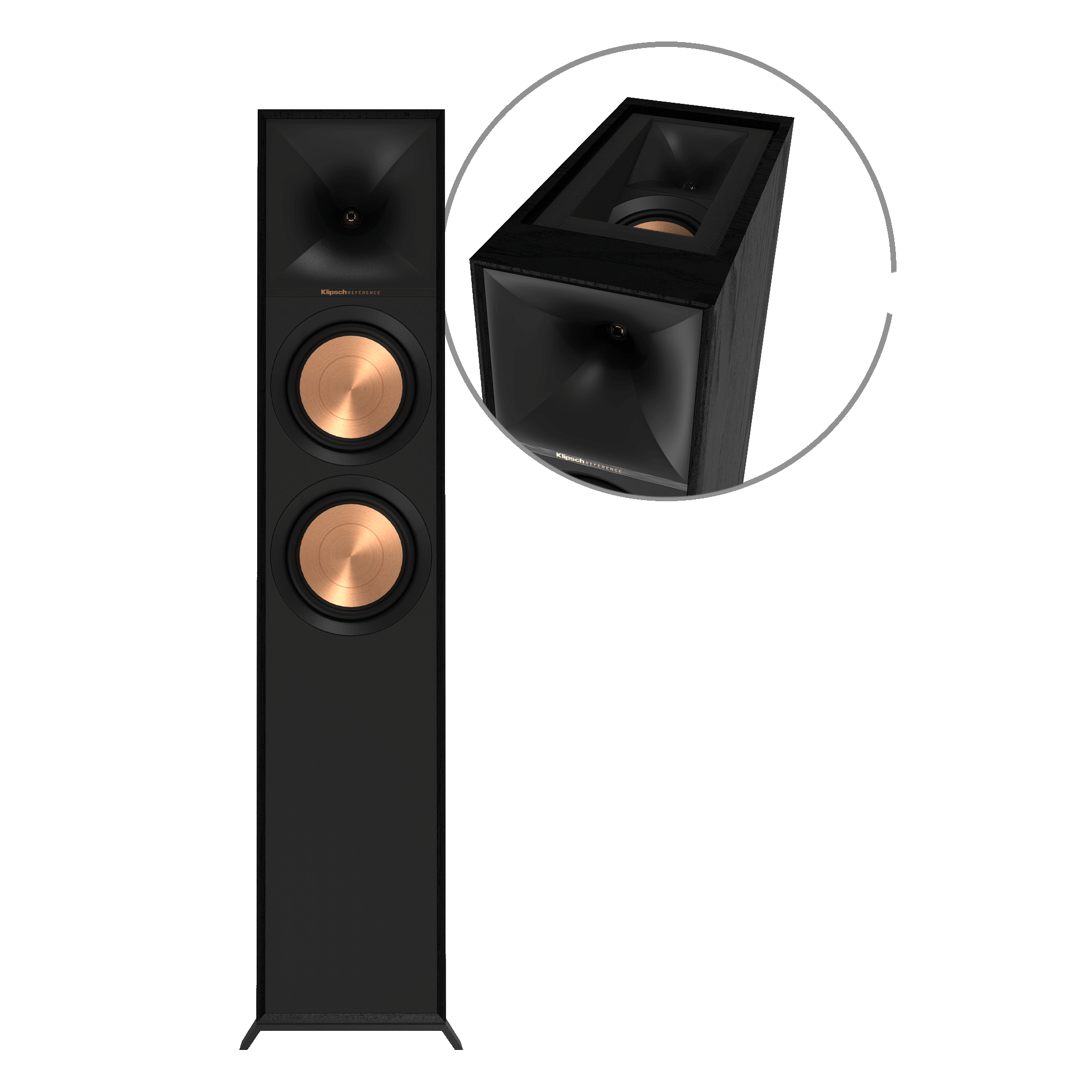
Klipsch R-605FA Dolby Atmos Floorstanding Speaker
Our top recommendation for this category
Price as of Aug 12, 2026 — see current price on Amazon.
Bookshelf speakers are great. But if you have the floor space and a proper home theater setup, there's nothing quite like a pair of towers anchoring your left and right channels. Floor-standing speakers have seen a real resurgence lately, mostly because Dolby Atmos home theater setups have gotten affordable enough that people are actually building them, and a tower speaker is the natural starting point for a serious 5.1 or 7.1.2 system.
I've been following what r/hometheater and r/audiophile users are recommending in 2026, and I cross-referenced that against what's actually available on Amazon with solid reviews and consistent stock. This guide covers five picks from entry-level home theater towers at $209 each all the way up to a premium audiophile pair just under $2,000.
| Speaker | Type | Price | Dolby Atmos | Best For | |
|---|---|---|---|---|---|
| Klipsch R-605FA | Passive | $599.99 each | Yes (built-in) | Editor's Choice | Check Price |
| Polk Audio T50 | Passive | ~$209 each | No | Best Budget | Check Price |
| Klipsch R-610F | Passive | ~$299/pair | No | Best Value | Check Price |
| Fluance Ai81 | Powered (Active) | ~$599.98/pair | No | Best Self-Powered | Check Price |
| SVS Prime Pinnacle | Passive | ~$1,998/pair | No | Best Audiophile | Check Price |
Klipsch R-605FA Dolby Atmos Floorstanding Speaker
Klipsch R-605FA Dolby Atmos Floorstanding Speaker
Pros
- Upward-firing Dolby Atmos driver built into the top of the cabinet
- New 90x90 Tractrix Horn for improved coverage and reduced room reflections
- Dual 6.5-inch copper TCP woofers with serious punch
- Works beautifully as front speakers in a Dolby Atmos 5.1.2 or 7.1.2 system
Cons
- Passive: you need an AVR or stereo amp to drive them
- At $599.99 per speaker, about $1,200 for a stereo pair, it's a real investment for most buyers
- Rear Tractrix port needs breathing room from the back wall
Price as of Aug 12, 2026 — see current price on Amazon.
The R-605FA is the pick I'd make if someone handed me $1,200 to spend on a pair of tower speakers for a dedicated home theater room. One note on the link: the pair listing we used to point to went unavailable on Amazon, so the link now goes to Klipsch's single-speaker listing in black at $599.99 each as of September 2026. Buy two for a stereo front stage. The headline feature is the integrated upward-firing driver on top, which handles Dolby Atmos height effects without requiring a separate pair of ceiling speakers or add-on modules. That's actually a bigger deal than it sounds.
Klipsch redesigned the horn geometry on this generation. The 90x90 Tractrix horn is larger than what was on the outgoing R-26FA, and the difference shows up as better off-axis coverage and less early reflections from side walls. If you've ever sat off-center from a horn speaker and felt like you were missing something, this design addresses that.
The dual 6.5-inch woofers use Klipsch's thermoformed crystalline polymer cones, which are light and stiff. Bass output is tight and impactful rather than bloated. You're not going to skip the subwoofer entirely, but the R-605FA can run reasonably full-range down to 35-40Hz, which gives your sub less work to do and makes the crossover integration smoother.
Pair these with a Denon or Yamaha AVR in the $400-600 range and you've got a genuinely impressive Dolby Atmos front stage.
Polk Audio T50 Home Theater Tower Speaker
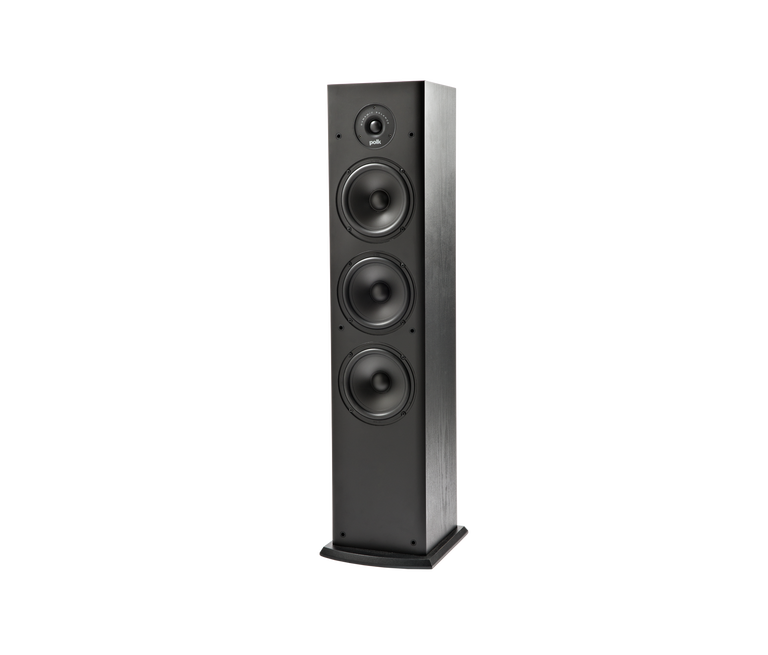
Polk Audio T50 Home Theater Floor Standing Tower Speaker
Pros
- One of the most affordable tower speaker options with a genuinely full sound
- 1-inch silk dome tweeter handles high-frequencies smoothly without harshness
- Slim profile fits even in tighter spaces
- Ships as a single speaker, so you buy two for a stereo pair
Cons
- Sold per speaker, not as a pair, so the Amazon listing can be confusing
- Bass extension is modest without a subwoofer
- At 150W peak power, sensitivity is decent but not Klipsch-horn-efficient
Price as of Aug 12, 2026 — see current price on Amazon.
Look, the T50 has been around for a while, but Polk keeps it in the lineup because it keeps selling. And it keeps selling because at around $209 per speaker, you'd struggle to find a floor-standing alternative that sounds this complete. Buy two and your total spend is roughly $418 for a stereo pair of actual tower speakers.
The 1-inch silk dome tweeter is the thing that separates the T50 from speakers that cost half as much. Silk dome tweeters have a naturally smooth roll-off that forgives rough recordings. No harsh edge on cymbal hits. No listening fatigue after a long session. The T50 isn't trying to be a detail monster. It's trying to be the speaker you actually enjoy listening to.
One thing to know before you buy: the Amazon listing is for a single speaker. You need to add two to your cart for a stereo pair. This confuses a lot of buyers and generates fake negative reviews from people who didn't read the listing. Once you're past that, the T50 is a rock-solid entry-level tower.
Sub-80Hz, you'll want a subwoofer. The T50's woofers are decent but not designed to dig deep. Run it with a crossover set to 80Hz and a budget sub and the combo works surprisingly well for movie watching and casual music.
Klipsch Reference R-610F Floorstanding Speaker

Klipsch Reference R-610F Floorstanding Speaker, Pair
Pros
- Klipsch Tractrix horn tweeter with that classic forward, detailed presentation
- Dual 6.5-inch woofers in a tower cabinet gives real bass weight
- Ships as a pair, which simplifies the buying experience
- Efficient enough to run off a modest AVR or even a quality stereo amp
Cons
- Klipsch's forward sound signature isn't for everyone, especially on bright recordings
- The Reference series finish is basic compared to premium competition
- Competition from newer Polk and Elac models has tightened recently
Price as of Aug 12, 2026 — see current price on Amazon.
The R-610F sits in that sweet spot where you're getting Klipsch's Tractrix horn technology, dual 6.5-inch woofers, and a proper tower form factor at a price that doesn't require a painful conversation with your significant other. Around $299 for the pair is genuinely competitive for what you're getting.
Klipsch designed the R-610F to be efficient. The sensitivity spec sits around 96dB, which means a 50-watt-per-channel receiver can drive these to room-filling volumes. That's actually useful if you're not planning to buy a high-power AVR. Entry-level Denon and Yamaha receivers have plenty of headroom for these.
The dual 6.5-inch woofers work together to give the R-610F more bass output than a single-woofer design at this price. They're tuned for impact rather than absolute extension, so rock music, action movie soundtracks, and gaming audio sound punchy and dynamic. If you mainly listen to chamber music or acoustic guitar, this might be more forward than you want. But for home theater duty, it's excellent.
Honestly, between the R-610F and the T50, the choice usually comes down to your room size. Smaller living room with lower ceilings? The T50 is enough. Dedicated media room or large open space? The R-610F's horn and dual woofers will fill it better.
Fluance Ai81 Elite Powered Floorstanding Tower Speakers

Fluance Ai81 Elite Powered 2-Way Floorstanding Tower Speakers
Pros
- Built-in 150W amplifier means no external AVR needed
- Bluetooth 5.0 + optical + RCA inputs cover nearly every source
- Natural walnut or black ash finishes look genuinely nice in a living room
- Turntable-ready with built-in phono preamp
Cons
- The built-in amp, while capable, doesn't match what a $400 stereo amp could provide
- Not Dolby Atmos capable
- Bluetooth latency can be noticeable for video if your TV doesn't have optical out
Price as of Aug 12, 2026 — see current price on Amazon.
The Fluance Ai81 is solving a different problem than the other speakers in this guide. Most floor-standing speakers are passive, meaning they need an external amplifier or receiver. The Ai81 has a 150W amp built directly into the cabinet. You plug in a power cable, connect your TV or turntable or phone via Bluetooth, and you're done.
This matters more than you might think. A lot of people who want tower speakers don't want to research AVRs and amplifiers. They want speakers. The Ai81 is that product. It's aimed at someone upgrading from a soundbar or a cheap 2.0 set who wants real floor-standing speakers without building a component system.
The natural walnut finish is legitimately attractive. These don't look like generic black boxes. They look like furniture, which helps if they're going in a living room rather than a dedicated AV room.
Sound-wise, the Ai81 is good. The 1-inch silk dome tweeter is smooth, and the dual 6.5-inch woofers give the kind of bass you'd expect from a tower form factor. Audiophiles will point out that the built-in Class D amp doesn't have the headroom or refinement of a quality external amp, and they're right. But for the average buyer upgrading from a soundbar, the gap between the Ai81 and "soundbar" is enormous, and the gap between the Ai81 and "Ai81 plus external amp" is subtle.
The phono preamp is a nice touch if you have a turntable. Bluetooth 5.0 handles streaming from your phone cleanly. Optical input works for TV audio without latency. Honestly, for a living room setup where you want to keep cables minimal, the Ai81 is hard to beat.
SVS Prime Pinnacle Floorstanding Speakers
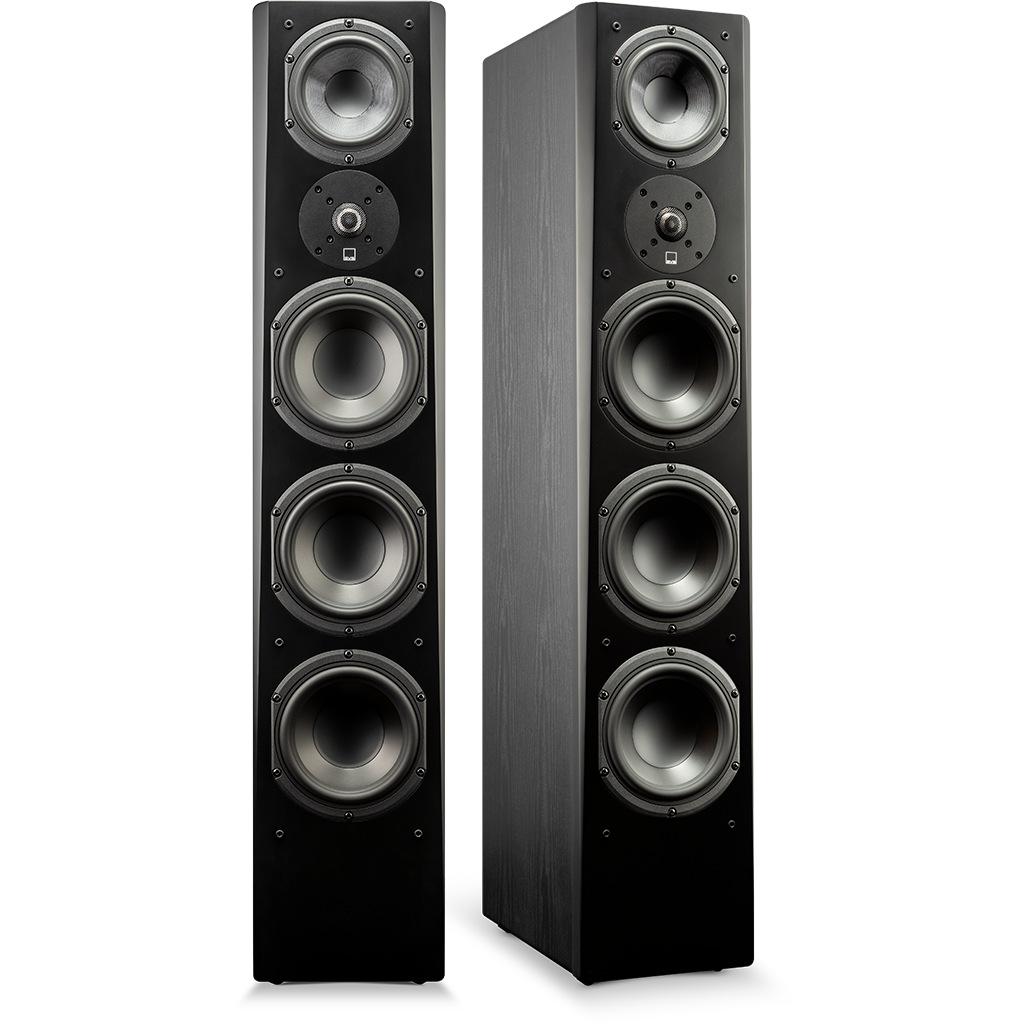
SVS Prime Pinnacle Floorstanding Speakers Pair
Pros
- One of the most technically refined tower speakers under $2,000
- Three 6.5-inch Rohacell woofers deliver exceptional bass extension and dynamics
- SoundMatch crossover technology reduces distortion at the crossover point
- SVS's 45-day trial period with free returns if you don't love them
Cons
- $1,998 for a pair is a serious investment; budget appropriately for a quality amp to match
- Needs at least 30-50 watts of quality amplification to open up properly
- At 40.5 pounds each, these are not lightweight to move around
Price as of Aug 12, 2026 — see current price on Amazon.
SVS started as a subwoofer company, which tells you something about how seriously they approach low-frequency engineering. The Prime Pinnacle takes that same obsession with bass control and builds it into a three-way tower speaker that has no business sounding this good for under $2,000.
The three 6.5-inch Rohacell woofers are the heart of the design. Rohacell is a foam core material used in aerospace composites. SVS uses it here because it's incredibly stiff and lightweight, which translates to low distortion even at high output levels. The bottom end of the Prime Pinnacle is articulate and deep in a way that cheaper woofer materials simply can't achieve.
The SoundMatch crossover is something SVS developed to reduce phase shift and distortion at the crossover frequencies. This is the kind of engineering detail that separates speakers you analyze from speakers you just... listen to. The transition between drivers on the Prime Pinnacle is seamless in a way that most speakers at twice the price can't claim.
SVS backs these with a 45-day in-home trial period with free returns. That's confidence. If you spend $1,998 on a pair of tower speakers and don't love them after a month in your room with your amp, you can send them back. I'm not aware of many speaker companies that do this without charging restocking fees.
You'll want a quality integrated amp or stereo amplifier to drive the Prime Pinnacles properly. A cheap $150 receiver will work but won't show you what these speakers can do. Budget $400-600 for the amplification side and the combination is genuinely impressive.
How to Choose a Floor Standing Speaker
Room Size and Placement Matter More Than Specs
A 250 sq ft bedroom and a 600 sq ft open living room are fundamentally different acoustic environments. The T50 will fill a bedroom beautifully. In a large open-plan space, you'll want the efficiency and output of the R-610F or R-605FA. SVS explicitly recommends the Prime Pinnacle for medium to large rooms.
Distance from the back wall also matters for ported speakers. Most floor-standers have rear-firing ports. Getting them within a foot of the back wall can cause boomy, muddy bass. A foot and a half to two feet of clearance generally sounds much better.
Passive vs. Powered: What's the Real Difference
Passive speakers (the Klipsch, Polk, and SVS picks in this guide) need an external amplifier or AV receiver. Powered speakers (the Fluance Ai81) have an amp built in.
For home theater use, passive + a mid-range AVR is usually the better choice because AVRs handle Dolby Atmos decoding, room correction, and multiple channel management. For a simple stereo listening setup or a TV upgrade where you want minimal components, powered speakers remove a layer of complexity.
Sensitivity: Why Klipsch Gets Loud on Low Power
Speaker sensitivity is measured in dB per watt at 1 meter. Higher numbers mean louder output per watt. Klipsch's horn-loaded designs typically run 95-100dB sensitivity. Competing speakers at similar prices often run 88-90dB.
The difference is significant. A speaker at 98dB sensitivity needs about 2 watts to reach 98dB SPL. A speaker at 88dB sensitivity needs 20 watts for the same output. This is why Klipsch speakers work well with entry-level AVRs and smaller amplifiers. Other brands with lower sensitivity benefit more from powerful amplification.
Do You Actually Need a Subwoofer
Short answer: probably yes. Floor-standing speakers extend lower than bookshelfs, but most don't dig below 35-40Hz. Movie soundtracks and music genres that emphasize very deep bass (hip-hop, EDM, home theater LFE channel) will sound incomplete without a dedicated sub.
The good news is that even a budget subwoofer in the $150-250 range makes a substantial difference. Most AVRs and stereo preamps have a subwoofer output. Set your main speakers to "large" if you want them to try for full-range, or "small" with an 80Hz crossover to hand the deep bass off to the sub. Either approach works.
Matching Your Speakers to an Amplifier
Budget for the amp when you budget for speakers. A pair of $1,998 SVS Prime Pinnacles running off a $99 receiver is actively wasteful. The receiver will run out of current before the speakers reveal what they can do.
A rough guideline: spend about 50-75% of the speaker budget on amplification. So $299 speakers pair well with a $150-225 stereo amp or AVR. The $1,998 SVS pair deserves at least a $1,000 integrated amp or AVR.
Frequently asked questions
- Do floor standing speakers need a subwoofer?
- Most do for a complete home theater experience. Tower speakers typically extend to 35-45Hz, which covers most music well but falls short for movie LFE effects that go down to 20Hz. A budget subwoofer in the $150-250 range fills the gap cleanly. If you're primarily streaming music rather than watching movies, many listeners find tower speakers sufficient without a sub.
- Can I run floor standing speakers without a receiver?
- Yes, but only if you choose a powered/active speaker like the Fluance Ai81, which has a built-in amplifier. Passive speakers like the Klipsch and SVS picks require a separate amplifier or AV receiver. For home theater with Dolby Atmos, a receiver is almost always the right choice since it handles multichannel audio decoding.
- How far from the wall should floor standing speakers be placed?
- Most manufacturers recommend at least 12-18 inches from the back wall, particularly for rear-ported speakers. Closer placement can make bass sound boomy. Toe the speakers in toward your listening position by about 10-15 degrees. Front-firing or bottom-firing port designs are more forgiving about wall proximity if space is tight.
- Are floor standing speakers better than soundbars?
- For pure audio quality, yes, significantly. A pair of tower speakers driven by a mid-range AVR will outperform soundbars costing twice as much in terms of soundstage width, stereo imaging, and dynamic range. The trade-off is setup complexity and cable management. Soundbars are simpler and cleaner. Towers sound better.
- What impedance should I look for in floor standing speakers?
- Most home theater amplifiers and receivers are designed for 6-8 ohm loads. 8 ohm speakers are the safest choice for any amp. Some premium speakers dip to 4 ohms, which demands more current from your amplifier. If your receiver specifies a 6-16 ohm range, stick to 8 ohm speakers. A good 4 ohm speaker like some SVS models typically pairs with a quality amp that can handle the lower impedance.
- Is Dolby Atmos worth it in a tower speaker?
- It depends on your setup. The Klipsch R-605FA's upward-firing Atmos driver is most effective in rooms with flat ceilings between 8 and 10 feet high. Vaulted or very high ceilings scatter the reflections and reduce the height effect. For a standard room with 8-9 foot ceilings and a compatible AVR, built-in Atmos drivers add genuine overhead dimension to supported content without separate ceiling speaker installation.
Bottom Line
Floor-standing tower speakers are one of those home audio investments that tends to stick around for years or decades. The Klipsch R-605FA is my top pick for a Dolby Atmos home theater build, the Fluance Ai81 earns its spot as the no-receiver-needed option, and the SVS Prime Pinnacle is simply one of the best speakers you can buy under $2,000 a pair. Budget buyers should seriously consider the Klipsch R-610F pair at around $299 before defaulting to something cheaper. And the Polk T50 at $209 each remains a legitimately impressive entry point that's been earning its reputation since long before the current tower speaker renaissance.
How We Test
We score products by combining spec-level research, pricing history, trusted third-party benchmarks, and owner sentiment from high-signal sources.
- Performance and real-world value in the category this guide targets
- Price-to-performance and deal consistency over recent pricing windows
- Build quality, reliability patterns, and known long-term issues
- Recommendation refresh cadence to keep these picks current
Author
TheTechSearch Editorial Team
Independent product reviewers & PC builders
We test and compare real-world specs, price trends, and user feedback to recommend gear that actually makes sense to buy.