Best VR Headsets 2026
The best VR headsets of 2026 ranked by use case, covering budget first-timers, PS5 owners, and PC VR enthusiasts. Real picks, real prices. Expert picks, pros...
As an Amazon Associate we earn from qualifying purchases made through our links — this doesn't affect our picks.
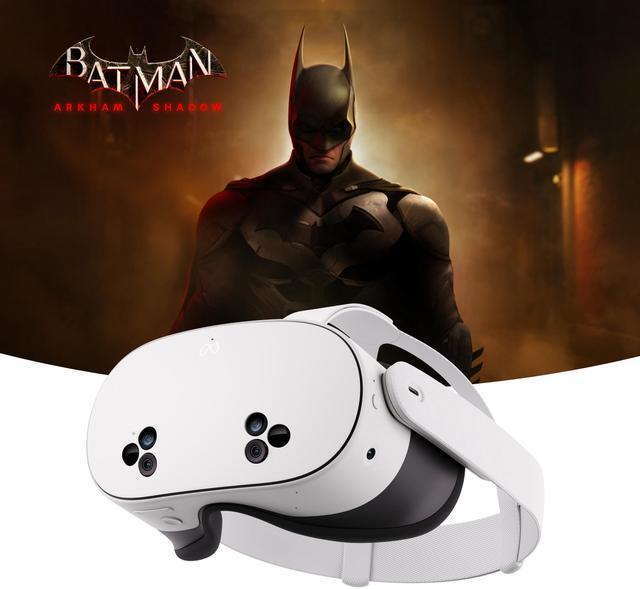
Meta Quest 3S 128GB All-in-One Headset
Our top recommendation for this category
Price as of Jul 11, 2026 — see current price on Amazon.
Three serious VR headsets are now available for $350 or less. The PSVR2 dropped from $599 to around $349. Meta's Quest 3S arrived at $299 in late 2024, then went up to $349 after an April 2026 price adjustment. And the Quest 3 itself came down enough that pancake optics and sharper resolution aren't exclusively premium territory anymore. The result is the most competitive VR market we've seen.
I've spent time with all of the main contenders. Here's where each one makes sense and where they don't.
Quick comparison
| Headset | Type | Display | Price | Best For | |
|---|---|---|---|---|---|
| Meta Quest 3S 128GB | Standalone | 1832x1920 per eye, LCD | $349 | First-time VR buyers | Check Price |
| Meta Quest 3S 256GB | Standalone | 1832x1920 per eye, LCD | $449 | Heavy game downloaders | Check Price |
| Meta Quest 3 512GB | Standalone | 2064x2208 per eye, LCD | $599 | Best overall experience | Check Price |
| PlayStation VR2 | Tethered (PS5) | 2000x2040 per eye, OLED | $349 | PS5 owners | Check Price |
| HTC Vive XR Elite | Standalone + PC VR | 1920x1920 per eye, LCD | $799 | PC VR enthusiasts | Check Price |
Meta Quest 3S 128GB: Best value standalone VR
Meta Quest 3S 128GB All-in-One Headset
Pros
- No PC or console required
- Huge game library with 1,000-plus titles
- Color passthrough for mixed reality
- Compact and light at 514g
Cons
- Fresnel lenses show more glare than pancake alternatives
- 128GB fills up fast if you download larger titles
- Battery life is 2 to 2.5 hours before needing a charge
Price as of Jul 11, 2026 — see current price on Amazon.
The Quest 3S is the headset I'd recommend to anyone who's never tried VR. No PC required, no console required, just the headset and a Meta account. You download games directly onto the device and play.
Meta's game library has matured significantly. Asgard's Wrath 2, Beat Saber, Resident Evil 4, Superhot VR, and hundreds of other titles work out of the box. The 3-month Meta Horizon+ trial that comes with most Amazon bundles gives you access to 40-plus games immediately, so you're not staring at an empty library on day one.
The display is LCD at 1832x2040 per eye with a 96-degree horizontal field of view. It's not as sharp as the Quest 3 and not as visually rich as the PSVR2's OLED panel, but honestly? For most people new to VR, it looks great. The screen-door effect that plagued first-gen headsets is basically gone at this resolution.
The Fresnel lenses are the main compromise versus the Quest 3. You'll notice a "god ray" glare effect on high-contrast scenes, particularly bright text on dark backgrounds. It's not a dealbreaker, but it's noticeable if you go back and forth between this and a pancake-lens headset.
128GB is tighter than you'd expect. Average Quest game is 5 to 15GB, but some titles like Asgard's Wrath 2 hit 35GB alone. If you plan to have more than 6 or 7 games installed at once, the 256GB model will save you the hassle of rotating games.
Meta Quest 3S 256GB: Best mid-range standalone
Meta Quest 3S 256GB All-in-One VR Headset
Pros
- Same performance as 128GB model with twice the storage
- Room for 20-plus large game installations
- Includes Batman: Arkham Shadow and Meta Horizon+ trial
- Better long-term value for serious players
Cons
- Identical display and optics to the 128GB
- $100 more for storage alone
- Still Fresnel lenses, not pancake
Price as of Jul 11, 2026 — see current price on Amazon.
The 256GB Quest 3S is the same headset as the 128GB in every spec that matters for performance. Same Snapdragon XR2 Gen 2 chip, same display, same controllers, same battery. The only difference is storage.
That said, the $100 upgrade is worth it if you're the type to install and keep games. Meta's cloud saves let you delete and re-download titles, but re-downloading 15 to 35GB games on a slower connection gets old fast. Having the headset ready to go without juggling storage management is worth the extra cost for regular users.
For casual players who'll stick to 3 to 5 games, the 128GB is fine. For anyone planning to treat this as their primary gaming device, spend the extra $100 now.
Meta Quest 3 512GB: Best overall VR headset

Meta Quest 3 512GB VR Headset
Pros
- Pancake lenses deliver noticeably sharper and cleaner visuals
- 2064x2208 per eye resolution vs 1832x1920 on Quest 3S
- 110-degree horizontal FOV vs 96-degree on Quest 3S
- 512GB removes storage concerns entirely
- PC VR via Link Cable or Air Link included
Cons
- $250 more than the Quest 3S 128GB for mostly display improvements
- Same battery life (2 to 2.5 hours) as the Quest 3S
- Still no OLED panel
Price as of Jul 11, 2026 — see current price on Amazon.
The Quest 3 costs $250 more than the Quest 3S. What do you actually get for that? Two things that matter a lot: pancake lenses and higher resolution.
Pancake lenses eliminate the god-ray glare that Fresnel optics produce. Text is sharper, contrast on dark scenes is cleaner, and the overall clarity bump is immediately apparent if you try both headsets back to back. At 2064x2208 per eye (versus 1832x1920 on the Quest 3S), individual pixels are smaller and the display looks more like a crisp screen and less like VR.
The field of view jump from 96 degrees to 110 degrees horizontal matters too. More peripheral vision makes the virtual world feel less like looking through goggles and more like actually being there.
512GB storage means you can have your full library installed without thinking about it. That's a real quality-of-life difference for people who own 20-plus Quest titles.
If you're serious about VR and plan to use this thing regularly for years, the Quest 3 is the right call. The display upgrade is real and noticeable. For casual or first-time users, the Quest 3S gets you 90% of the experience for 60% of the price.
PlayStation VR2: Best for PS5 owners

PlayStation VR2 (PSVR2)
Pros
- OLED display with real HDR, the best image quality of any sub-$600 VR headset
- Eye tracking enables foveated rendering for better GPU efficiency
- Sense controllers with haptic feedback and adaptive triggers
- Gran Turismo 7 and Resident Evil Village in VR are genuinely impressive
- PC VR support added via DisplayPort adapter
Cons
- Requires a PS5 connected via cable (not wireless, not standalone)
- Smaller game library than Quest, though high quality
- DisplayPort PC VR requires a specific adapter and capable GPU
Price as of Jul 11, 2026 — see current price on Amazon.
The PSVR2 dropped from $599 to $349 in 2025, and at that price it became a serious option. The hardware is genuinely excellent. OLED panels at 2000x2040 per eye means blacks are actually black, colors are vivid in a way LCD panels can't match, and HDR works correctly rather than being a marketing checkbox.
Eye tracking is the other feature that actually changes the experience. The headset knows where you're looking, so it can render the area your eyes focus on at full detail while reducing quality in your periphery. The result is better frame rates and cleaner visuals than the raw specs would suggest. No other headset at this price has this.
The Sense controllers deserve mention. The same adaptive trigger technology from the DualSense controller appears here, so pulling a bowstring or a gun trigger has resistance that varies based on what's happening in the game. It sounds gimmicky until you try it in Horizon Call of the Mountain and realize it adds genuine immersion.
The major limitation is the cable requirement. The PSVR2 always connects to the PS5 via USB-C. You can't use it across the room or in your backyard. If you want a cable-free experience, this isn't it.
Sony added PC VR support in 2024 via a DisplayPort adapter, which opened the headset to Steam games. Setup requires a bit of work and you'll need a GPU with DisplayPort 1.4, but it works. The OLED display running Valve titles is genuinely nice.
If you own a PS5, $349 is a compelling entry point for what is objectively the best display of any VR headset under $1,000.
HTC Vive XR Elite: Best for PC VR enthusiasts
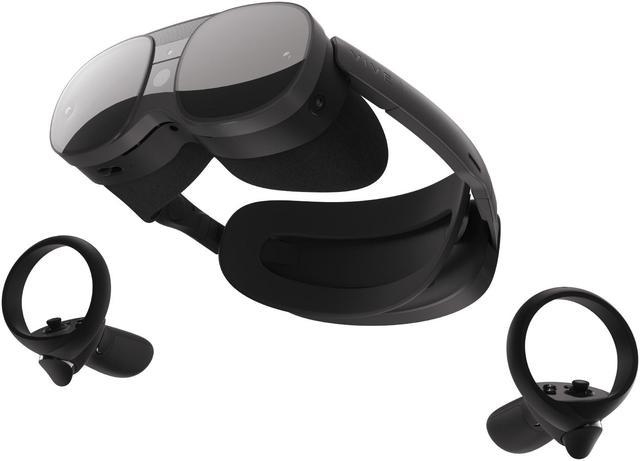
HTC Vive XR Elite Virtual Reality Headset + Controllers
Pros
- Pancake lenses with excellent clarity at 1920x1920 per eye
- Works standalone OR as a PC VR headset without base stations
- Built-in prescription lens adjustment (diopter dial) for glasses wearers
- Lighter than it looks at 625g with the battery pack balanced on the back
Cons
- $800 is a tough sell against the Quest 3 at $599 for most buyers
- SteamVR integration not quite as polished as a dedicated PC VR setup
- Game library smaller than Meta's ecosystem
Price as of Jul 11, 2026 — see current price on Amazon.
The Vive XR Elite fills a specific niche: people who want PC VR access without base stations, or SteamVR users who also want standalone capability.
Pancake lenses are where this headset genuinely impresses. At 1920x1920 per eye, resolution runs slightly below the Quest 3 (2064x2208), but HTC's optics tuning makes the real-world visual quality comparable. Side by side, both look sharp.
The built-in diopter adjustment is a feature HTC pioneered and nobody else has matched properly. If you wear glasses, you dial in your prescription directly on the headset and stop needing to worry about whether your glasses fit inside the headset or whether the lenses are scratching. For glasses wearers, this alone is a significant quality-of-life improvement.
PC VR setup works inside-out (no external base stations) via SteamVR. For most SteamVR titles, it works well. Very demanding SIM titles that need precise controller tracking may benefit from adding an optional base station, but that's a niche case.
At $799, the Vive XR Elite is harder to recommend since Meta slashed Quest 3 prices. The Quest 3 is $200 cheaper with a larger game library and slightly higher resolution. The Vive wins on the glasses-wearers diopter feature, standalone-plus-PC flexibility, and HTC's enterprise software ecosystem. For a home gamer without glasses, the Quest 3 is probably the smarter $200 savings.
What to look for in a VR headset
Standalone vs tethered
Standalone headsets like the Quest 3S, Quest 3, and Vive XR Elite have their own processor and run games natively. No PC, no console, no cables. The tradeoff is processing power. A standalone chipset (even the Snapdragon XR2 Gen 2 in all three Meta/HTC headsets) is less powerful than a gaming PC with a dedicated GPU.
Tethered headsets like the PSVR2 borrow compute power from a connected device, which is why PS5-connected VR can look better than equivalent standalone graphics.
Display technology matters
LCD panels (Quest 3S, Quest 3, Vive XR Elite) deliver good visuals but can't match OLED contrast. In dark scenes with both light and shadow, LCD displays show a slight grayish wash in what should be pure black. OLED panels (PSVR2) render black as actually black, making horror games and space environments far more atmospheric.
For bright, colorful games like Beat Saber or sports titles, the difference is minimal. For immersive single-player experiences with dramatic lighting, OLED is noticeably better.
Resolution and field of view
VR resolution is specified per eye, and the numbers stack up like this: Quest 3S at 1832x1920, PSVR2 at 2000x2040, Quest 3 at 2064x2208, Vive XR Elite at 1920x1920. The practical differences between these are smaller than the numbers suggest once you factor in lens quality. A headset with slightly lower resolution but excellent optics can look sharper than a higher-resolution headset with poor lenses.
Field of view (FOV) affects how much peripheral vision you have. 110 degrees horizontal (Quest 3, PSVR2) feels more natural than 96 degrees (Quest 3S). The difference is real but not dramatic.
Battery life and comfort
All standalone headsets in 2026 land around 2 to 2.5 hours of actual VR gameplay on a charge. This is the current limitation of the battery-to-weight-to-processing tradeoff. A USB-C cable lets you play while charging, which most people end up doing for longer sessions.
Weight and balance matter a lot over time. Head-to-back balance (battery pack at the rear) reduces neck fatigue versus front-heavy designs. If you plan to use VR for more than an hour at a stretch, check headset weight and strap designs before buying.
Frequently asked questions
- Do I need a gaming PC or console to use a Meta Quest headset?
- No. The Meta Quest 3S and Quest 3 are fully standalone. They have their own processor (Snapdragon XR2 Gen 2) and run games from internal storage. You can optionally connect them to a PC via USB-C cable (Link Cable) or wirelessly (Air Link) to access Steam games, but this is entirely optional.
- What's the actual difference between the Quest 3S and Quest 3?
- Three things: lenses, resolution, and field of view. The Quest 3 has pancake lenses with sharper, cleaner visuals and no glare artifacts. Resolution is 2064x2208 per eye on the Quest 3 versus 1832x1920 on the Quest 3S. FOV is 110 degrees horizontal on the Quest 3 versus 96 degrees on the Quest 3S. The Quest 3S costs $349 to $449 vs $599 for the Quest 3, so you're paying $150 to $250 more for primarily display and optics improvements.
- Is the PSVR2 worth buying if I already have a PS5?
- At $349, yes — particularly if you're interested in titles like Gran Turismo 7, Resident Evil Village, and Horizon Call of the Mountain, which are legitimate system sellers. The OLED display and eye tracking genuinely impress. The catch is the cable requirement and a library that's smaller than Meta's. If you want wireless VR, look at the Quest 3S instead.
- How long does VR battery last on the Quest headsets?
- Plan for 2 to 2.5 hours per charge under active use. Light experiences stretch longer, demanding games drain it faster. Most people run a USB-C cable during longer sessions. The Quest 3S and Quest 3 both have the same battery capacity, so battery life is similar between them. There's no Quest headset with substantially longer battery life — the current limit is about processing power vs weight vs heat.
- Can I use VR headsets with glasses?
- Yes, but it varies by headset. The Quest 3S and Quest 3 have spacious lens-to-face distances that fit most frames, and Meta sells an official glasses spacer. The HTC Vive XR Elite has a built-in diopter dial you adjust for your prescription, eliminating the need for glasses inside the headset entirely. PSVR2 fits glasses but can feel tight with larger frames. If you wear glasses regularly, the Vive XR Elite's diopter system is the most elegant solution.
- What VR games are actually worth playing in 2026?
- Beat Saber remains the best VR-native game for showing off what the medium can do. Asgard's Wrath 2 is the most polished AAA-quality standalone title at no extra cost with most Quest bundles. Superhot VR holds up years later. On PSVR2: Gran Turismo 7 is stunning, Resident Evil 4 is a full retail game in VR, and Horizon Call of the Mountain was built ground-up for the headset. On PC VR via Quest or Vive XR Elite: Half-Life: Alyx remains the gold standard for VR storytelling and still hasn't been topped.
Bottom line
For most people buying their first VR headset, start with the Meta Quest 3S 128GB at $349. It's wireless, needs nothing else to work, and has the biggest library in VR. Step up to the Quest 3 at $599 if you want the best display and optics the Quest platform offers and you'll use it regularly. PS5 owners should seriously consider the PSVR2 at $349 for its OLED display and top-tier exclusive library. The HTC Vive XR Elite makes sense for PC VR users who want base-station-free tracking and built-in glasses diopter adjustment, though the Quest 3 undercuts it on price and library size.
VR has finally gotten good enough that the question isn't "is VR ready?" It's just which headset fits your setup.
How We Test
We score products by combining spec-level research, pricing history, trusted third-party benchmarks, and owner sentiment from high-signal sources.
- Performance and real-world value in the category this guide targets
- Price-to-performance and deal consistency over recent pricing windows
- Build quality, reliability patterns, and known long-term issues
- Recommendation refresh cadence to keep these picks current
Author
TheTechSearch Editorial Team
Independent product reviewers & PC builders
We test and compare real-world specs, price trends, and user feedback to recommend gear that actually makes sense to buy.