Is a Smart Ring Worth It in 2026?
Who a smart ring actually suits, what it can't do that a watch can, what the subscriptions really cost, and which rings are worth buying from $199. Expert pi...
As an Amazon Associate we earn from qualifying purchases made through our links — this doesn't affect our picks.

Oura Ring 5 (Silver, Size 8)
Our top recommendation for this category
Price as of Sep 29, 2026 — see current price on Amazon.
Yes, if what you really want is better sleep and recovery data and you hate wearing a watch to bed. No, if you want GPS for runs, notifications on your wrist, or a screen of any kind.
That's the whole decision in two sentences. A smart ring is a sleep and recovery tracker you forget you're wearing. It is not a smaller smartwatch, and the people who end up disappointed are nearly always the ones who bought it expecting one.
The Short Answer
| Your situation | Verdict | |---|---| | You mainly want sleep, HRV and recovery trends | Worth it. This is what rings do best. | | You take your watch off at night because it's uncomfortable | Worth it. A ring is the fix. | | You want cycle and temperature tracking without a wrist device | Worth it. Skin temperature from the finger is a strength. | | You want run pace, maps and GPS distance | Skip it, or pair it with a watch you already own. | | You want calls, texts and apps on your body | Skip it. There's no screen and no speaker. | | You lift weights or climb daily | Think twice. Rings scratch, and they get in the way of a bar. |
What a Smart Ring Actually Measures
Inside the band are a few tiny sensors pressed against the underside of your finger. An optical sensor (PPG) shines light into the skin to read heart rate, heart rate variability and blood oxygen. A temperature sensor tracks small overnight shifts. An accelerometer handles movement, steps and a guess at sleep versus wake.
The finger is actually a good spot for this. It has dense blood vessels close to the surface, and a ring moves less against the skin at night than a watch strap does. That's why the overnight numbers from a ring are often steadier than the same numbers from a loose watch.
Then the app does the real work. It turns raw readings into scores: a sleep score, a readiness or energy score, an activity total. The scores are what you'll look at every morning, and they're only as good as the algorithm behind them.
How Accurate Are They, Honestly?
Better than you'd guess for sleep, weaker than you'd hope for everything else.
The most cited validation work is Oura's own. In a 2021 paper in the journal Sensors (Altini and Kinnunen, 2021, 21(13), 4302), researchers compared the ring against polysomnography across 440 nights from 106 people. Adding heart rate variability and temperature to motion data lifted four-stage sleep classification to 79% agreement, and sleep-versus-wake agreement to 96%. A motion-only model managed 57%.
Two caveats. First, that's Oura's own research team, published in a peer-reviewed journal but not independent. Second, 79% agreement on sleep stages is good for a consumer device and still nowhere near a sleep lab. Treat the stage breakdown as a trend line, not a diagnosis.
Where rings get shakier is daytime activity. Step counts and calorie estimates drift, and none of the rings here can match a chest strap for heart rate during hard intervals. If your training depends on accurate zones, a ring isn't the tool.
The Subscription Question
This is where the price you see isn't the price you pay, so it's worth doing the maths before you buy.
Oura charges a membership. It's $5.99 a month or $69.99 a year in the US. Without it, the app shows three daily scores and not much else: no sleep stage detail, no HRV trends, no temperature insights. Over three years, a $399 Oura Ring 5 plus an annual membership costs about $609.
Samsung, RingConn and Amazfit don't. The Galaxy Ring, both RingConn rings and the Helio Ring keep their core tracking free. Over the same three years, a $199 RingConn Gen 2 Air stays at $199.
That gap is the single biggest reason to look past Oura. It's also not the whole story, because Oura's app and research base are still the most mature in the category. You're paying for software, and it shows.
Smart Ring vs Smartwatch
Here's how the two really split, once you strip away the marketing:
- Sleep comfort: ring wins, clearly. Most people don't notice it after the first night.
- Battery: ring wins. Four to twelve days versus one to three for most full smartwatches.
- Workouts: watch wins. GPS, live heart rate on a screen, interval alerts.
- Notifications and payments: watch wins, since rings have no display.
- Looks: ring wins for most people. It's jewelry-adjacent, not a gadget on your wrist.
Plenty of people end up wearing both: a watch during the day and workouts, a ring around the clock. If you already own a smartwatch you like and just hate sleeping in it, that combination is honestly the best case for a ring. If you're choosing only one device and you exercise outdoors a lot, our guide to the best smartwatches is the better starting point.
When a Smart Ring Is Not Worth It
You'll wear it for two weeks. Rings are about trends. A single night's score tells you very little. The value shows up after a month or two, when you start noticing that late meals or a second glass of wine drag your recovery down. If you're not going to look at the app daily, save the money.
Your hands are your job. Gym lifters, climbers, mechanics and anyone gripping tools all day will scratch the coating and find the ring uncomfortable under load. Some people swap fingers or take it off for sessions, which works, but it also leaves gaps in the data.
You need medical answers. None of these rings is a medical device for diagnosing sleep apnea, arrhythmia or anything else, even when they flag something worth asking about. RingConn's Gen 2 offers sleep apnea monitoring as a wellness feature; if it shows something worrying, the next step is a doctor and a proper sleep study, not another ring.
Your phone is the wrong one. The Galaxy Ring works only with Android phones, and Samsung phones get the most features. On an iPhone, skip it entirely.
What to Check Before You Buy
Size first, always. Ring sizing for these devices doesn't match jewelry sizing. Every brand here ships or sells a sizing kit, and Amazon listings are per size, so wear the sizer for a full day and a night before ordering. Fingers swell in heat and shrink in cold, and a ring that spins won't read well.
Battery by size. Smaller rings hold smaller batteries. Samsung quotes up to 7 days, but its smaller sizes land closer to five. Oura quotes 6 to 9 days on the Ring 5, depending on size.
Which finger. Most brands suggest the index finger for the best sensor contact. Middle and ring fingers work too. Pick one and stick with it.
HSA and FSA eligibility. Several rings, including the Galaxy Ring and RingConn models, are sold as HSA/FSA eligible in the US. If you have pre-tax health money to spend, that's effectively a discount.
The Smart Rings Worth Buying
Prices below were checked on Amazon on 29 September 2026 and compared against each brand's own store. Each link opens a specific size; change it on the listing to match your sizing kit.
| Model | Price | Battery | Subscription | Best for | |
|---|---|---|---|---|---|
| Oura Ring 5 (Silver, Size 8) | $399.00 | 6 to 9 days | $5.99 a month | Best app and research | Check Price |
| RingConn Gen 2 Air (Galaxy Silver, Size 9) | $199.00 | Up to 10 days | None | Most people | Check Price |
| Samsung Galaxy Ring (Titanium Silver, Size 8) | $391.00 | Up to 7 days | None | Samsung phone owners | Check Price |
| RingConn Gen 2 (Silver, Size 9) | $299.00 | Up to 12 days | None | Longest battery | Check Price |
| Oura Ring 4 (Silver, Size 8) | $349.00 | Up to 8 days | $5.99 a month | Oura for less | Check Price |
| Amazfit Helio Ring (Size 10) | $167.14 | Up to 4 days | None for core tracking | Cheapest way in | Check Price |
Oura Ring 5 (Silver, Size 8)
Pros
- About 40% smaller than the Ring 4, per Oura, so it reads as jewelry
- 6 to 9 days of battery depending on size
- Titanium inside and out, water resistant to 100 meters
- The most mature app and the largest validation research base in the category
Cons
- Full insights need a $5.99 monthly or $69.99 yearly membership
- $399 before that membership, about $609 over three years
Price as of Sep 29, 2026 — see current price on Amazon.
Oura is still the benchmark. The Ring 5 launched in June at $399, and the Amazon listing sells it at that same price. Oura says it's about 40% smaller than the Ring 4, which matters more than it sounds: a thinner band is less noticeable in bed and less likely to catch on things during the day.
The reason to pay more is the software. Oura's sleep, readiness and cycle features have years of refinement behind them, and its team publishes validation work in peer-reviewed journals. The reason not to is that membership, which you should count as part of the price from day one.

RingConn Gen 2 Air (Galaxy Silver, Size 9)
Pros
- $199 with no subscription for standard features
- Up to 10 days of battery
- About 2.5 grams and a 2mm-thin profile
- Works with both iPhone and Android
Cons
- No sleep apnea monitoring, which the pricier Gen 2 adds
- App is simpler and less polished than Oura's
Price as of Sep 29, 2026 — see current price on Amazon.
This is the ring most people should start with. At $199 it costs half an Oura Ring 5, and there's no monthly fee waiting behind it. Over three years that's a gap of roughly $400. It tracks the same core things you'll actually look at: sleep, heart rate, HRV, blood oxygen, stress and cycles.
What you give up is polish. The app's insights are less detailed than Oura's, and the Air skips the sleep apnea feature the regular Gen 2 carries. For a first ring, neither of those is a deal-breaker. The $199 price matches what RingConn charges on its own store.
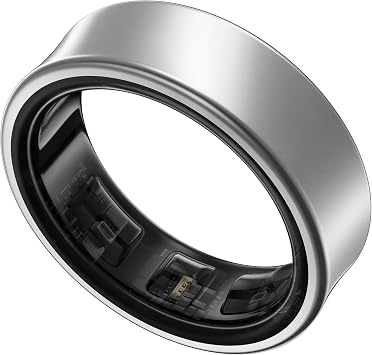
Samsung Galaxy Ring (Titanium Silver, Size 8)
Pros
- No subscription for any of its health features
- Ties into Samsung Health and Galaxy AI on Samsung phones
- 10ATM water resistance, 2.3 to 3 grams depending on size
- Comes with a sizing kit flow on the listing
Cons
- Android only, and best on Samsung phones
- Battery lands closer to 6 days on middle sizes, not the headline 7
- Samsung has frequently sold it for $299.99, so $391 is not a good deal
Price as of Sep 29, 2026 — see current price on Amazon.
If you already own a Galaxy phone and watch, this ring slots into Samsung Health without another app to learn. That's the whole pitch, and for that group it's a good one.
For everyone else, it's harder to recommend. It's Android only, and at $391 on Amazon it's barely below Samsung's $399.99 list price. Samsung has cut it to $299.99 several times this year, including in January, April and June. If you're not in a hurry, wait for that price. A Galaxy Ring 2 is also reported for early 2027.
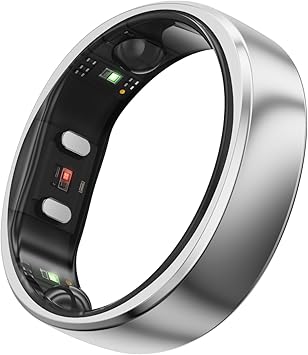
RingConn Gen 2 (Silver, Size 9)
Pros
- Up to 12 days of battery in larger sizes, the longest here
- Sleep apnea monitoring as a wellness feature, with no subscription
- Works with iPhone and Android
- $299, matching RingConn's own store
Cons
- $100 more than the Gen 2 Air for mostly one feature and extra battery
- Apnea monitoring is a screening nudge, not a diagnosis
Price as of Sep 29, 2026 — see current price on Amazon.
The Gen 2 is the Air with two upgrades: more battery and a sleep apnea monitoring feature. If you snore, wake up tired no matter what, or a partner has mentioned your breathing at night, that feature is a reasonable reason to spend the extra $100. It can nudge you toward a real sleep study.
Otherwise, the Air does the everyday job for less. RingConn has also launched a Gen 3 from $349 on its own store, adding vibration alerts, but the Gen 2 remains the better value for sleep-focused buyers.
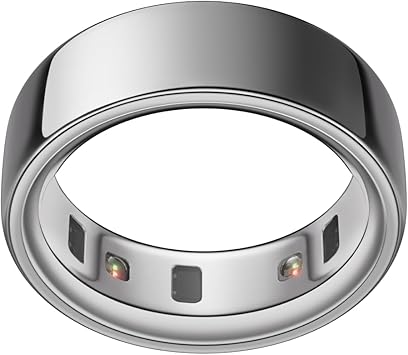
Oura Ring 4 (Silver, Size 8)
Pros
- Same Oura app and features as the Ring 5
- Up to 8 days of battery
- $50 less than the Ring 5 at Oura's own starting price
- Titanium build, water resistant to 100 meters
Cons
- Bulkier than the Ring 5
- Still needs the $5.99 monthly membership
- Amazon has sold it for $319.99 in past deals, so watch for a drop
Price as of Sep 29, 2026 — see current price on Amazon.
The previous Oura is still a very good ring. It runs the same app, so you get the same sleep and readiness insights. What you give up is the Ring 5's slimmer body, and not much else that shows up in daily use.
At $349 it only saves $50 over the Ring 5, which makes it a close call. It's a better buy the moment it drops again. Deal sites tracked it at $319.99 on Amazon after the Ring 5 launched.

Amazfit Helio Ring (Size 10)
Pros
- $167.14 on Amazon against a $199.99 list price
- No subscription for core sleep, heart rate and stress tracking
- 10 ATM water resistance, titanium alloy shell
- Fast charging, about 1.4 hours from empty
Cons
- Up to 4 days of battery, the shortest here by a long way
- Only sold in sizes 8, 10 and 12
- Its sizing doesn't match standard jewelry sizes, so the kit is essential
Price as of Sep 29, 2026 — see current price on Amazon.
If you just want to find out whether you'll keep wearing a ring, the Helio is the cheapest honest way to do it. It covers sleep, heart rate and stress well enough to answer that question.
It's also clearly the budget option. Four days of battery means charging twice a week, and only three sizes means some fingers simply won't fit. Amazfit owners who already use a Zepp-based watch will like having everything in one app.
FAQ
Frequently asked questions
- Do smart rings need a subscription?
- Oura does: $5.99 a month or $69.99 a year for full insights. Samsung's Galaxy Ring, RingConn's Gen 2 and Gen 2 Air, and the Amazfit Helio Ring keep core tracking free with no monthly fee.
- Is a smart ring more accurate than a smartwatch for sleep?
- Often, yes. The finger has dense blood vessels near the surface and a ring moves less than a watch strap overnight, so readings tend to be steadier. Oura's own 2021 study reported 79% agreement with a sleep lab on four sleep stages, which is strong for a consumer device but still not a medical test.
- Can a smart ring replace a smartwatch?
- For sleep and recovery, yes. For workouts with GPS, live heart rate on a screen, notifications or payments, no. Many people wear a watch during the day and a ring around the clock.
- Which finger should I wear a smart ring on?
- Most brands recommend the index finger for the best sensor contact, with the middle or ring finger as alternatives. Use the sizing kit on the finger you plan to wear it on, and keep it on that finger.
- Does the Samsung Galaxy Ring work with an iPhone?
- No. The Galaxy Ring needs an Android phone, and some features need a Samsung Galaxy phone. iPhone owners should look at Oura or RingConn instead.
- How long do smart ring batteries last?
- Between about 4 and 12 days depending on the model and size. The Amazfit Helio Ring is at the short end at up to 4 days, and RingConn's Gen 2 at the long end at up to 12 days in larger sizes.
Bottom Line
A smart ring is worth it if you want sleep and recovery data without sleeping in a watch, and you'll actually check the app. It's not worth it if you want GPS, a screen or medical answers. For most people, the RingConn Gen 2 Air at $199 with no subscription is the smartest first ring. If you want the best app and don't mind the membership, get the Oura Ring 5. And if you already own an Android phone from Samsung, the Galaxy Ring fits in with everything else you use.
How We Test
We score products by combining spec-level research, pricing history, trusted third-party benchmarks, and owner sentiment from high-signal sources.
- Performance and real-world value in the category this guide targets
- Price-to-performance and deal consistency over recent pricing windows
- Build quality, reliability patterns, and known long-term issues
- Recommendation refresh cadence to keep these picks current
Author
TheTechSearch Editorial Team
Independent product reviewers & PC builders
We test and compare real-world specs, price trends, and user feedback to recommend gear that actually makes sense to buy.